Agility
Agility
Navigate obstacle courses with speed and precision
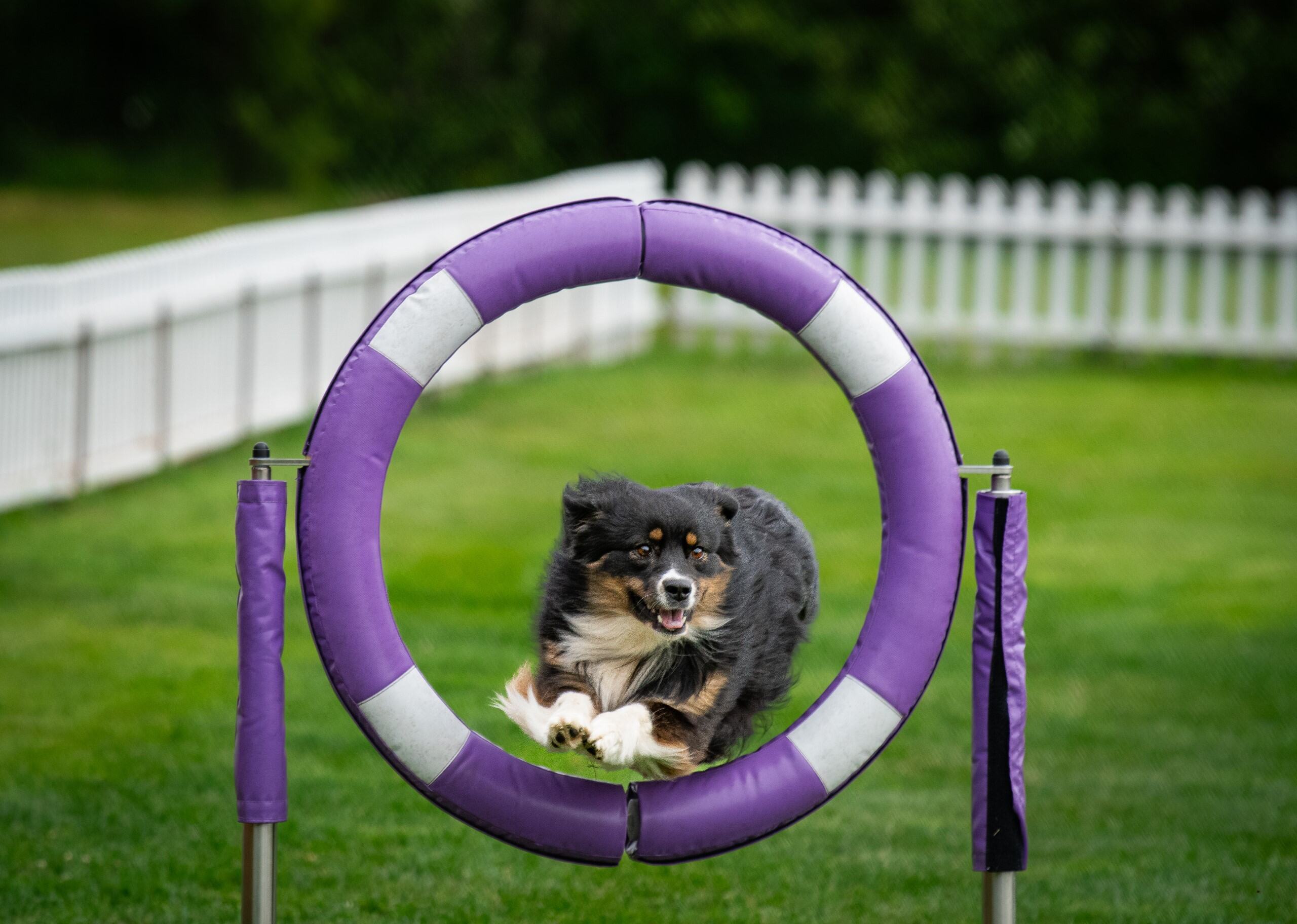
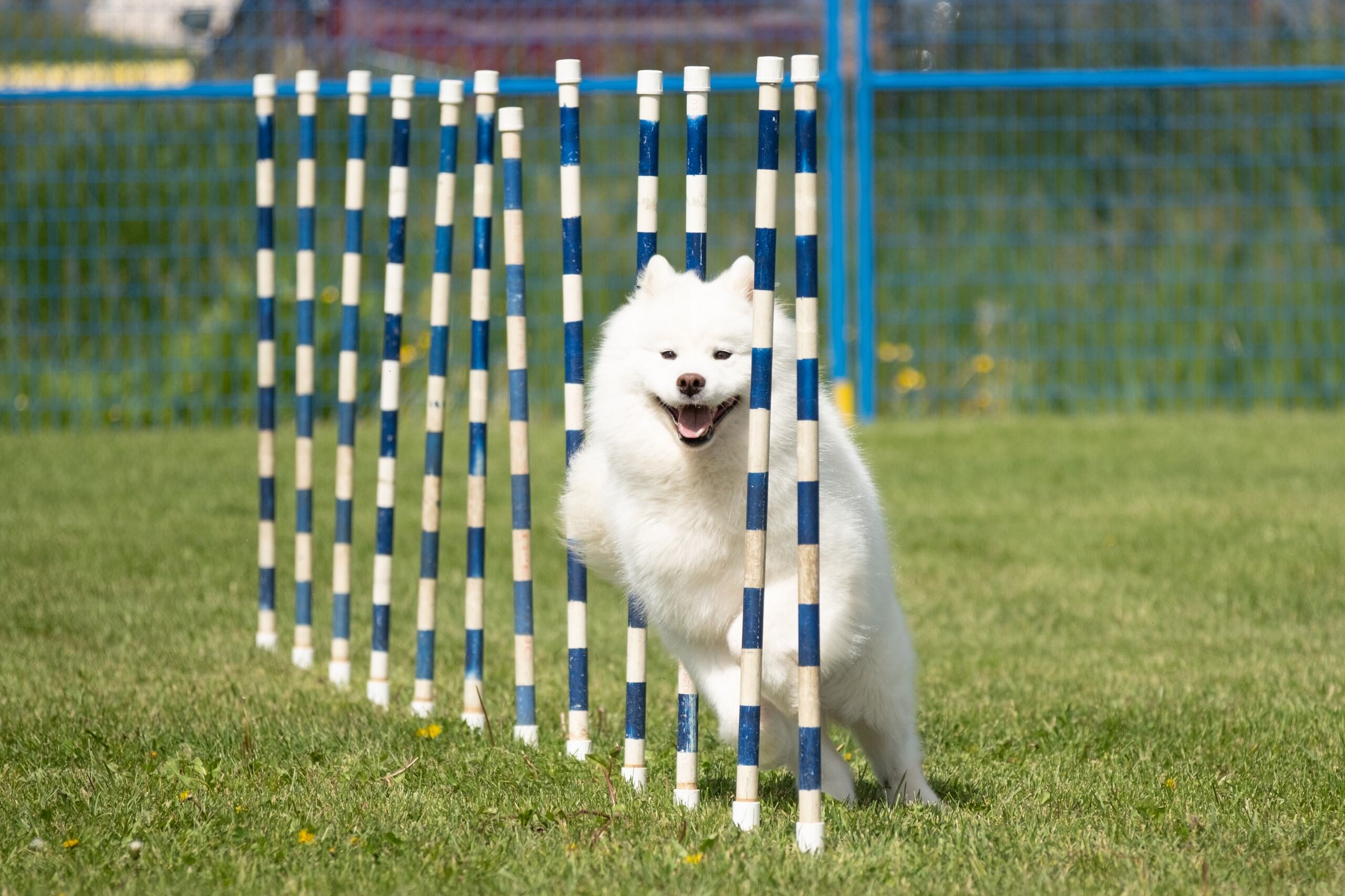
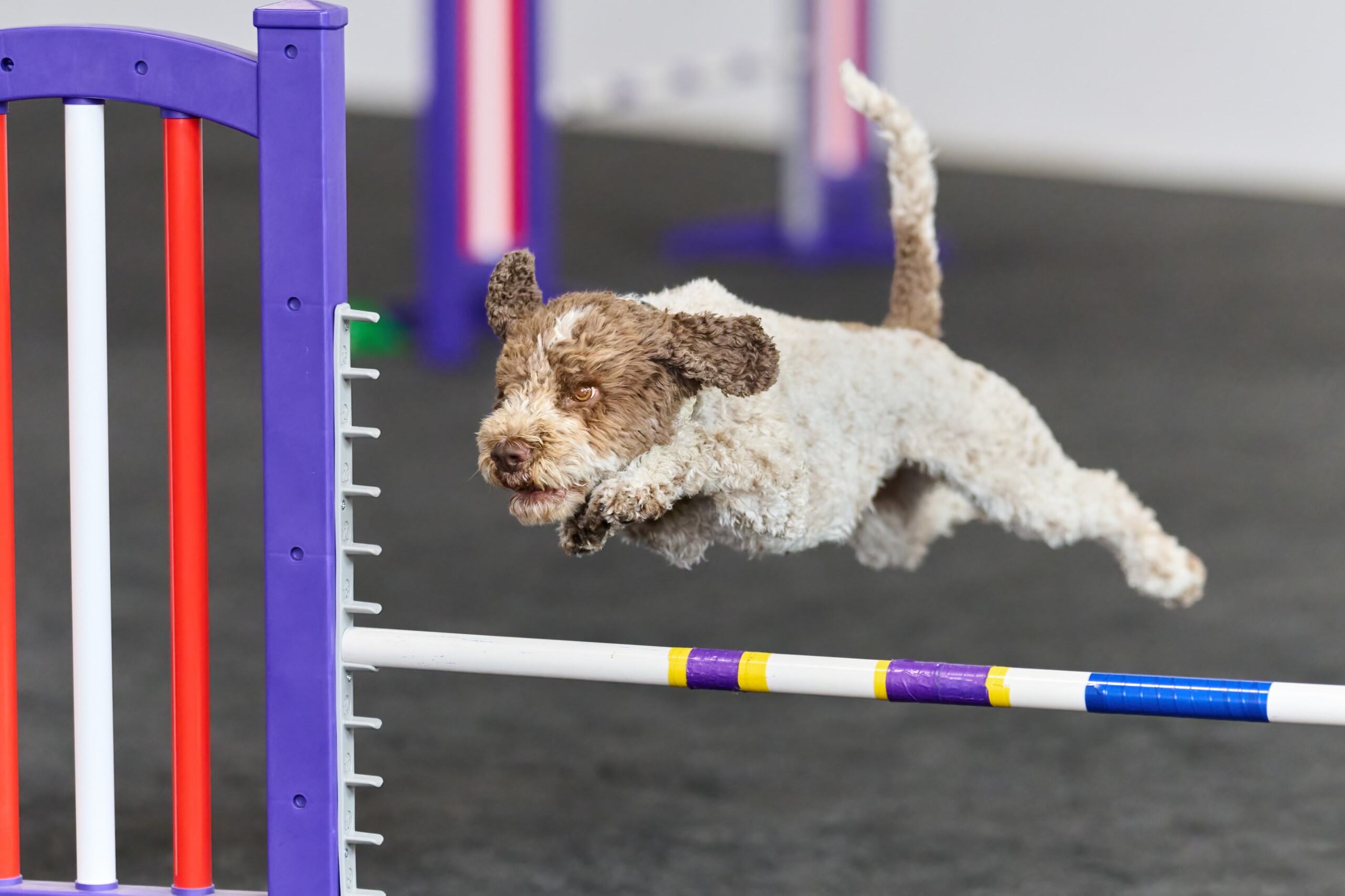
Agility is a fast-moving, challenging, and energetic sport enjoyed by dogs and handlers alike. It’s also a great spectator activity. Dogs work off-lead and are guided by their handler’s voice commands and body signals as they race through an intricate course filled with obstacles such as jumps, tunnels, weave poles, and even a teeter totter.
Agility is open to all breeds. Dogs are grouped by size, with jump heights and speed requirements adjusted accordingly, so every dog has an equal opportunity to excel – whether short and stocky or tall and lean.
Beyond the excitement, Agility is a powerful way to build a deeper connection with your dog. Navigating the course together requires trust, communication, and focus. Each run strengthens your teamwork and gives you both a sense of accomplishment. It’s a sport that brings out your dog’s drive and enthusiasm while reinforcing the bond you share.
Eligibility & Participation Guide
Purebred Dogs
To compete in CKC agility trials, purebred dogs must be registered with the CKC under one of the following:
– CKC Registration Certificate (for dogs born in Canada and foreign dogs registered with CKC)
– CKC Event Registration Number (ERN) – for foreign-born dogs temporarily competing in CKC events
– CKC Miscellaneous Certification Number (MCN) – for breeds not yet fully recognized by CKC
– CKC Performance Event Number (PEN) – for purebred dogs that cannot be fully registered due to missing documentation but meet breed standards
Mixed Breed Dogs
Mixed breed dogs can participate in CKC agility if they meet these requirements:
– CKC Canine Companion Number (CCN) – allows non-purebred dogs to compete in performance events like agility, rally, and obedience
Minimum Age Requirement
– Dogs must be at least 18 months old on the day of the trial.
Handler Eligibility
– CKC Membership: Handlers do not need to be CKC members to compete, but membership is required for title recognition or awards.
– Age Requirements: No minimum age, but youth handlers should be capable of safely managing their dog on course.
– Experience Level: Beginners are welcome! Many clubs offer training and mentorship.
– Conduct & Sportsmanship: Handlers must follow CKC rules and demonstrate respectful behavior toward dogs, judges, and other participants.
– Multiple Dogs: A handler may compete with more than one dog, but each dog must be entered separately.
Skill Levels
– Novice: Entry-level; dogs begin earning titles like JT
– Intermediate: Dogs progress to classes such as Intermediate Standard
– Excellent & Master: Advanced levels with titles like AGX and AGM
Finding a Mentor
– Breeders: For breed-specific guidance and early training.
– CKC Clubs: Offer agility classes and mentorship.
– Field Representatives: Others that are involved and can help with rules and trial procedures.
– Agility Council Representative: Oversees CKC agility and may offer resources.
Dog Characteristics Needed
– Health & Fitness: Dogs must be in good physical condition
– Temperament: Confident, focused, and responsive
– Drive & Motivation: High food or toy drive is helpful
– Agility Aptitude: Enjoys running, jumping, and problem-solving
Getting Started in Agility
– Understand CKC Agility Rules: Review the CKC Agility Rulebook to learn about course types, scoring, and titles
– Watch Trials: Attend a CKC agility trial to observe how courses are run and how dogs and handlers interact
2. Find a Local CKC Club
Look for CKC-recognized clubs that offer:
– Foundation Agility Classes
– Beginner Handling Workshops
– Fun Matches or Practice Runs
– Clubs often have or can recommend experienced instructors and mentors who can guide you through training and trial prep.
3. Prepare Your Dog
– Health Check: Ensure your dog is physically fit and cleared by a vet
– Basic Obedience: Your dog should reliably respond to commands like sit, stay, come, and heel
– Socialization: Dogs must be comfortable around other dogs, people, and noisy environments
4. Start Training
Begin with:
– Body Awareness Exercises (e.g., balance work, rear-end awareness)
– Obstacle Introduction (tunnels, jumps, contact equipment)
– Focus & Engagement (reward-based training to build drive)
– Use positive reinforcement and short, fun sessions.
5. Register Your Dog with CKC
– Purebred Dogs: Must have CKC registration, ERN, PEN, or MCN
– Mixed Breeds: must obtain a CCN
6. Enter Fun Matches or Sanction Matches
– These are informal events that simulate trial conditions
– Great for building confidence and testing readiness
– Feedback from judges and experienced handlers is often available
7. Trial Readiness Checklist
Before entering a CKC-approved trial, ensure your dog can:
– Run a full course off-leash
– Follow your cues through sequences
– Stay focused in a busy environment
– Perform safely and confidently
Find and Enter an Event
Canuck Dogs is the go-to site for finding CKC approved agility trials across Canada.
You can:
– Search by province, date, or club
– View trial listings, premium lists, and entry deadlines
– Access links to online entry portals (e.g., DogShow.ca, The Entry Line)
2. Read the Premium List Carefully
Each trial has a premium and includes:
– Trial dates and location
– Judges’ names and assignments
– Classes offered (Novice, Intermediate, Excellent, etc.)
– Entry fees and deadlines
– Running order and ring schedule
– Special instructions (e.g., parking, crating space, pandemic protocols)
Tip: Always read the premium list thoroughly before entering. It contains vital info about what to expect and how to prepare.
3. Know the CKC Agility Rules
Familiarize yourself with the CKC Agility Rulebook:
– Course types and scoring
– Faults and refusals
– Title requirements
– Equipment standards
– Understanding the rules helps you avoid disqualifications and improves your performance.
4. Submit Your Entry
Use the link provided in the Canuck Dogs listing to access the entry form.
Fill out:
– Dog’s registration info (CKC #, PEN, CCN, etc.)
– Handler details
– Class selections
– Pay entry fees online or by mail, depending on the club’s process.
5. Understand Judging Schedules
Trials often run multiple rings and classes simultaneously. Judging schedules are usually posted a few days before the event.
Know:
– Your dog’s class and height division
– Estimated ring time
– Walk-through times (handlers walk the course before competing)
Tip: Arrive early to check in, walk your course, and warm up your dog.
Agility Titles and Progression
Agility Novice (AG.N.)
– Earn 3 qualifying scores in the Novice Standard class under at least 2 judges
– Basic obstacles: jumps, tunnels, contact equipment
Agility Intermediate (AG.I.)
– Earn 3 qualifying scores in the Intermediate Standard class under at least 2 judges
– More complex sequences and tighter handling
Agility Excellent (AG.X.)
– Earn 3 qualifying scores in the Excellent Standard class under at least 2 judges
– Advanced challenges and precision required
Agility Master Excellent (AG.M.X.)
– Earn 10 perfect scores of 100 in Master Excellent Standard class
– Must have already earned AG.X.
– Demonstrates consistent high-level performance
Agility Master Champion (AG.M.CH.)
– Receive both the Agility Master Excellent Standard and Agility Master Excellent Jumper titles
Grand Agility Master Champion (G.Ag.M.CH.)
– 50 qualifying scores in the Master Excellent Standard class
– 50 qualifying scores in the Master Excellent Jumpers with Weaves class
– 25 qualifying scores in the Master Excellent Points and Distance class
– 25 qualifying scores in the Steeplechase class
Jumpers With Weaves (JWW) Titles
Agility Novice Jumper (AG.N.J.)
– 3 qualifying scores in the Novice JWW class under at least 2 judges
– Obstacles: jumps and weave poles
Agility Intermediate Jumper (AG.I.J.)
– 3 qualifying scores in the Intermediate JWW class under at least 2 judges
Agility Excellent Jumper (AG.X.J.)
– 3 qualifying scores in the Excellent JWW class under at least 2 judges
Agility Master Excellent Jumper (AG.M.X.J.)
– 10 perfect scores of 100 in the Excellent JWW class after earning the AG.X.J.
Agility Master Excellent Jumper Multiples (AGMXJ2, 3, 4…)
– Additional sets of 10 perfect scores beyond AG.M.X.J.
Points and Distance (PAD) Titles
Novice PAD (NP) , Intermediate PAD (IP), Excellent PAD (XP), Master Excellent PAD (MXP, MXP2, 3, 4…)
– Dogs earn titles by accumulating points based on distance and successful obstacle completion
– Courses emphasize strategic handling and distance control
Steeplechase Titles
Steeplechase (AGSC), Steeplechase Excellent (AGSCX,2,3,4..)
– Fast-paced course with jumps, tunnels, and weave poles
– Titles earned through qualifying scores
– Emphasizes speed and flow over technical challenge
Jumps & Tunnels Titles
Jumps & Tunnels (JT), Jumps & Tunnels Excellent (JTX, 2,3,4..)
– Courses consist only of jumps and tunnels
– Designed for beginner dogs or those with physical limitations
– Titles earned through qualifying scores
For all of the above titles, dogs entered in Selected or Veterans stakes will earn a title with the letter S or V after the title.
Final Thoughts: Make It Fun!
Agility is more than just competition; it’s a celebration of teamwork, trust, and joy between you and your dog. Whether you’re chasing your first Q (qualifying score) or just enjoying the thrill of the course, every run is a chance to grow together with your dog.
Celebrate the little wins; a clean run, a confident tunnel entry, or even just showing up and trying something new.
Stay positive; mistakes are part of the journey, and every handler (even the pros!) started somewhere.
Connect with the community – agility folks are friendly, supportive, and love to cheer each other on. You’ll find mentors, friends, and maybe even a few dog-loving comedians at your local trial.
Most importantly have fun! Your dog doesn’t care about ribbons – they care about spending time with you, doing something exciting and rewarding.