Hunt Tests for Retrievers
Hunt Tests for Retrievers
Test retrievers on their ability to mark and retrieve game
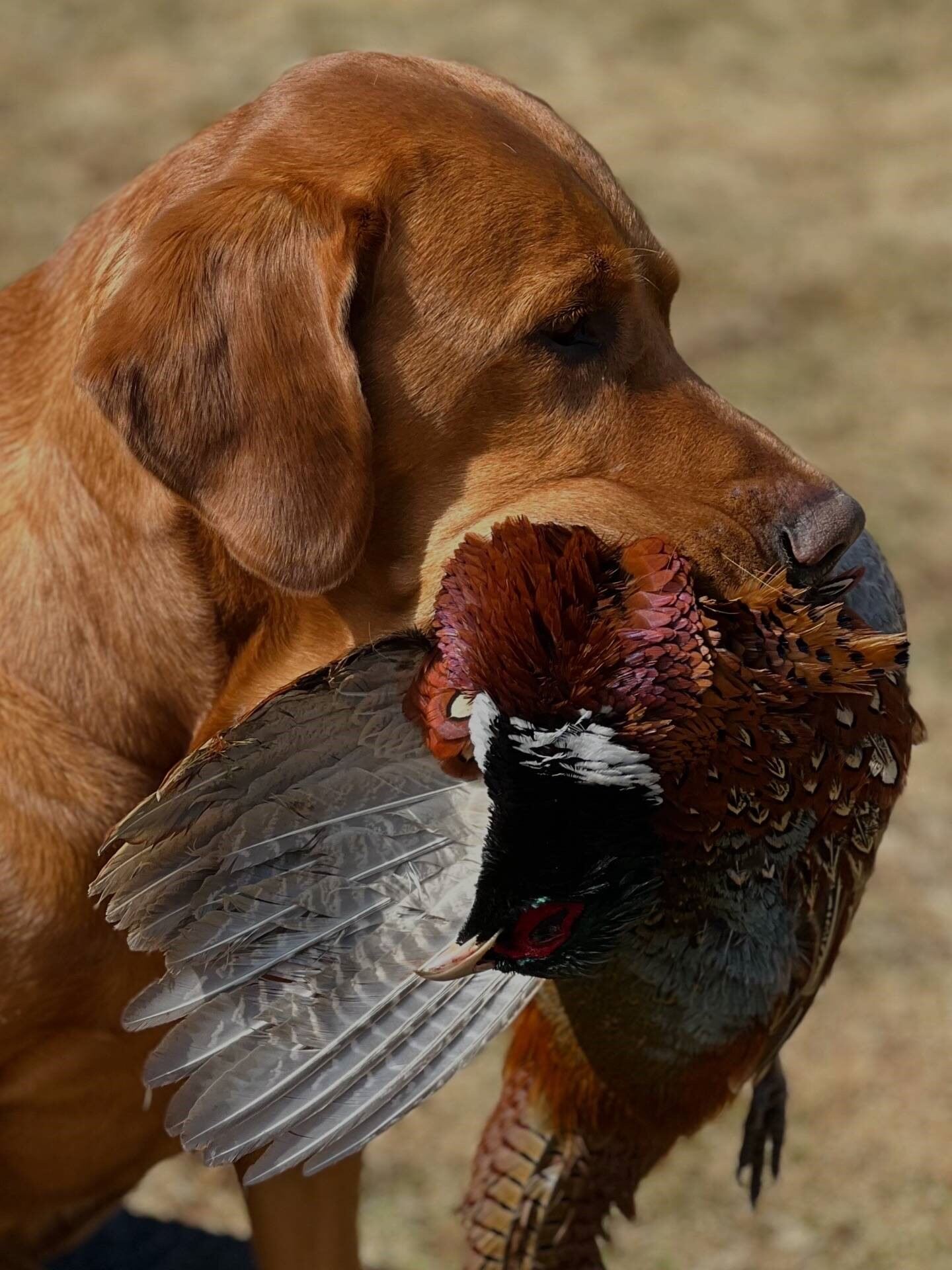
Retriever Hunt Tests are designed to evaluate the natural and trained abilities of retrievers, Barbets, Irish Water Spaniels, and Poodles in realistic hunting scenarios. Events simulate the work of a skilled hunting companion, with dogs judged individually on their ability to mark, retrieve, and respond to commands on both land and water.
Dogs are tested on their ability to mark the location of downed birds, retrieve game efficiently, and follow handler direction. At higher levels, dogs must complete more advanced tasks such as marking multiple birds and performing blind retrieves locating birds that were not seen fall and retrieving them based solely on handler cues.
These tests are a practical and rewarding way to build a working partnership with your dog. As you guide them through each challenge, you develop a deeper understanding of their instincts, timing, and responsiveness. The teamwork required in hunt tests strengthens your bond and highlights the trust and communication that define a successful hunting team.
Eligibility & Participation Guide
– Retrievers (e.g., Labrador, Golden, Flat-Coated, Chesapeake Bay), Barbets, Irish Water Spaniels, Poodles
– Dogs must be in good health and meet age requirements
Handler Eligibility
– Responsible dog ownership required
– CKC membership not required to participate but needed for title recognition
Skill Levels
Retriever Hunt Tests are divided into three levels of increasing difficulty:
– Junior Hunt (JH) – Entry-level; basic marking and retrieving
– Senior Hunt (SH) – Intermediate; includes double marks, blinds, and honoring
– Master Hunt (MH) – Advanced; multiple marks, complex blinds, and advanced control
Finding a Mentor
– CKC clubs offering retriever training and hunt test preparation
– Experienced handlers and breed clubs
– Field representatives and CKC Hunt Test Council
Dog Characteristics Needed
– Strong marking and retrieving instinct
– Responsive to commands and steady in the field
– Comfortable working in water and natural terrain
Getting Started in Retriever Hunt Tests
– Review the CKC Hunt Test Rules & Regulations for Retrievers
– Understand test components, scoring, and safety requirements
2. Find a Local CKC Club
– Clubs may offer training, mentorship, and access to hunt test grounds
3. Prepare Your Dog
– Health check and conditioning
– Exposure to birds, terrain, and water retrieves
4. Start Training
– Practice marking, retrieving, and blind work
– Use positive reinforcement and build field confidence
5. Register Your Dog with CKC
– Ensure proper registration or obtain ERN/PEN/MCN/CCN
6. Enter Fun Matches or Sanctioned Matches
– Participate in practice events and CKC-sanctioned hunt tests
7. Trial Readiness Checklist
– Dog can mark and retrieve birds reliably
– Dog performs blinds and honors other dogs
– Handler understands test procedures and safety protocols
Find and Enter an Event
– Visit CanuckDogs.com to find Retriever Hunt Tests
2. Read the Premium List Carefully
– Check event location, judges, fees, and requirements
3. Know the CKC Hunt Test Rules
– Review the rulebook for test details and scoring
4. Submit Your Entry
– Complete the entry form and submit fees
5. Understand Judging Schedules
– Know your scheduled test time and arrive early
Retriever Hunt Test Titles and Progression
Junior Hunter (JH)
– Dog must demonstrate basic retrieving instinct
– Must mark and retrieve single birds on land and water
– Retrieves should be completed to hand
– Handler may assist with guidance
– Three qualifying scores are required
Senior Hunter (SH)
– Dog must show increased control and responsiveness
– Must perform double marks, land and water retrieves
– Must complete a blind retrieve and honor another dog’s work
– Retrieves must be completed to hand with minimal handling
– Four qualifying scores are required, if the dog has already earned a JH title
Master Hunter (MH)
– Dog must perform with precision, consistency, and independence
– Must complete multiple marks, advanced blinds, and honor another dog
– Demonstrates excellent control, teamwork, and steadiness
– Retrieves must be clean, direct, and delivered to hand
– Five qualifying scores are required, if the dog has already earned an SH title
Grand Master Hunter (GMH)
– Must have already earned the MH title
– Accumulate 10 qualifying scores in Master hunt tests after the MH title has been earned
National Master Hunter (NMH)
– Earned by qualifying at the CKC National Master Hunt Test
– Dog must have MH title to enter
– Recognizes dogs with exceptional performance at the national level
Final Thoughts: Make It Fun!
Retriever Hunt Tests are a celebration of instinct, training, and partnership. They’re a great way to engage retrieving breeds and enjoy the outdoors with your dog.