
Height
Male: 15 - 21 in
Female: 15 - 20 in
Life expectancy
12 - 16 years
Colours
Black, Black & tan, Blue merle, Brindle, +18 more
Key Characteristics
General information
Origin
Paintings and archaeological findings suggest that the Berger des Pyrenees or Pyrenean Shepherd Dog has been known in the Pyrenees Mountains for hundreds of years but they proved to be a well-kept secret. Smallest of the French herding breeds, the pixie-faced little dogs failed to attract attention outside of their working area. Finally, a breed club was formed in 1923, starting the official life of this breed.
Temperament
Don’t let the size fool you. This is a hardy, assertive, tough herding dog with phenomenal energy. Though affectionate with its own family, the Berger is suspicious of strangers and makes a very good guard dog. Bright, inquisitive and intelligent, the Berger surveys the world with a mischievous expression.
Activity Level
The Berger has an enormous amount of nervous energy. It displays a great liveliness of movement and characteristically, it is always on guard. Though small, a daily walk won’t do the job for this breed. It needs to work or at least participate in agility or other vigorous activity to satisfy its need for action.
Coat
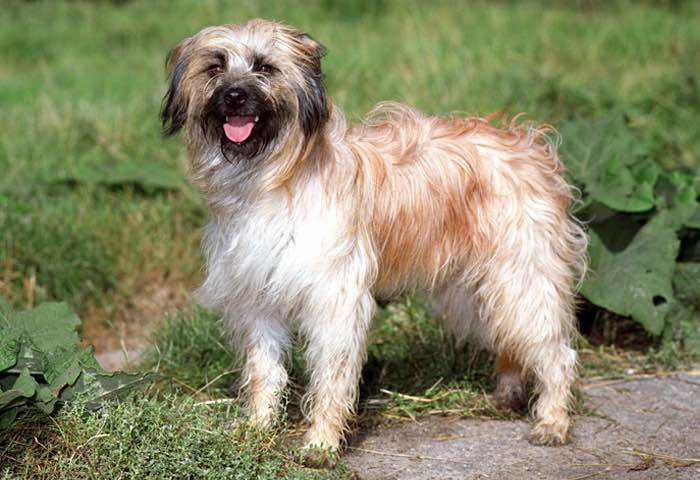
The coat is long or medium long in length and always plentiful. The texture is a cross between the coarse hair of a goat and the wool of a sheep. It tends to be thicker on the thighs and rump.
Colour
Grooming
Weekly sessions with a pin brush and rake should keep the coat healthy and free of mats.
Caring for Berger des Pyrenees
Training, Socialization & Breed Specific Traits
The Berger needs constant and careful socializing for the first year of life. Immersive methods are not recommended as these dogs learn better with gentle and regular exposure to new things.
Health
Pyrenean shepherds can have health issues such as hip dysplasia, slipping patella, progressive -rod cone degeneration (PRA-PRCD) and mitral valve degeneration (MVD). These diseases can be found by a veterinarian with an examination or an x-ray. MVD usually develops later on in the dog’s life. The earliest diagnosis is usually made with an echocardiogram.
Clubs
Breed standards outline the ideal characteristics, temperament, and appearance of a breed, and ensure that a dog can carry out its original purpose. They act as a blueprint for the ideal specimen and include size, weight, colour, coat, ear set, tail set, topline, feet, movement, temperament, structure, etc.
Berger des Pyrenees Breed Standard