Height
Male: 9 - 12 in
Female: 9 - 12 in
Weight
Male: 10 - 16 lbs
Female: 10 - 16 lbs
Colours
White, White & apricot, White & buff, +1 more
Key Characteristics
General information
Origin
One of four members of the bichon family, this breed was first known as the Bichon Teneriffe. The Bichon’s cheerful disposition won him friends among the aristocracy until fashions in pampered lapdogs changed. But the Bichon continued to flourish as a dog of the streets and a pet of the common people. His talent for performing tricks turned many a Bichon into a circus dog. In the early 1930s, four French breeders set up a controlled breeding program, drew up a breed standard and changed the name to ‘Bichon a poil frise’ or ‘Bichon of the curly coat.’ Since then the breed has gained friends and fame worldwide.
Temperament
An ideal city companion, the Bichon Frise is stable, outgoing and alert with a delightfully entertaining personality.
Activity Level
A small, lively dog, the Bichon likes activity but, with its short legs, its exercise requirements are easily met.
Coat
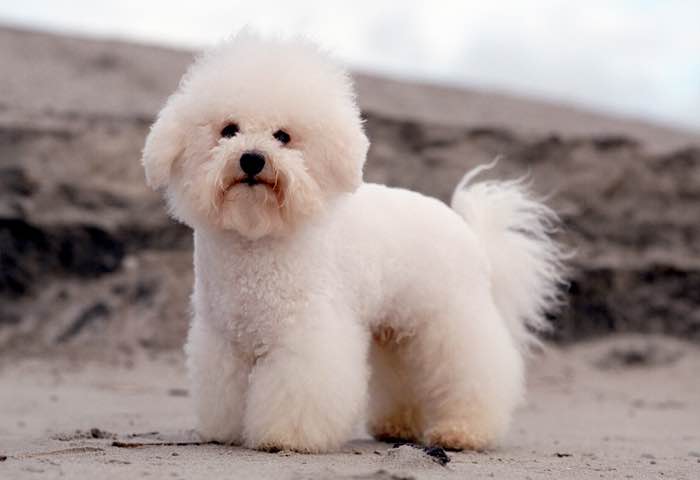
The outer coat is soft, silky and loosely curled. The Bichon has a soft undercoat as well.
Non Shedding Plush/Velvety to the touch
Colour
Grooming
A certain amount of talent with grooming shears is needed to maintain this breed in the distinctive trim seen in the show ring. Professional grooming (4-6 weeks) may be necessary if owners aren’t up to the art. Regardless of the trim, frequent bathing and brushing is a must for this breed. Including nails trimming.
Caring for Bichon Frise
Training, Socialization & Breed Specific Traits
Bichons love to be around people. If left alone for long periods of time they could develop separation anxiety issues and/or engage in naughty behaviour in the house.
Health
Highly recommended: Hip scoring, Patella, Eyes (CERF)
Recommended: Heart, Legg-Caleb- Perthes
**The latter (L-C-P) has not been a problem for our club members as far as we know.
Dental Care: As with most small breeds regular home dental care (brushing of teeth recommended, and professional dental cleanings usually every 1-2 years.
Clubs
Bichon Frise Club Of Canada
Learn moreBreed standards outline the ideal characteristics, temperament, and appearance of a breed, and ensure that a dog can carry out its original purpose. They act as a blueprint for the ideal specimen and include size, weight, colour, coat, ear set, tail set, topline, feet, movement, temperament, structure, etc.
Bichon Frise Breed StandardBreeders
Canadian Kennel Club
1 breeder