
Height
Male: 15 - 15 in
Female: 14 - 14 in
Weight
Male: 50 - 50 lbs
Female: 40 - 40 lbs
Life expectancy
8 - 13 years
Colours
Brindle, Brindle & white, +24 more
Key Characteristics
General information
Origin
As British as Big Ben, the Bulldog is believed to have evolved from the Molossian dog first brought to Britain by Phoenician traders in the 6th century BC. The breed was exploited in the sport of bull baiting, a practice that existed from Roman times. Though the Bulldog may appear to be oddly made, each point of its structure was bred into the breed to aid or protect it while attempting to overcome a bull. When bull baiting was outlawed early in the 19th century, the future looked bleak for the Bulldog until a handful of breeders set to preserving this breed that had become a symbol of British courage and tenacity. When The Kennel Club (England) was organized in 1873, the Bulldog was among the first of the breeds to be recognized.
Temperament
For a dog that once faced bulls, the Bulldog is calm and dignified with a steady, even disposition. He is resolute and courageous but not vicious or aggressive.
Activity Level
The Bulldog has a relatively low activity level and his exercise needs are easily met. The bulldog prefers a cool environment and air conditioning recommended in hot and sultry weather.
Coat
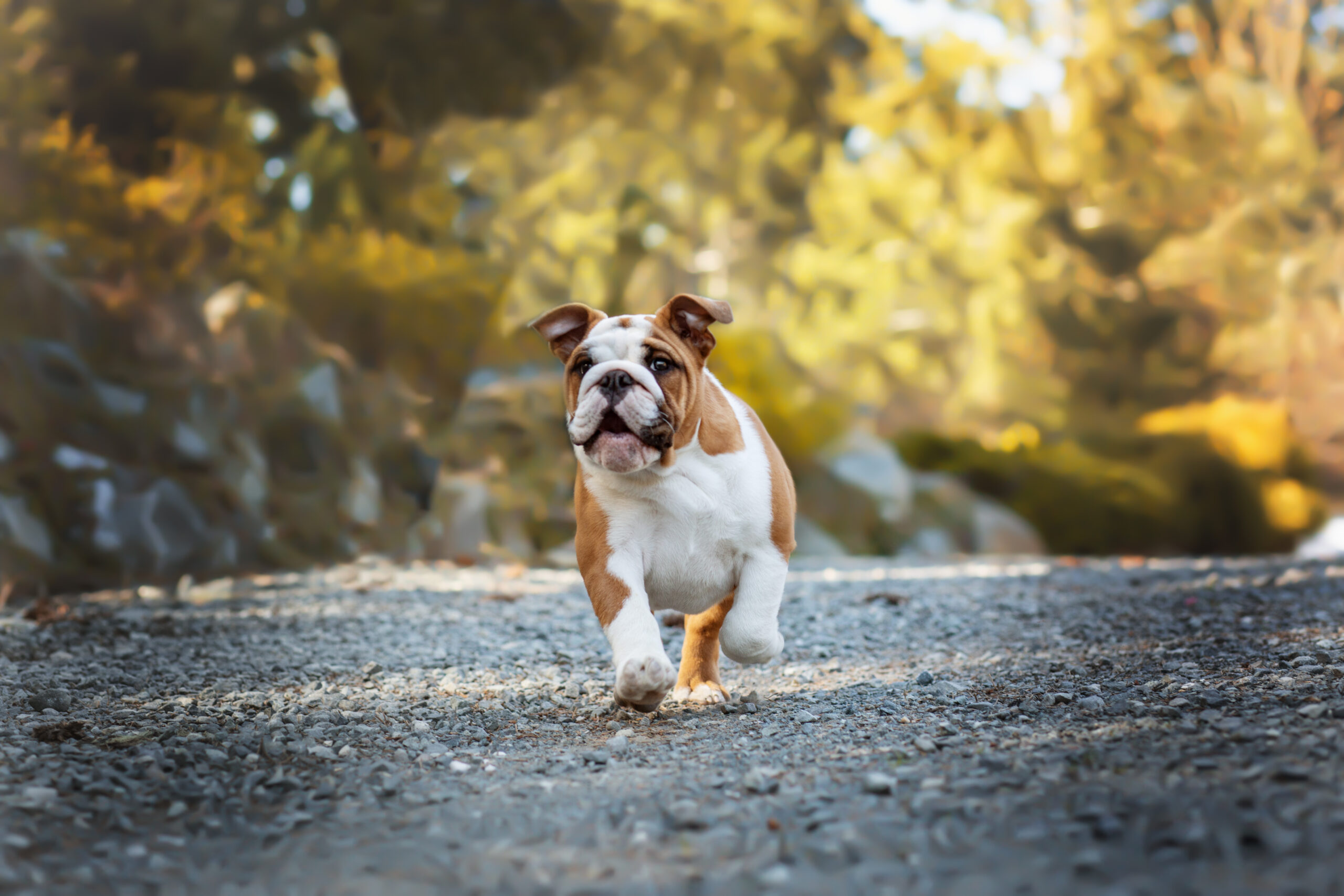
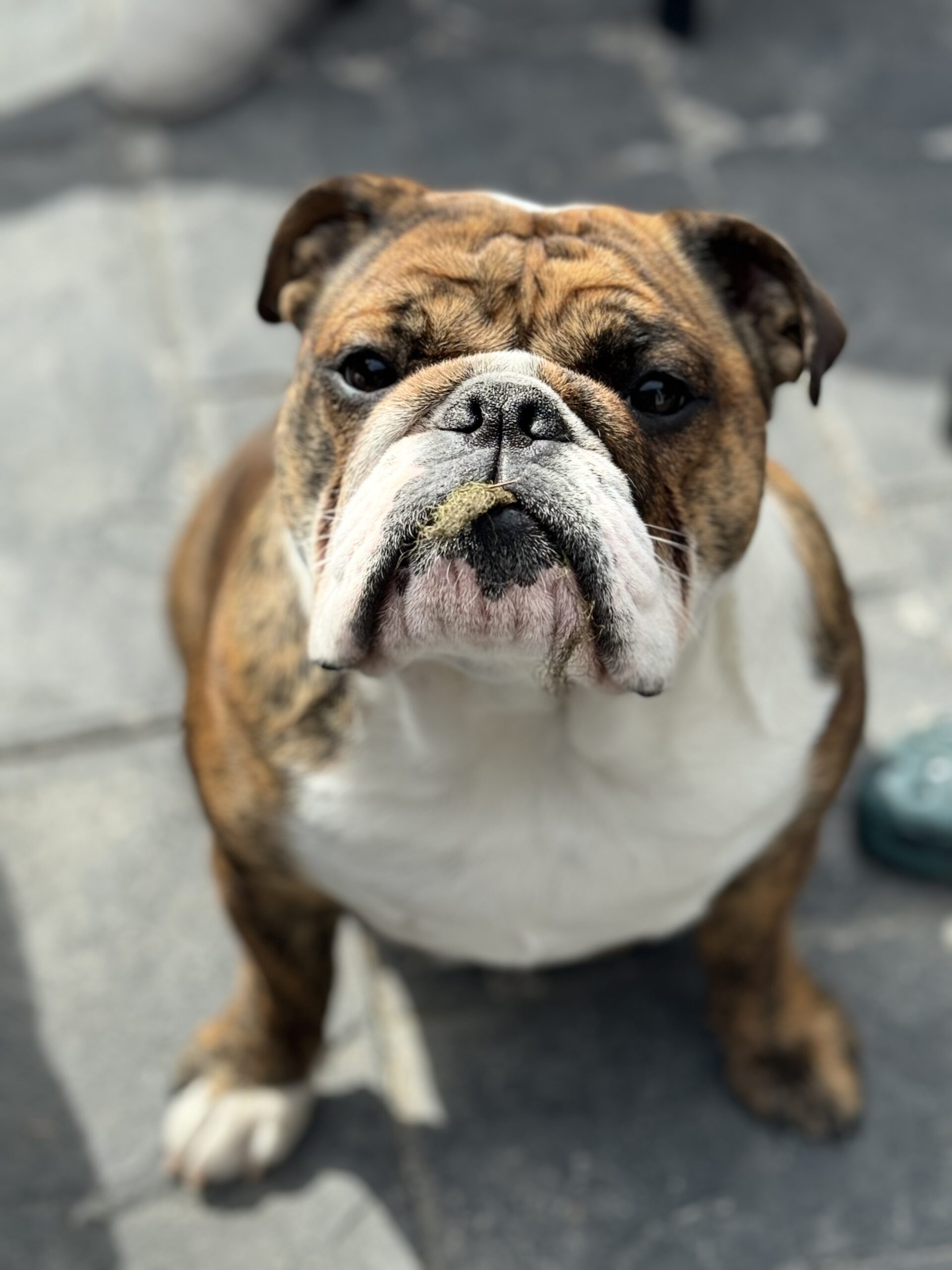
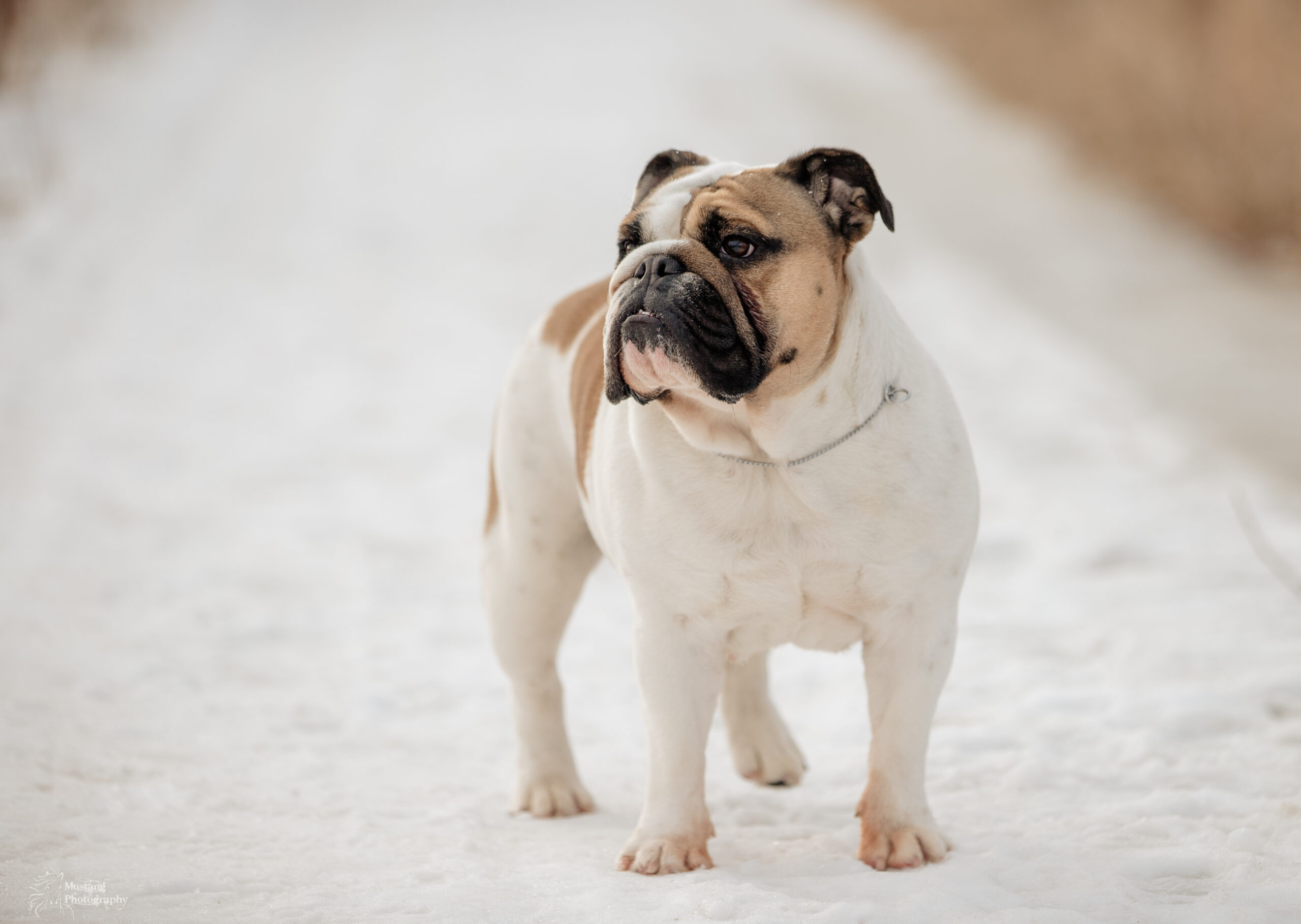
The coat is smooth, short, straight and flat, of fine texture and glossy.
Colour
Grooming
The Bulldog coat is wash and wear only to a certain extent, provided it is dried thoroughly. The wrinkles, paws and tail should be kept clean and dry at all times to prevent hot spots, yeast and irritation. The coat must be brushed regularly.
Caring for Bulldog
Training, Socialization & Breed Specific Traits
Cleaning eyes, ears and teeth once per week, keep nails short and watching weight are all important aspects of care. Basic care; deworming twice a year, daily exercise (two 15 mins walks). Frequent car rides, playdates with other dogs, meeting people and children is great socialization. Swimming pools are dangerous without supervision.
Health
Bulldogs have the same health diseases as any other breed. However, they are prone to having skin, ear and eye discomfort due to their facial wrinkles and a lack of proper care by their owners. Mild to severe breathing issues are reported by veterinarians in all brachycephalic breeds. To eliminate diseases in the bulldog, breeders have their dogs tested for Congenital Cardiac, Patellar Luxation, Tracheal Hypoplasia, Thyroid, Elbow-Hip Dysplasia, Hyperuricosuria (bladder stones) and certified normal by the Orthopedic Foundation of America (OFA) before they can be bred. A new test developed by the University of Cambridge, UK, the Respiratory Function Grading Scheme (RFGS) is also OFA certified since 2022.
Clubs
Bulldog Club Of Canada
Learn moreBreed standards outline the ideal characteristics, temperament, and appearance of a breed, and ensure that a dog can carry out its original purpose. They act as a blueprint for the ideal specimen and include size, weight, colour, coat, ear set, tail set, topline, feet, movement, temperament, structure, etc.
Bulldog Breed Standard