
Height
Male: 18 - 22 in
Female: 18 - 21 in
Weight
Male: 40 - 62 lbs
Female: 53 - 60 lbs
Life expectancy
8 - 12 years
Colours
Apricot, Black, Blue, Brown, Chocolate, Cream, +16 more
Key Characteristics
General information
Origin
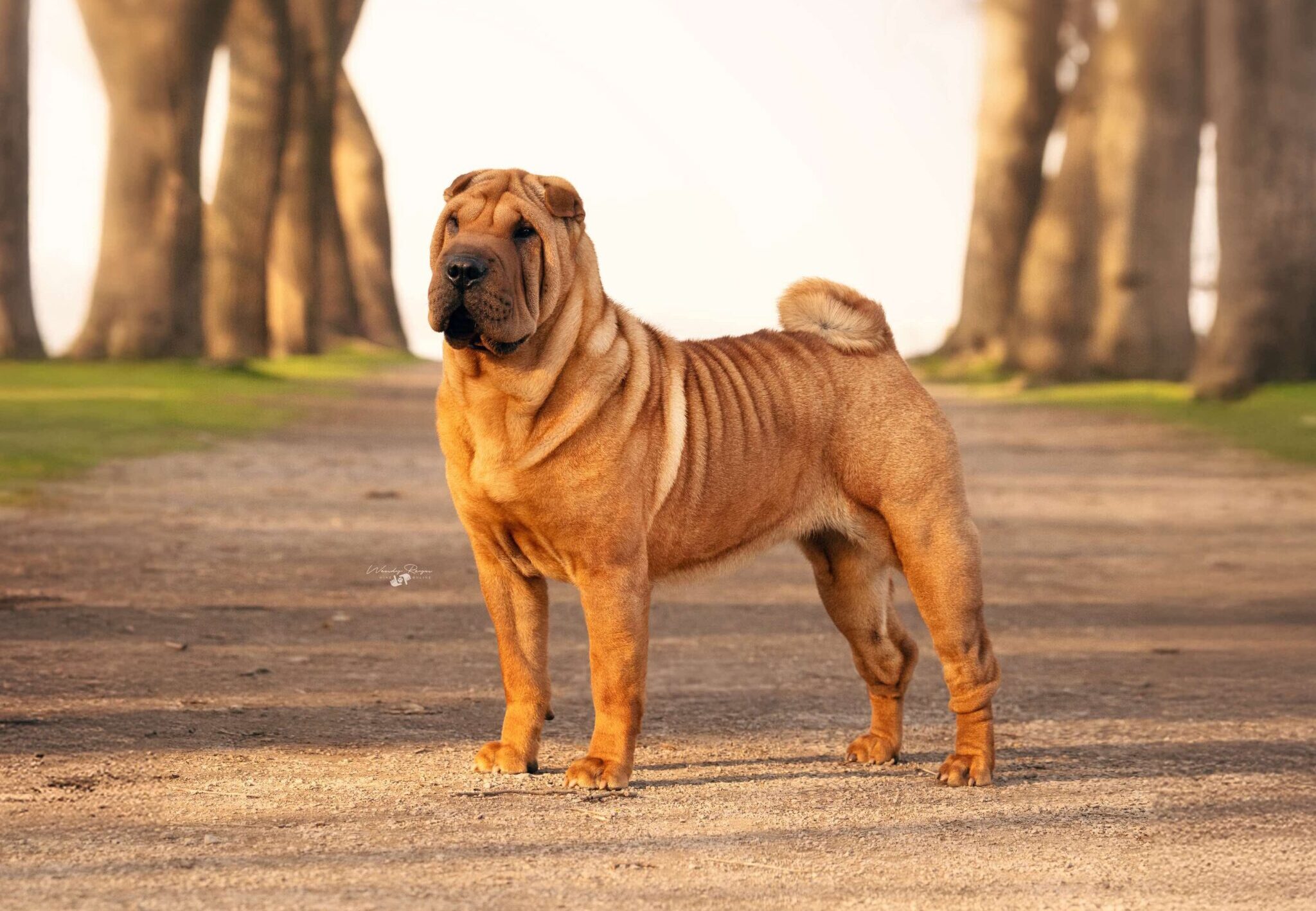
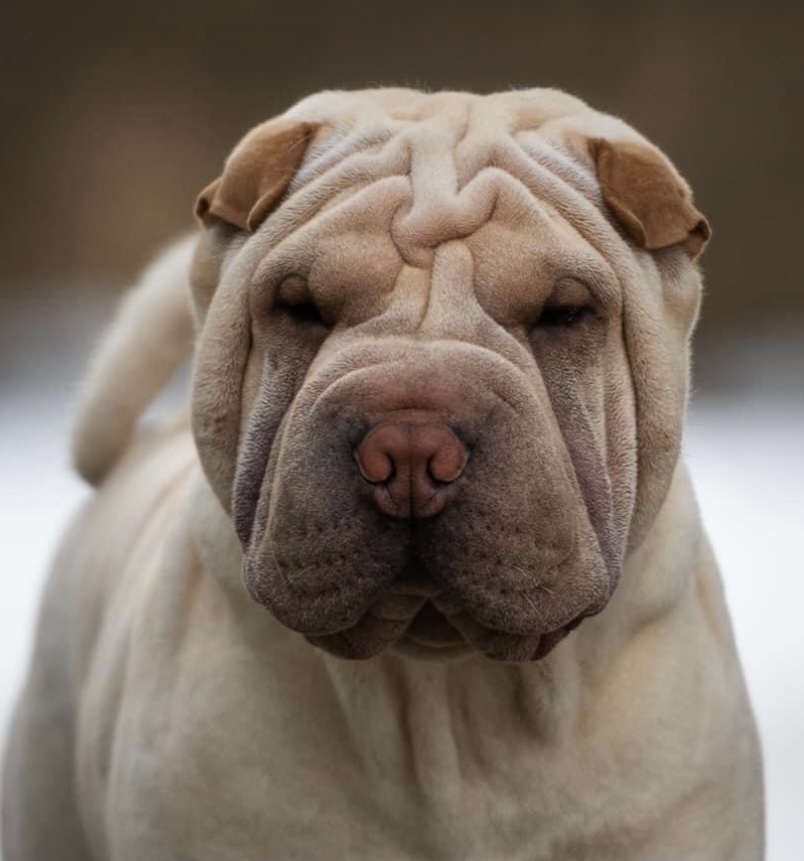
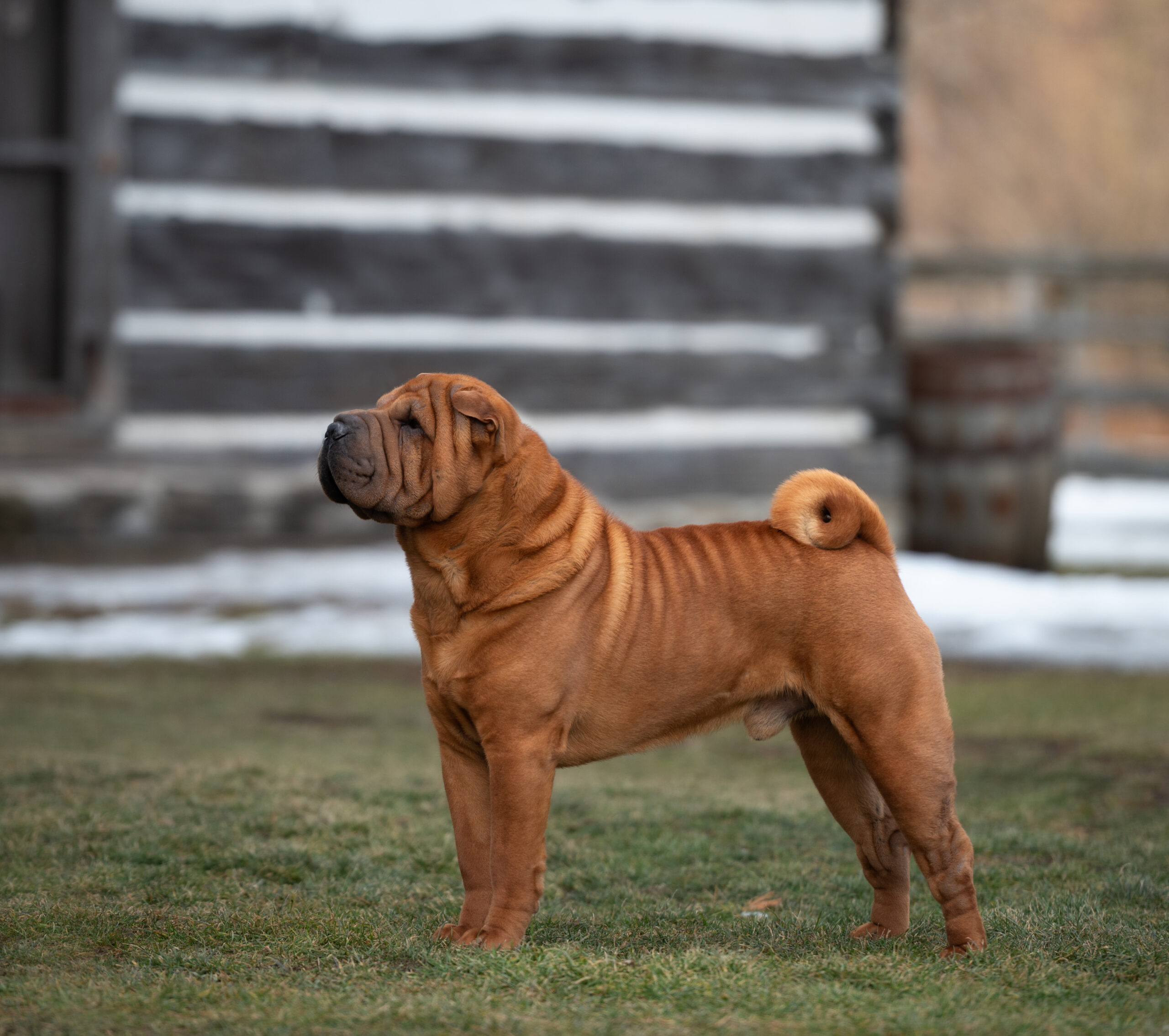
Once known as the rarest breed in the world, the ancient Chinese Shar-Pei teetered on the brink of extinction in the early 1970s when a Hong Kong fancier appealed to Americans for help in saving the breed. North Americans responded, attracted by the unusual appearance and charm of the breed. A few were imported, breeding programs were set up and the breed’s popularity fairly mushroomed. Pups start out with heavily wrinkled coats but usually manage to fill them out fairly well as adults. Like the Chow Chow, Shar-Pei have blue-black tongues.
Temperament
Though intensely loyal to their owners, Shar-Pei are usually somewhat aloof with strangers and have a natural instinct to guard home and family. They may be alert but they retain a dignified, lordly scowl along with an independent nature.
Activity Level
The Shar-Pei is not a high-energy dog and maintains a fairly calm demeanor. A daily walk satisfies its exercise requirements nicely.
Coat
One of the distinguishing features of the breed is its extremely harsh coat that is absolutely straight and stands off from the body though it may lie flatter on the limbs. Coat lengths may range from the very short ‘horse coat’ up to the ‘brush coat,’ which may be up to 1 in (2.5 cm) long.
Colour
Grooming
The harsh coat requires little grooming; however, care must be taken on the wrinkled dogs to ensure that skin problems do not develop in the folds of the skin.
Caring for Chinese Shar-Pei
Training, Socialization & Breed Specific Traits
Puppies should be socialized from the time they get their vaccination forward.
Health
The CSPCC recommends that the following test be done before breeding. At the age of 24 months or older; Hips, Elbows and patellas X-Rayed and sent to OFA to be graded. OFA Grading Dysplastic or Fair, Good or Excellent. Dysplastic results is recommended not using in a breeding program.
DNA testing as follows:
– SPAID (Shar-Pei Autoinflammatory Disease, MTBP) which will grade your dog 10 thru to 0 in how prone your dog is to be affected by Shar-Pei Autoinflammatory disease 10 being the highest. The goal would be to breed a 10 to a 6 or 2 or 0.
– Primary Open-Angle Glaucoma Primary Lena Luxation (POAG-PLL) Sha-Pei.
The SPAID and POAG-PLL are done with cheek swabs. Results you receive will be Clear, Carrier or Affected. The CSPCC recommends that you not breed an affected but can breed a Carrier to a Clear and test all puppies in your litters and try to keep only clear to breed.
Clubs
Chinese Shar-Pei Club Of Canada
Learn moreBreed standards outline the ideal characteristics, temperament, and appearance of a breed, and ensure that a dog can carry out its original purpose. They act as a blueprint for the ideal specimen and include size, weight, colour, coat, ear set, tail set, topline, feet, movement, temperament, structure, etc.
Chinese Shar-Pei Breed Standard