
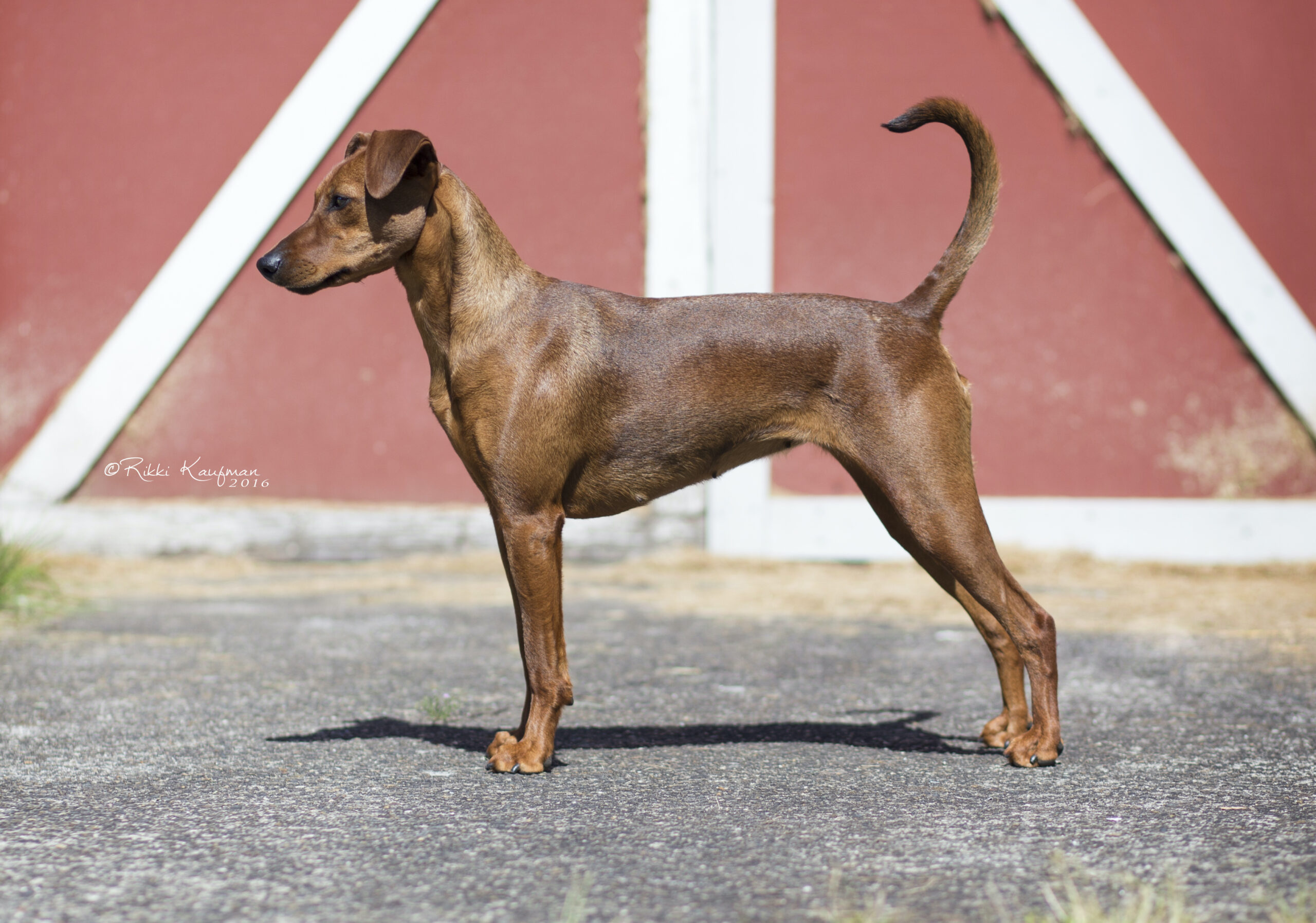
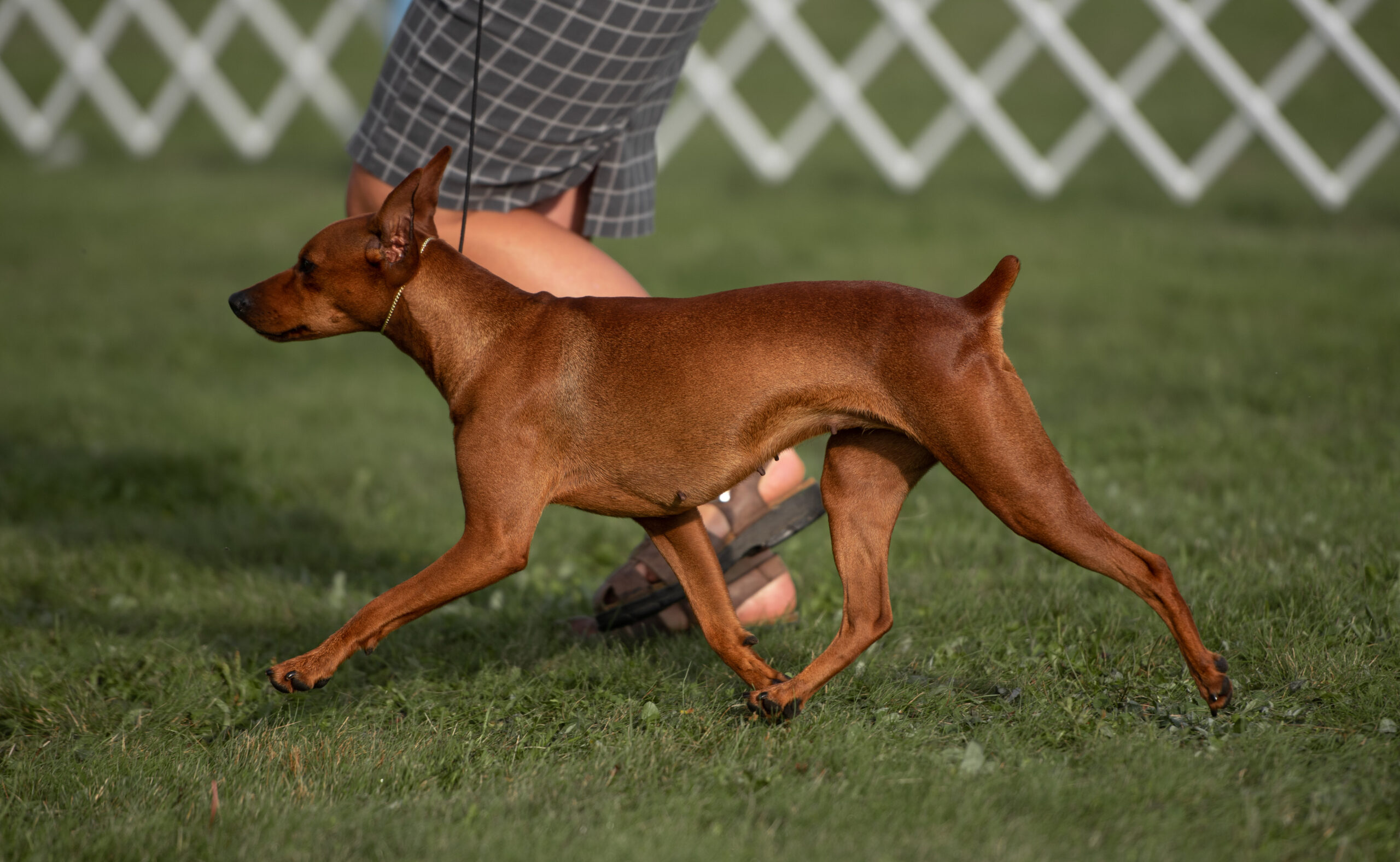
Colours
Black & red, Black & tan, Red, Stag red
Key Characteristics
General information
Origin
The German Pinscher has been accepted in the German registry since 1879, though its roots can be traced back to the Middle Ages and the Biberhund of southern Germany, a dog bred to hunt beaver, badger and otter. By the 15th century, a breed known as the Rattler evolved. It was renowned as a killer of vermin and protector of the home. The Rattler came in two varieties, rough and smooth, and the smooth is believed to be the forerunner of the German Pinscher and the rough variety is that of the Standard Schnauzer. The German Pinscher is often mistaken for a small or young Doberman Pinscher, yet it is a much older and entirely separate breed. Due to two World Wars, the German Pinscher slowly began to disappear and it remained for Herr Werner Jung to start a breeding program in the 1950s to put the breed back on its feet.
Temperament
German Pinschers are affectionate towards their humans. They are loyal to their family and protective of them. Alert and vigilant, they may be wary of strangers. The breed displays fearless courage if threatened. This intelligent and independent thinking breed has high prey drive but takes well to obedience training.
Activity Level
A very active dog, the German Pinscher is not given to excessive barking. He makes an agile and alert watchdog who does best with a job. Daily exercise is a must beyond just casual leash walking.
Coat
The coat is short, dense and close-fitting with a healthy gloss. Coarse texture is preferred to aid in protection from elements
Colour
Grooming
Little grooming is required. Nails are to be kept short and coat requires some brushing to reduce shedding.
Caring for German Pinscher
Training, Socialization & Breed Specific Traits
Early socialization and obedience training is imperative from a young age. This is an independent breed with an active, working mind, they require regular physical and mental stimulation to be content. Positive reinforcement training works best. They do not respond well to repetition.
Health
Hips and Elbows should be evaluated for dysplasia and passed by either OFA or PennHip. Advanced Cardiac screening, including an ECHO should be performed by a Cardiologist to assess for structural and functional soundness. Eyes to be tested and cleared yearly by an ophthalmologist. Recommended DNA testing for von Willebrands Disease (vWD) and degenerative myelopathy (DM).
Clubs
Breed standards outline the ideal characteristics, temperament, and appearance of a breed, and ensure that a dog can carry out its original purpose. They act as a blueprint for the ideal specimen and include size, weight, colour, coat, ear set, tail set, topline, feet, movement, temperament, structure, etc.
German Pinscher Breed Standard