
Height
Male: 27 - 32 in
Female: 25 - 31 in
Weight
Male: 100+ - 100+ lbs
Female: 78 - 100+ lbs
Life expectancy
10 - 12 years
Colours
White, White with badger markings, White, +5 more
Key Characteristics
General information
Origin
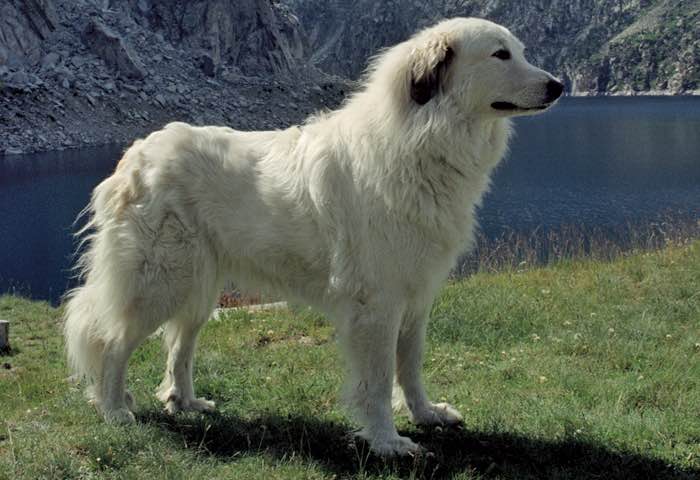
The handsome animated snowdrift known as the Great Pyrenees descended from the Molossian hounds brought to Spain by the Romans. They became established in the Pyrenean Mountains on the Franco-Spanish border and bred pure there for centuries. The Pyr was used to protect sheep from predators and guard fortresses during the Middle Ages. While on a visit to a spa in the Pyrenees in the 18th century, the Dauphin of France was so entranced by the breed that he took some puppies home and the breed became the official dog of the court of Louis XIV. Little was seen of the breed outside its homeland until the 1930s when some excellent breeding stock was imported to the U.S.
Temperament
Gentle and docile with those it knows, the Pyr is recognized as a breed that moulds itself to the moods and desires of its human companions. As a guard dog, it shows courage and a natural protectiveness.
Activity Level
Easily trained, the Pyr is a serious dog in both work and play. It displays a calm nature with those it knows. Regular outdoor exercise is a good idea for this majestic dog.
Coat
Created to withstand severe weather, the outer coat is long, flat, thick and coarse. It may be straight or undulate slightly. Underneath the weather-resistant outer coat is a heavy, fine, white undercoat for insulation.
Colour
Grooming
Lots of brushing is needed to remove dead hair and keep shedding to a minimum. Because the Pyr is essentially an outdoor breed, almost constant shedding can be a problem with the Pyr that spends part of the time indoors.
Caring for Great Pyrenees
Health
OCD, Hip Dysplasia, NDG
Clubs
Great Pyrenees Club Of Canada
Learn moreBreed standards outline the ideal characteristics, temperament, and appearance of a breed, and ensure that a dog can carry out its original purpose. They act as a blueprint for the ideal specimen and include size, weight, colour, coat, ear set, tail set, topline, feet, movement, temperament, structure, etc.
Great Pyrenees Breed Standard