
Height
Male: 10 - 11 in
Female: 10 - 11 in
Weight
Male: 12 - 18 lbs
Female: 12 - 16 lbs
Life expectancy
12 - 15 years
Colours
Black, Black & tan, Black & tan, +35 more
Key Characteristics
General information
Origin
Bred in Tibetan monasteries for over 2,000 years, Lhasas were kept by the Tibetan monks in their isolated monasteries where they served as companions and watchdogs. To this day the Lhasa will alert its owners when any stranger enters. Its name comes from the Tibetan city of Lhasa while opinions are divided on whether the Apso part comes from the word ‘rapso’ meaning goat-like (referring to the coat, of course) or from Abso Seng Kye, which means Barking Lion Sentinel Dog. Lhasas were never sold but were considered harbingers of good luck and were presented to visiting dignitaries or as gifts of esteem. That’s how the first Lhasas left the Roof of the World. The Dalai Lama presented some to occidental friends in the 1920s.
Temperament
True to his heritage, the Lhasa is high spirited and assertive, loyal and loving to those it knows but aloof and suspicious of strangers. Lhasas interact better with adults and older children. Early socialization is important.
Activity Level
Keenly watchful and alert, the Lhasa also relishes its playtime. It is a good watchdog and its small size makes him a most agreeable city pet whose exercise needs can be met with a couple daily walks.
Coat
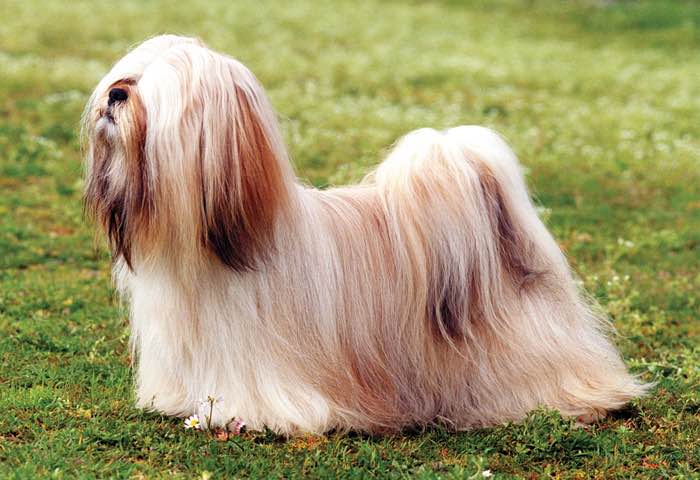
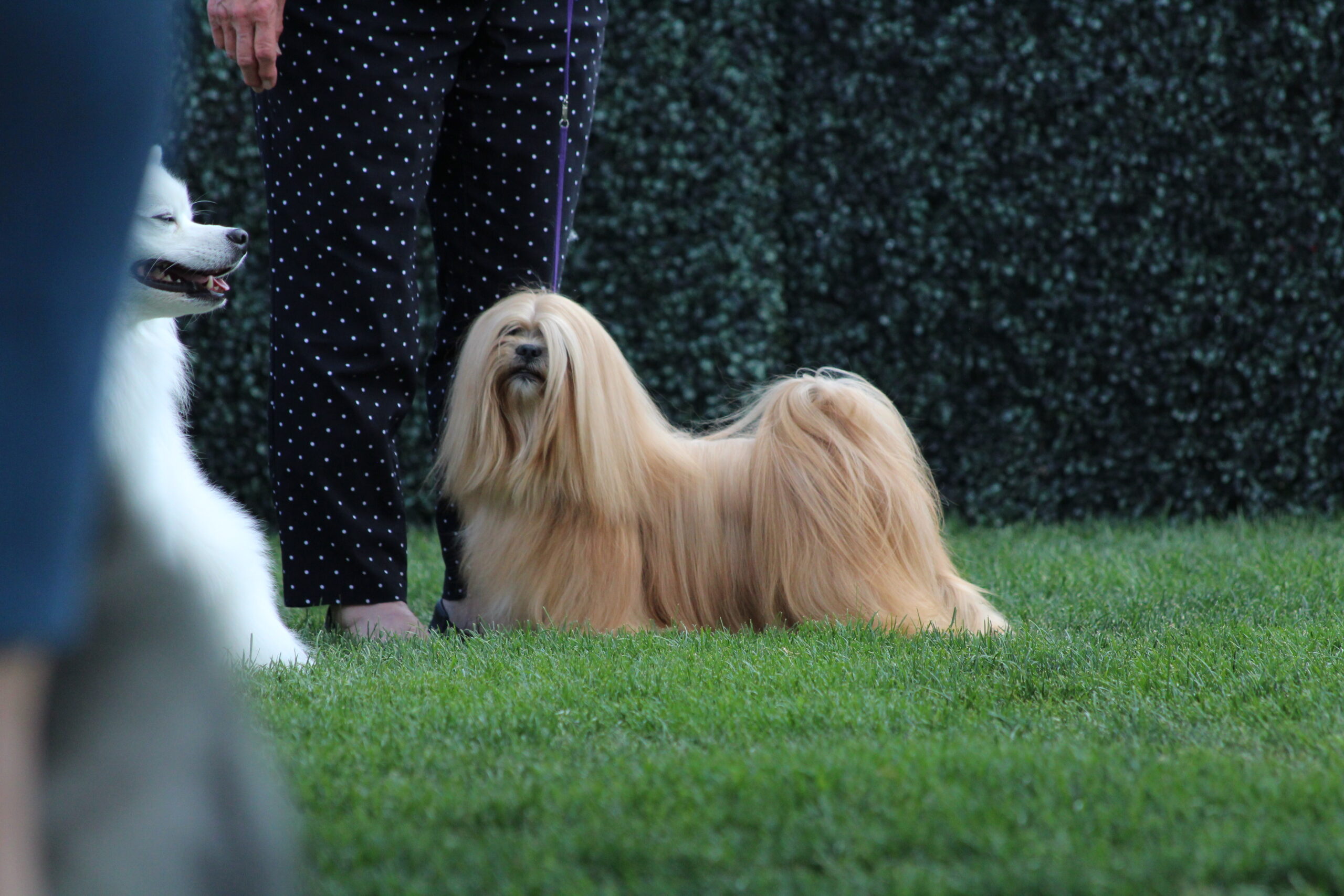
The crowning glory of the Lhasa Apso is the long, heavy, straight, hard coat, parted in the midde drapes over their body. With its abundantly coated head and plumed tail carried over the back, sometimes it’s hard to tell which end is which.
Colour
Grooming
That long, glorious double coat needs almost daily grooming to keep the undercoat free of mats and since it reaches to the ground, it needs regular cleansing with suitable coat-care products. Most pet owners will keep their Lhasa in short trimmed coat.
Caring for Lhasa Apso
Training, Socialization & Breed Specific Traits
A very hardy and healthy dog. Lhasas are intelligent and if the owner does not establish themselves as leader of the pack, then the Lhasa will run the household. Stubborn but can be trained, Lhasas will respond best to positive reinforcement and they like their treats.
Health
Common health issues umbilical hernias, cherry eye, patellar luxation.
Clubs
Lhasa Apso Canada
Learn moreBreed standards outline the ideal characteristics, temperament, and appearance of a breed, and ensure that a dog can carry out its original purpose. They act as a blueprint for the ideal specimen and include size, weight, colour, coat, ear set, tail set, topline, feet, movement, temperament, structure, etc.
Lhasa Apso Breed Standard