

Colours
White, White, lemon markings, White, +1 more
Key Characteristics
General information
Origin
The Maltese is believed to be the oldest European Toy breed. Art objects dating back 3,000 years bear likenesses of the dainty little dogs. The Maltese was described in writings of 200 BC under the Latin name of Canis Melitaeus, which may refer to the island of Malta or to the Sicilian town of Melita. From early times, the breed appears to have been known and admired throughout Europe and often had its portrait painted as it lounged on the laps of aristocratic ladies. It was also well known in Britain at the time of Elizabeth I (1558-1603). Some historians claim the breed was brought by Roman invaders while others theorize returning Crusaders brought the small charmers back as gifts for their ladies.
Temperament
The Maltese is said to be among the gentlest mannered of all little dogs. The breed is intelligent, affectionate and seemingly fearless.
Activity Level
A vigorous canine, the Maltese is always ready for a romp. Its small size makes the Maltese a fine pet for limited accommodations. His exercise needs are minimal.
Coat
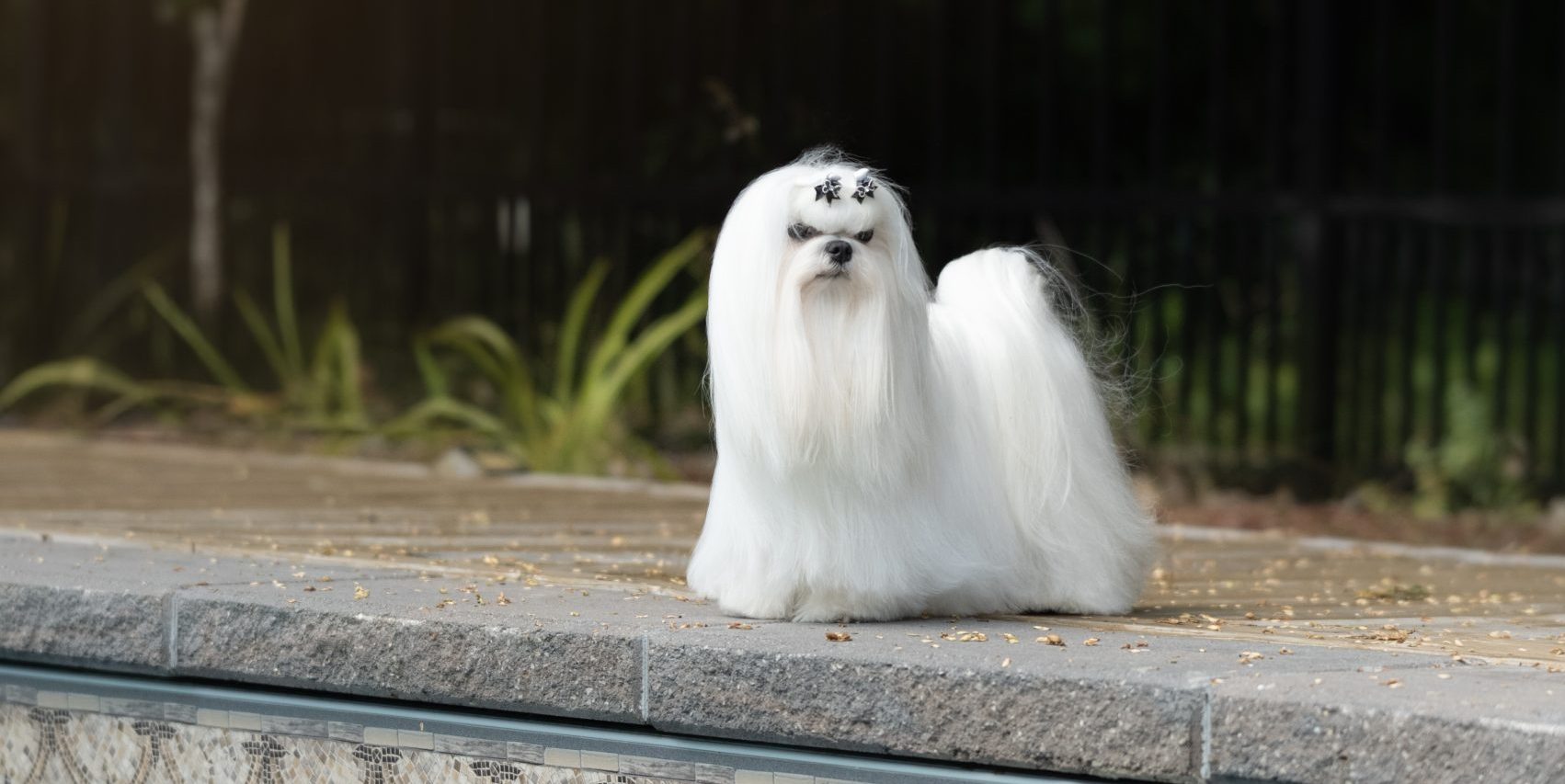
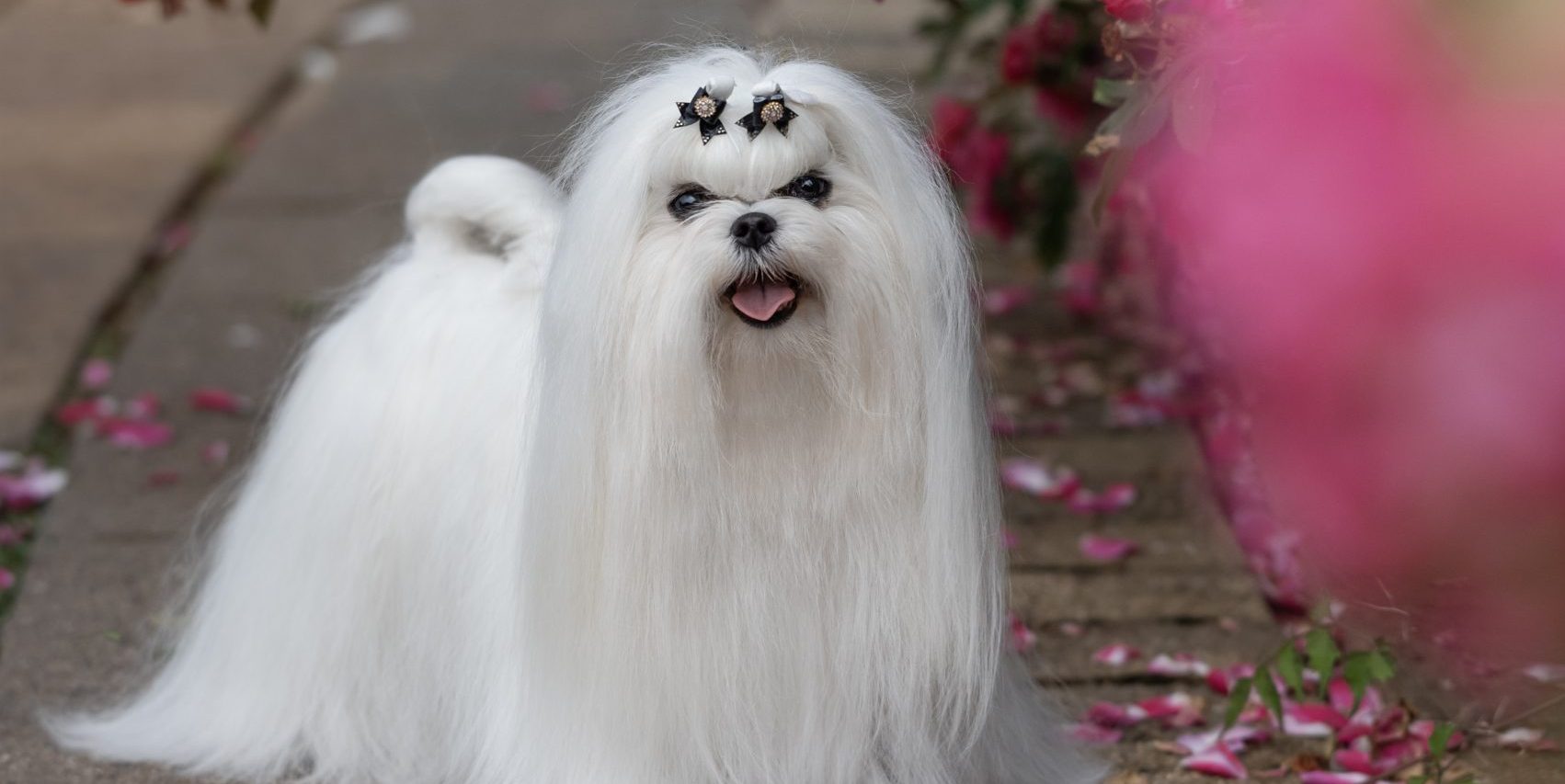
The single coat (no undercoat) is flat, silky and hangs straight to the ground from a centre part running from nose to tip of tail.
Colour
Grooming
That lovely coat needs daily brushing to stay tangle-free and frequent bathing to keep it sparkling white.
Caring for Maltese
Training, Socialization & Breed Specific Traits
Maltese require training for separation anxiety.
Health
Serious health concerns are liver shunt, degenerative myelopathy (dm), cardiac.
Less serious, patella luxation, eye conditions, dental, allergies.
Clubs
Breed standards outline the ideal characteristics, temperament, and appearance of a breed, and ensure that a dog can carry out its original purpose. They act as a blueprint for the ideal specimen and include size, weight, colour, coat, ear set, tail set, topline, feet, movement, temperament, structure, etc.
Maltese Breed Standard