
Height
Male: 18 - 21 in
Female: 17 - 20 in
Weight
Male: 45 - 51 lbs
Female: 37 - 43 lbs
Life expectancy
10 - 15 years
Colours
Golden red & white, Orange, +3 more
Key Characteristics
General information
Origin
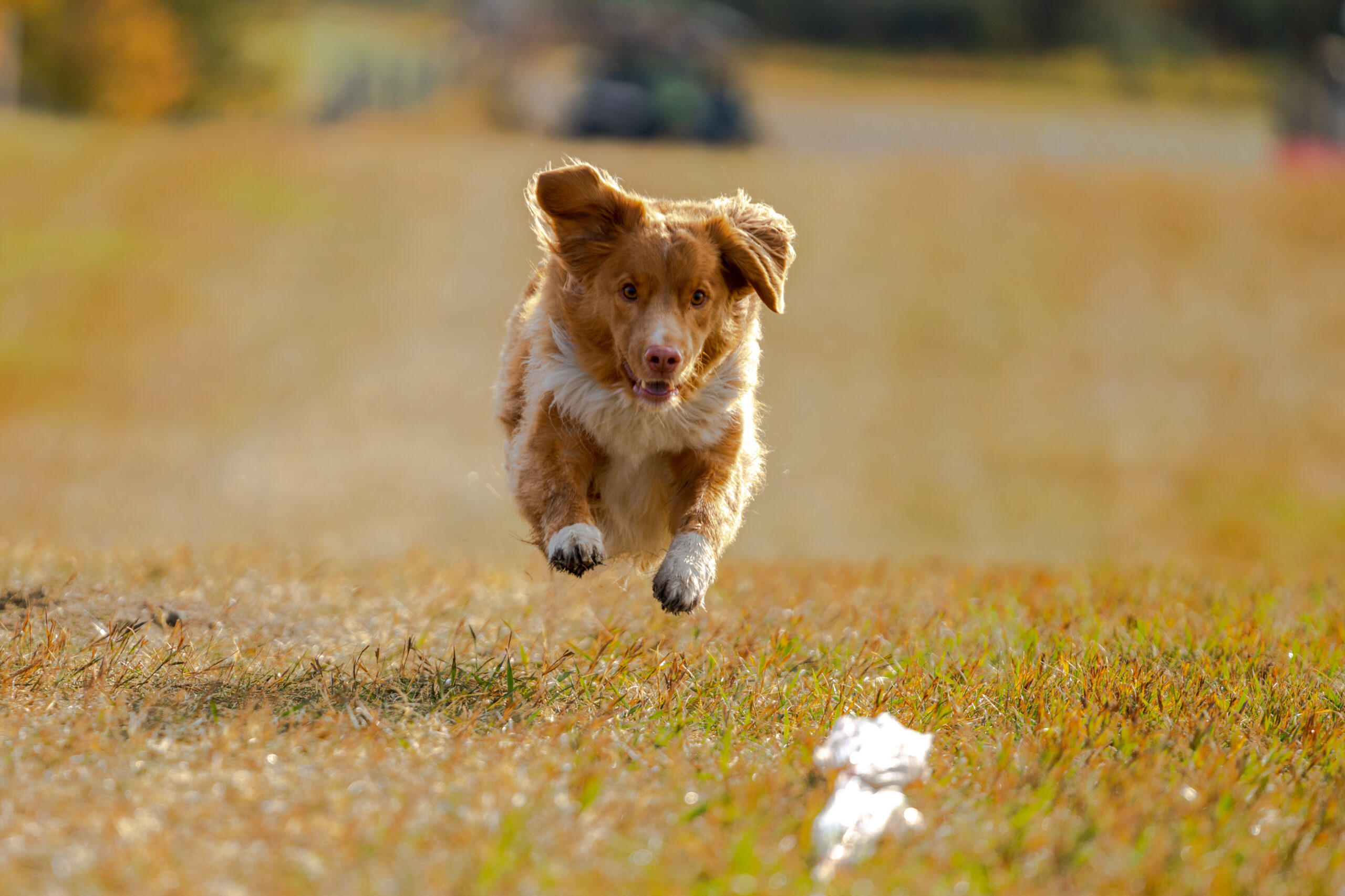
The Nova Scotia Duck Tolling Retriever was developed in Yarmouth County, Nova Scotia in the early 19th century. Its’purpose is to toll (lure) and retrieve waterfowl. The tolling dog runs, jumps and plays along the shoreline in full view of a flock of ducks, occasionally disappearing from sight and then quickly reappearing, aided by the hidden hunter who throws a stick or a ball for the dog. This technique is used to entice the ducks that are rafted offshore to approach within firing range by arousing their curiosity. It’s a trick used by the fox. Hunters saw this technique of the fox and began developing a dog to do the same thing. The Tollers were a mixture of retrievers, spaniels and setters with a possible farm collie cross thrown in. The breed was perfected in the latter half of the 19 century. The breed was recognized by The Canadian Kennel Club in 1945 and named the Nova Scotia Duck Tolling Retriever.
Temperament
Highly intelligent and easy to train, the Toller has already made a name for itself as a versatile dog in performance sports. His playfulness, which is also a part of tolling, also makes him an entertaining, loyal companion.
Activity Level
A dog of great endurance, the Toller is also a strong swimmer and a natural retriever, both on land and water. The breed loves to work and requires lots of outdoor exercise.
Coat
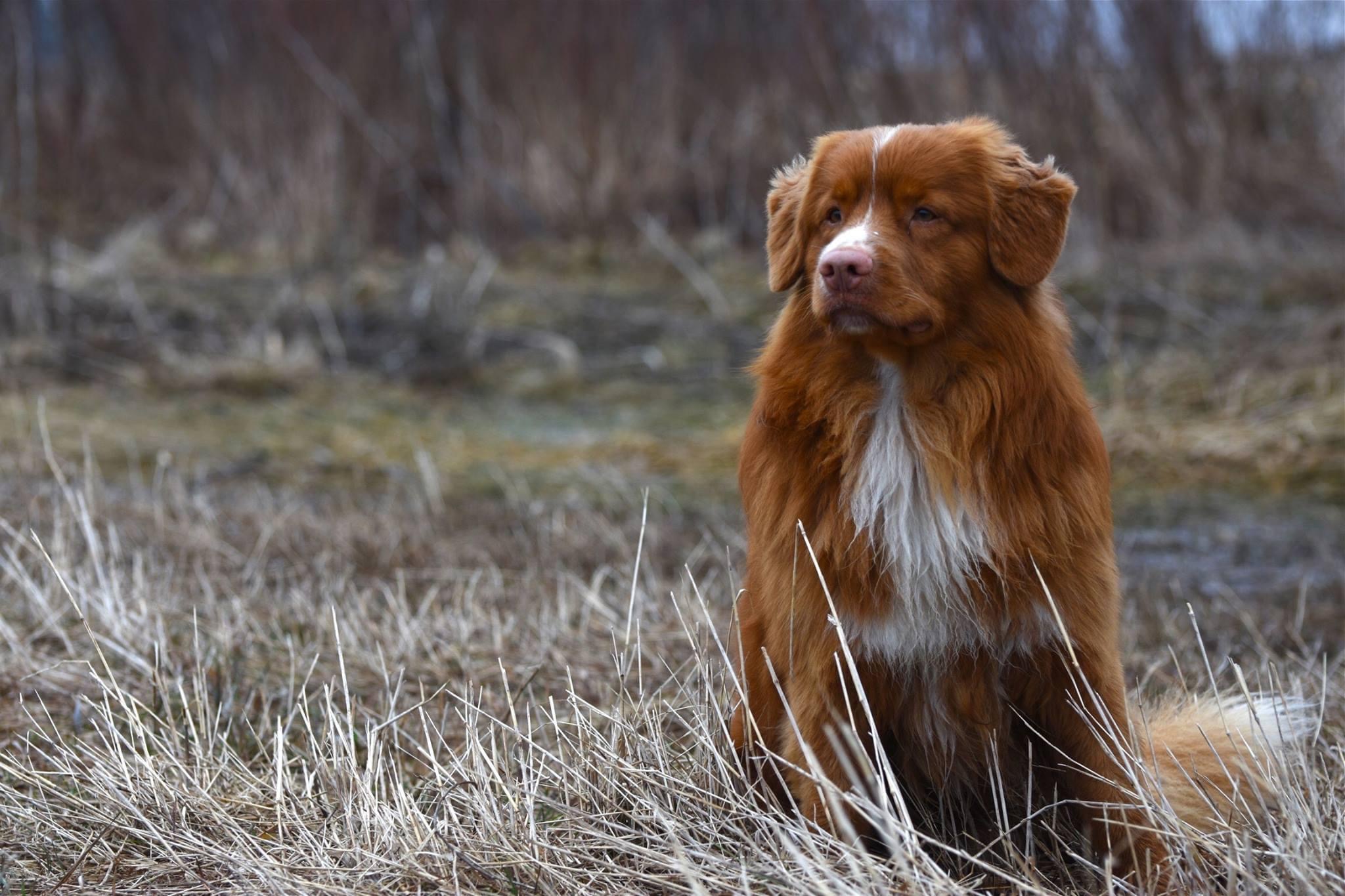
The Toller has a medium-length, water-repellent double coat with a softer, dense undercoat. The coat may have a slight wave on the back but otherwise straight with feathering at the throat, back of thighs, forelegs and tail.
Colour
Grooming
Grooming consists of frequent brushing to remove dead hair and keep the undercoat free of mats. Regular trimming of nails, feet and ears are recommended.
Caring for Nova Scotia Duck Tolling Retriever
Training, Socialization & Breed Specific Traits
Energy levels must be met to keep the Toller happy and healthy.
A highly intelligent dog that will become bored with repetitive type training techniques.
Their sensitive nature requires positive training techniques for the best outcome.
Health
The following health tests are required or recommended for screening Tollers in a current breeding program: CAER Eyes, Hip and Elbow Dysplasia, Thyroid, Cardiac, Patellar Luxation, Dentition. DNA tests as follows Juvenile Addison’s Disease (JADD), Cleft Palate (Cp1), Cleft Lip/Palate/Syndactyly (CLPS), Cardiac Laminopathy (CLAM), Cerebellar Degeneration and Myositis Complex (CDMC), Degenerative Myelopathy (DM), Degenerative Encephalopathy (DE) and Dilute (D Locus) for the Buff gene. Progressive Retinal Atrophy (PRA-prcd), Collie eye anomaly and choroidal hypoplasia (CEA) and Brucellosis.
Additional testing could include the Liver shunt research and the MDR1 gene.
Clubs
Nova Scotia Duck Tolling Retriever Club Of Canada
Learn moreBreed standards outline the ideal characteristics, temperament, and appearance of a breed, and ensure that a dog can carry out its original purpose. They act as a blueprint for the ideal specimen and include size, weight, colour, coat, ear set, tail set, topline, feet, movement, temperament, structure, etc.
Nova Scotia Duck Tolling Retriever Breed Standard