
Colours
Black & tan, Black grizzle & tan, +8 more
Key Characteristics
General information
Origin
With webbed feet and the ability to swim for hours, the Otterhound is definitely a water dog. Used in Britain to swim down the otter that robbed the streams of fish, the Otterhound has been known there since the 13th century. Though the breed’s ancestry is uncertain, it is believed the Bloodhound and Southern Harrier may have contributed to its makeup. When pollution made both fish and otter scarce, the otter became a protected species in 1978 and the breed’s usefulness came to an abrupt halt. Two purebred packs remained and the owners were determined to keep the breed alive. An association was formed, a standard was drawn up and the Otterhound became a show dog. On this continent, the Otterhound has been used to hunt mink, raccoon, mountain lion and bear.
Temperament
The Otterhound is described as amiable, boisterous and even-tempered, displaying unfailing devotion to its owner.
Activity Level
The breed’s working qualities have always been emphasized. This is a dog that should be kept in lean, well-muscled condition and needs lots of outdoor exercise, including some water where it can hone its swimming skills. The Otterhound is best suited for country living.
Coat
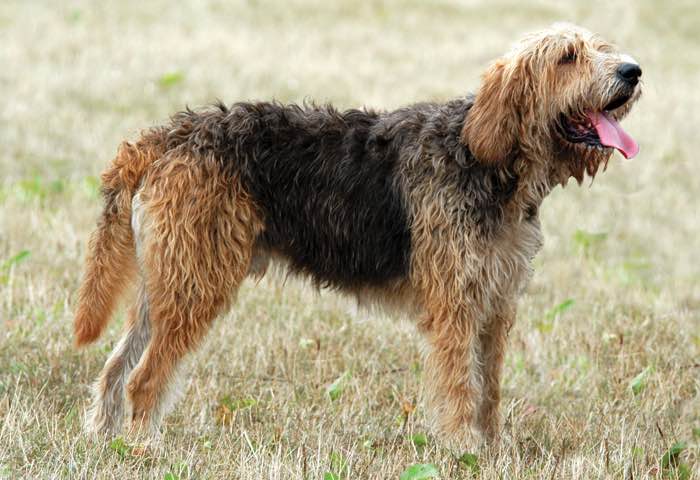
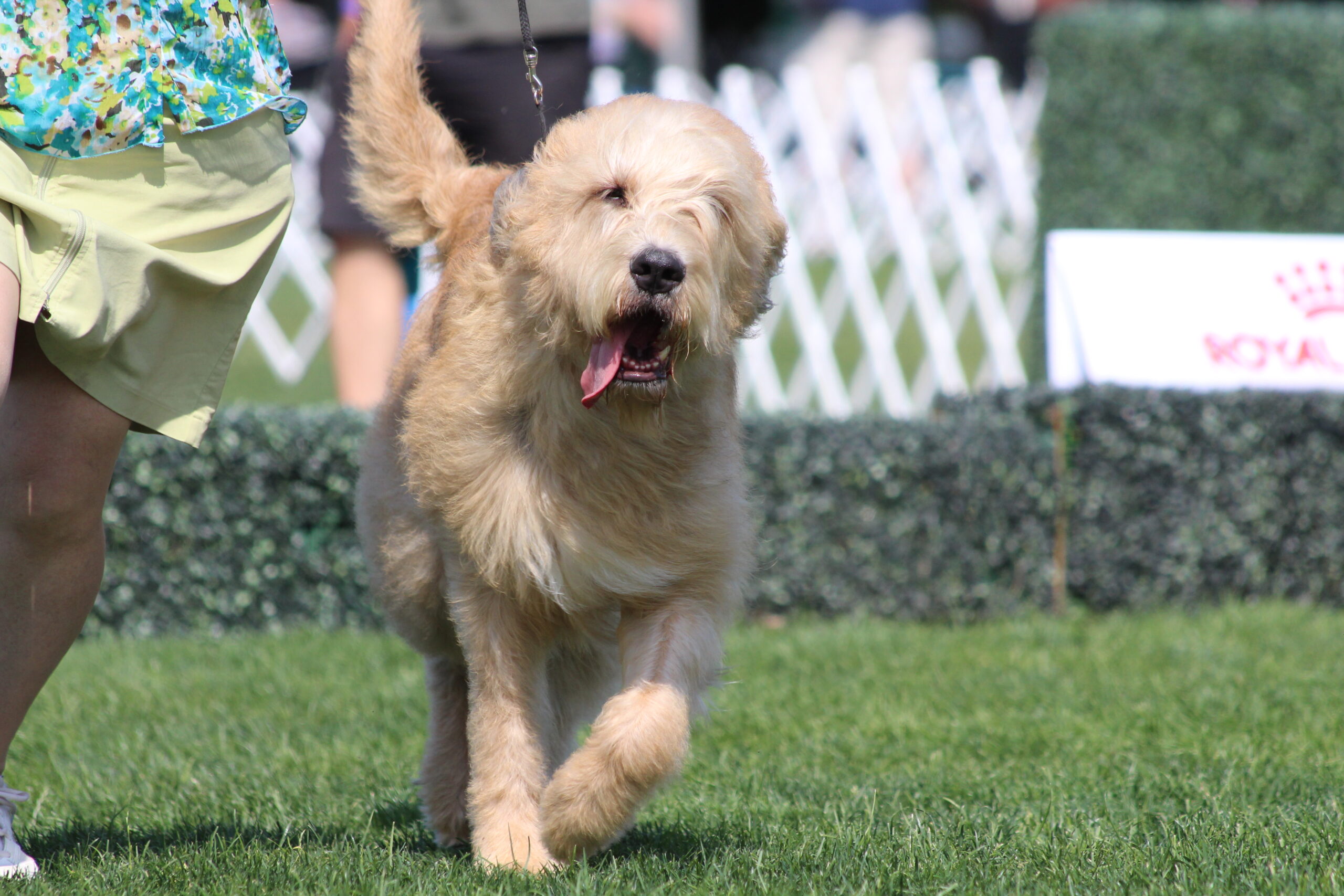
The outer coat is dense, rough, coarse and crisp. It’s natural to have softer hair on the head and lower legs. Of importance is the water-resistant undercoat of short, woolly, slightly oily hair. The breed should be able to stand any amount of immersion in water.
Colour
Grooming
The Otterhound is shown in a natural state with no sculpturing or shaping of the coat allowed. A good going-over with a slicker brush should suffice.
Clubs
Breed standards outline the ideal characteristics, temperament, and appearance of a breed, and ensure that a dog can carry out its original purpose. They act as a blueprint for the ideal specimen and include size, weight, colour, coat, ear set, tail set, topline, feet, movement, temperament, structure, etc.
Otterhound Breed Standard