
Height
Male: 24 - 27 in
Female: 22 - 25 in
Weight
Male: 55 - 75 lbs
Female: 45 - 60 lbs
Life expectancy
12 - 16 years
Colours
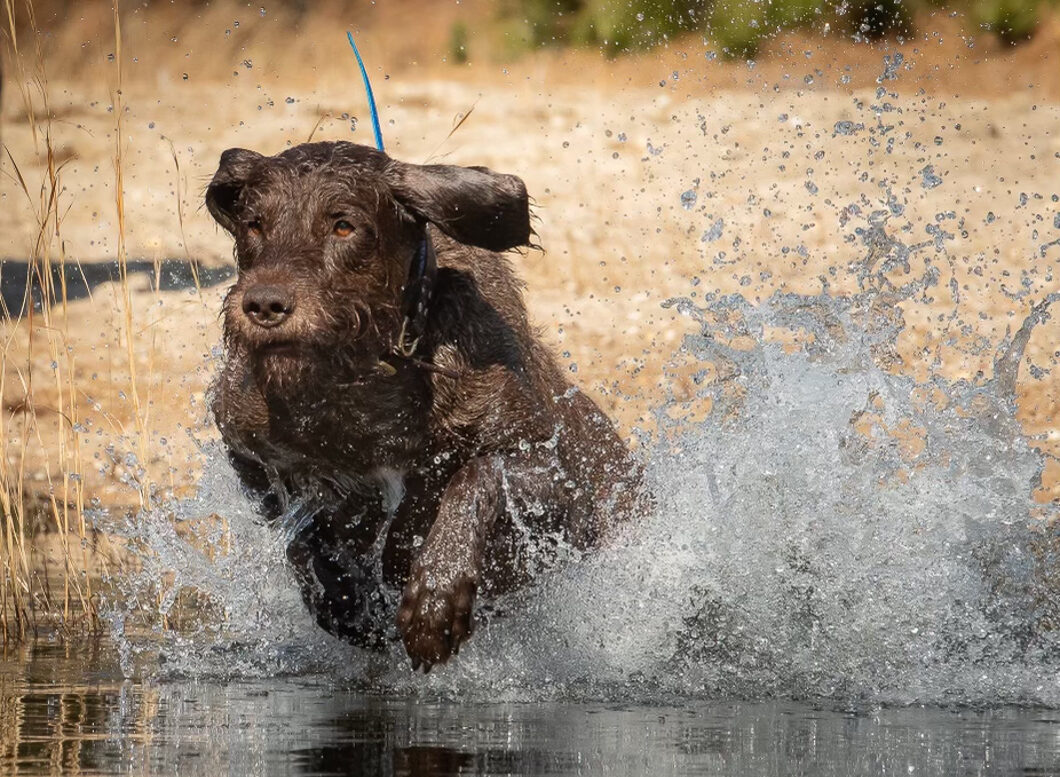
Brown, Dark liver, Light brown
Key Characteristics
General information
Origin
The Pudelpointer breed was started in 1881 in Germany, based on the idea of the ideal versatile hunting dog as imagined by Sigismund Freiherr (Baron) von Zedlitz und Neukirch, also known as “Hegewald”. Baron von Zedlitz used his influence with other dog breeders to collaborate on the creation of the breed by crossing English pointers with German water dogs (pudels). The first pairing was done using a black Pudel bitch named “Molly”, owned by a forester from Poland, and a brown and white Pointer named Tell, owned by Friedrich III, the future Emperor of Germany and King of Prussia. In all, 11 Pudels and 80 Pointers were used over 30 years to create the Pudelpointer as it’s known today.
Temperament
Their character should indicate enthusiasm for work, keenness, spark, and strong nerves. They should be neither shy, nor aggressive and display a calm, self-controlled, even temperament with distinct hunting instinct without game or gun shyness.
Activity Level
A keen hunting dog, the Pudelpointer needs plenty of outdoor exercise and likes to work. The mental stimulation provided by regular training is a key component to exercise their intelligence.
Coat
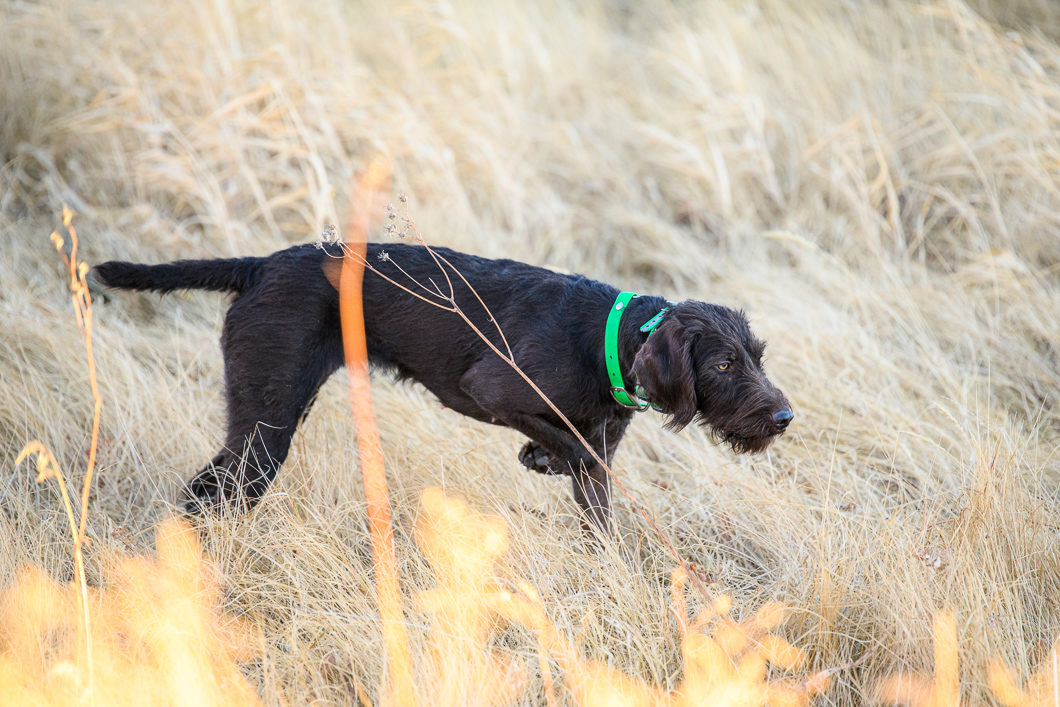
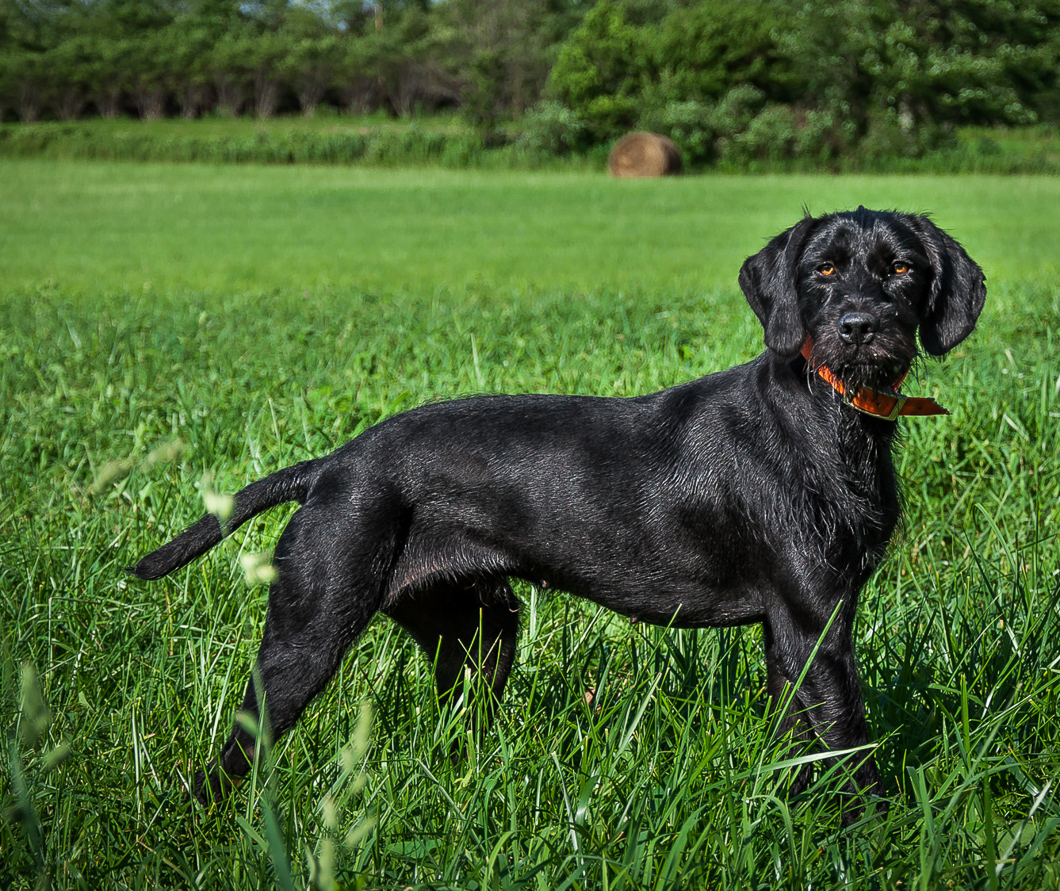
The coat should be dense, harsh and rather tight to the body with fine woolly undercoat, and by its density and harshness the coat should provide as good of protection against weather and injuries as possible. Pudelpointers should have pronounced eyebrows and “bearded” muzzles.
Colour
Grooming
A weekly brushing will remove loose hair. A wiry coat can benefit from regular stripping of the dead hair, to keep it healthy and provide better protection as new coat grows in.
Caring for Pudelpointer
Training, Socialization & Breed Specific Traits
The Pudelpointer is a very family oriented, interactive breed, which benefits from early socialization and positive reinforcement training methods. They love to be part of the family and will likely want to be with you wherever you are.
Health
Though there are currently no specific or consistent health concerns with the Pudelpointer, standard practice for all properly vetted breeding dogs is to make sure they are certified free of Hip Dysplasia.
Clubs
North American Pudelpointer Society
Learn moreBreed standards outline the ideal characteristics, temperament, and appearance of a breed, and ensure that a dog can carry out its original purpose. They act as a blueprint for the ideal specimen and include size, weight, colour, coat, ear set, tail set, topline, feet, movement, temperament, structure, etc.
Pudelpointer Breed Standard