
Height
Male: 13 - 20 in
Female: 12 - 19 in
Weight
Male: 28 - 33 lbs
Female: 22 - 28 lbs
Life expectancy
9 - 15 years
Colours
Black, Fawn, black mask, Grey, Grey reddish black, +3 more
Key Characteristics
General information
Origin
With his roots in central Asia, the Puli was brought to Hungary by the Magyars about 1,000 years ago. Researchers believe the Puli may have a common ancestry with the Tibetan Terrier since both share so many physical characteristics and since both originated in Asia and travelled to new territories with nomadic tribes. For centuries, the Puli was treasured for its herding instinct and was used to drive sheep, and also cattle, swine, and horses. But it wasn’t until the end of the 19th century and the advent of dog shows that any attempt was made to classify it as a pure Hungarian breed or to keep accurate breeding records. The breed’s history was researched by biologists and veterinarians and by 1920, an ideal type had been established and a standard was drawn up.
Temperament
An affectionate, intelligent, devoted and home-loving companion, the Puli is sensibly suspicious of strangers and makes an efficient watchdog.
Activity Level
Lively and nimble, the Puli can be a canine acrobat. True to his herding nature, he is agile, light on his feet and able to change direction instantly. He relishes activity and enjoys having a job to do.
Coat
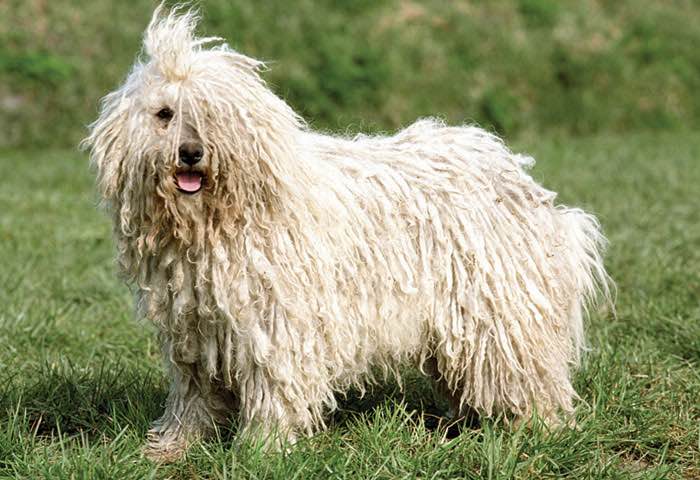
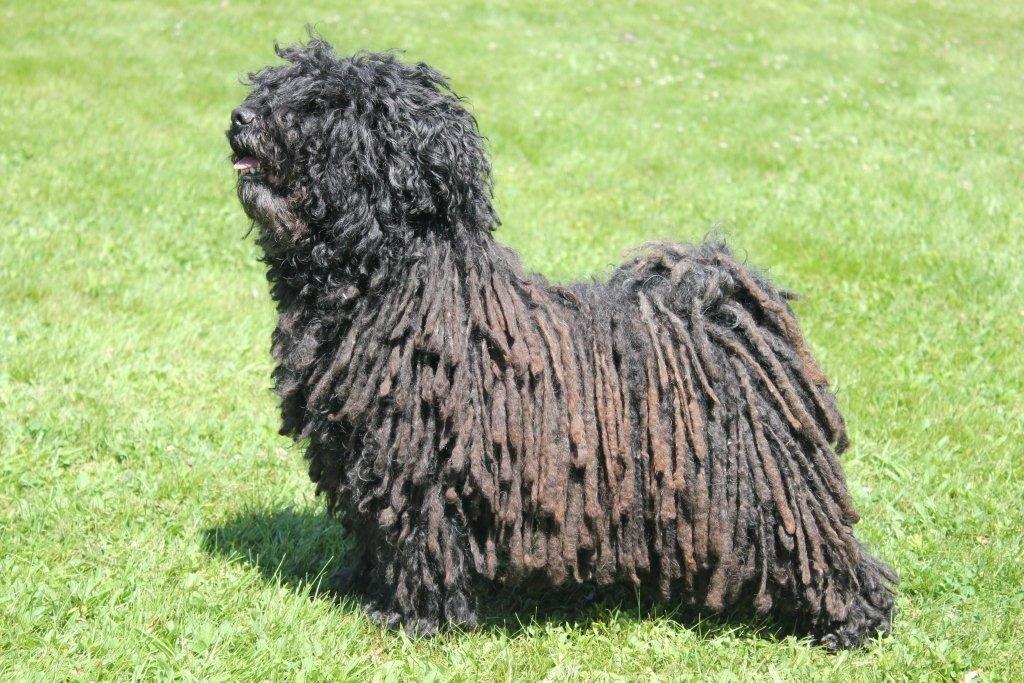
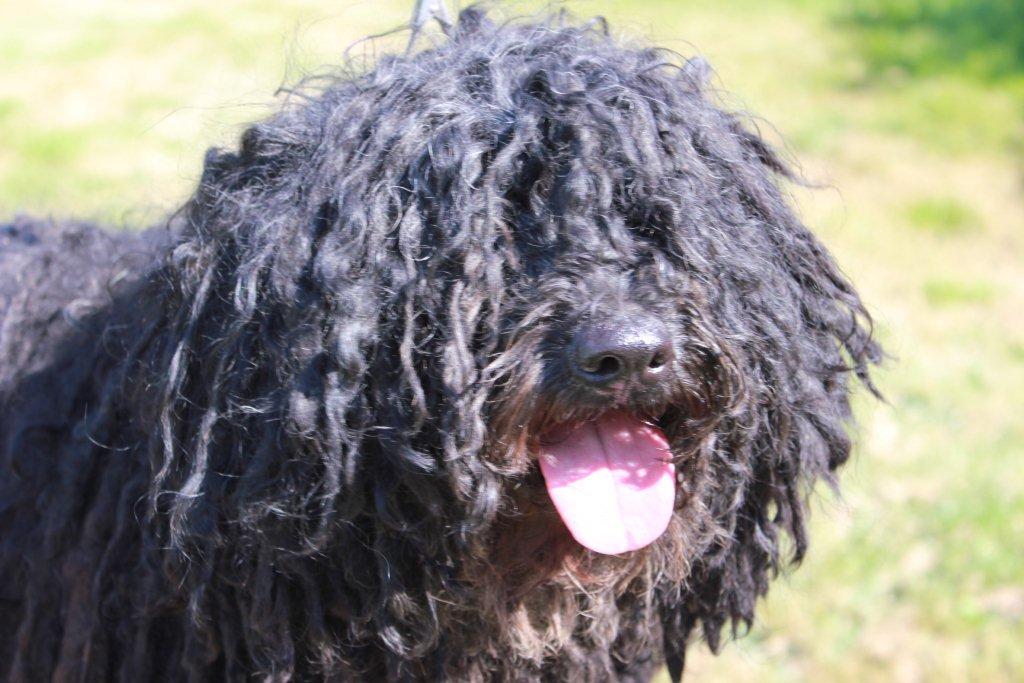
A striking characteristic of this breed is its heavily corded coat. The dense, weather-resisting double coat forms cords that may vary from wide, flat strands to small round cords. The cording process begins when the puppy coat shows the tendency to form into bunches and cording will generally be complete over the entire dog by the age of two.
Colour
Grooming
The cording process may need a little help to keep cords even in size. The cords are kept separate from each other at the skin by gently tearing them apart if necessary, and the cords are trimmed with scissors to keep them neat.
Caring for Puli
Training, Socialization & Breed Specific Traits
The Puli is a devoted and home-loving companion, often sensibly suspicious of strangers, and should be well socialized as a puppy. He will appreciate an outlet for his energy in performance events, or accompanying his owner in outdoor pursuits. Caring for the corded coat is very different from brushing and combing, but is not hard for most owners.
Health
This breed should be checked for hip dysplasia (HD), luxating patella’s, and for eye diseases.
Clubs
Puli Canada
Learn moreBreed standards outline the ideal characteristics, temperament, and appearance of a breed, and ensure that a dog can carry out its original purpose. They act as a blueprint for the ideal specimen and include size, weight, colour, coat, ear set, tail set, topline, feet, movement, temperament, structure, etc.
Puli Breed Standard