
Height
Male: 8 - 11 in
Female: 8 - 11 in
Colours
Black & tan, Blue & tan, Brown & tan, +4 more
Key Characteristics
General information
Origin
The Russkiy Toy was originally bred from the English Toy Terrier. By the beginning of the 20th century, the Russkiy Toy was one of the most popular dogs in the country. Following the October Revolution (between 1920 and 1950) their numbers plummeted due to the fact that they were linked to the Russian aristocracy. When the Iron Curtain fell, the breed numbers decreased even further as many new dog breeds were imported. Only in the mid-fifties did Russian dog breeders begin the revival of the breed. There are two types coats. The smooth-coated variety was previously known as the Russian Toy Terrier and the long-coated as the Moscow Long Haired Toy Terrier. Both were brought together under the same Russian Toy Terrier name in 1988 and the “Terrier” was dropped from the name. Until the 1990s, the breed was virtually unknown outside of Russia. As one of the world’s smallest dogs and its similarities to the Chihuahua, the two are often compared.
Temperament
Originally developed as a ratter and watchdog, the Russkiy Toy is alert and active, and can be very vocal and protective of its owners. The behaviour between the males and females can be significantly different.
Activity Level
Although it is tempting to carry these dainty creatures about, these are active little dogs that need a daily walk or a good romp in a safe, large fenced-in yard.
Coat
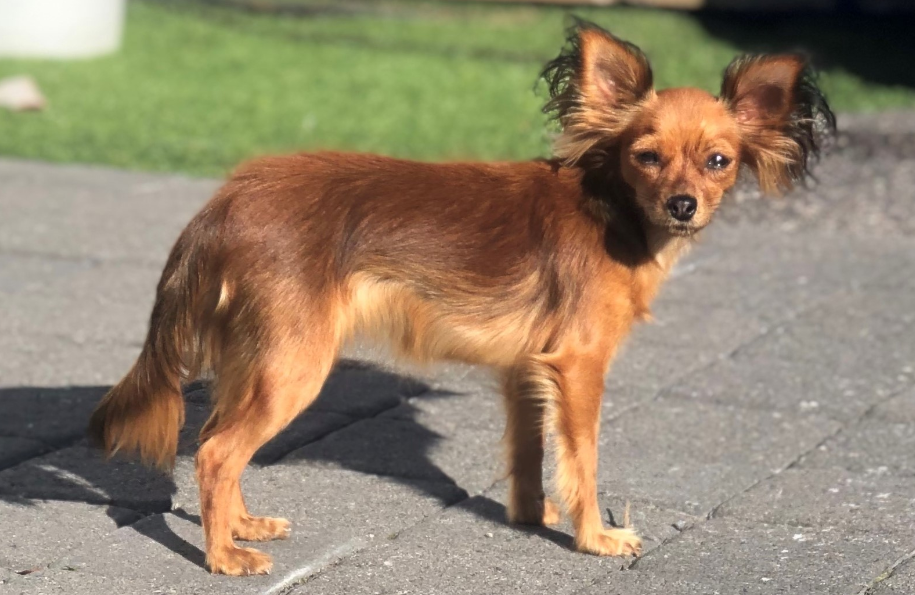
The Russkiy has two coat types. The smooth-haired coat is short and close-lying without an undercoat or bald patches. The long-haired variety is covered with moderately long, straight or slightly wavy hair, with long ear fringes and long silky hair on the feet that hides the nails.
Colour
Grooming
Grooming needs for the smooths are minimal. The long-haired variety will require more frequent combing to remain mat-free.
Clubs
Russkiy Toy Fanciers Of Canada
Breed standards outline the ideal characteristics, temperament, and appearance of a breed, and ensure that a dog can carry out its original purpose. They act as a blueprint for the ideal specimen and include size, weight, colour, coat, ear set, tail set, topline, feet, movement, temperament, structure, etc.
Russkiy Toy Breed Standard