
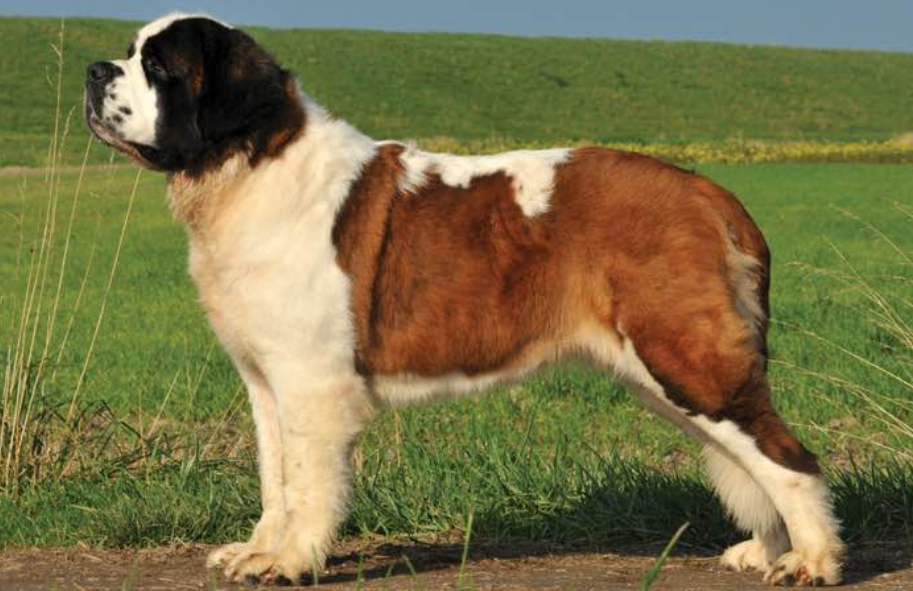
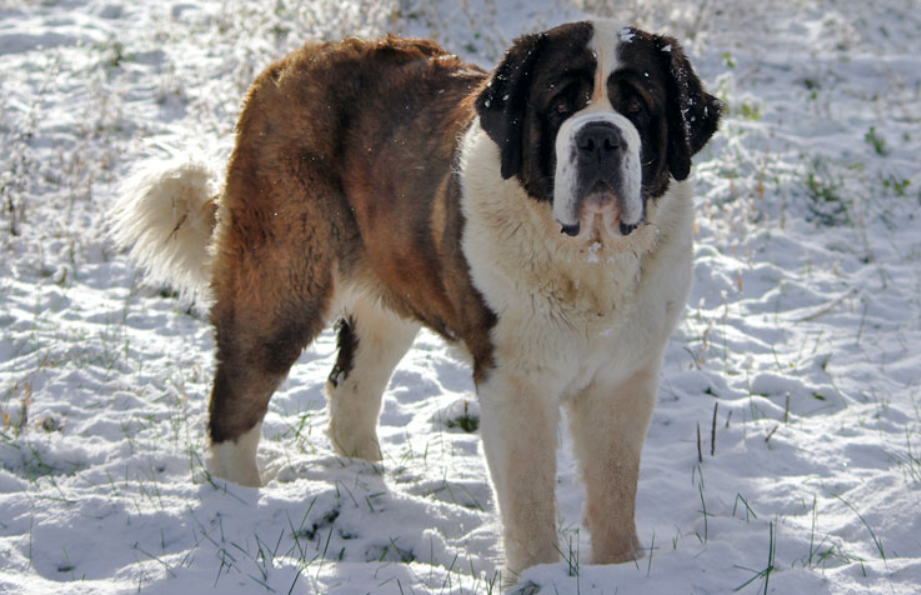
Height
Male: 27 - 0 in
Female: 25 - 0 in
Weight
Male: 100+ - 0 lbs
Female: 100+ - 0 lbs
Life expectancy
6 - 10 years
Colours
Brown & white, Brown & white, black mask, +27 more
Key Characteristics
General information
Origin
Credited with saving more than 2,500 travellers lost in the snow, this breed was named for the Hospice du Grand Saint Bernard in Switzerland, where the monks have bred these large dogs since the 17th century. It seems probable that the Saint developed from the heavy mastiffs brought to Switzerland by the Roman armies during the first two centuries AD, which then bred with local dogs. Because of the isolation of the Hospice, the original stock was undoubtedly inbred and produced the distinctive ‘Hospice Dog.’ When the monks took the dogs along with them, they quickly learned the canines’ sense of smell was invaluable in locating lost travelers overcome in the snow. Thus began a working relationship that endured for centuries. Up until 1830, all Saints were short-haired, but when the breed was struck with disaster and distemper, the Newfoundland was crossed with the Hospice Dog to give size and strength to the breed. The cross also produced the first long-haired Saints.
Temperament
Good-natured and kindly, the Saint is a relatively easygoing dog with a gentle nature. The breed is especially understanding and lovable with children. Can be stubborn.
Activity Level
This giant breed tends to take life easy but it requires lots of room, both indoors and out, plus regular daily exercise.
Coat
There are two coat types in this breed. The original is the short-haired, which is dense, smooth and tough. The long-haired or rough variety carries a coat of medium length, which is straight and may be slightly wavy on the back.
Colour
Grooming
Both coats benefit from regular, thorough brushing. Eyes and ears should be checked regularly and gently cleaned as necessary. Nails should be done every 4 weeks or so.
Caring for Saint Bernard
Training, Socialization & Breed Specific Traits
Saints grow very quickly and can add a pound a day in the first 6 months. No excessive exercise while young. Obedience training a must.
Health
Most common genetic problems in the breed: hip and elbow dysplasia, eye problems and heart abnormalities.
Clubs
Saint Bernard Fanciers Of Canada
Learn moreBreed standards outline the ideal characteristics, temperament, and appearance of a breed, and ensure that a dog can carry out its original purpose. They act as a blueprint for the ideal specimen and include size, weight, colour, coat, ear set, tail set, topline, feet, movement, temperament, structure, etc.
Saint Bernard Breed Standard