
Height
Male: 9 - 11 in
Female: 9 - 11 in
Weight
Male: 20 - 25 lbs
Female: 18 - 22 lbs
Life expectancy
10 - 12 years
Colours
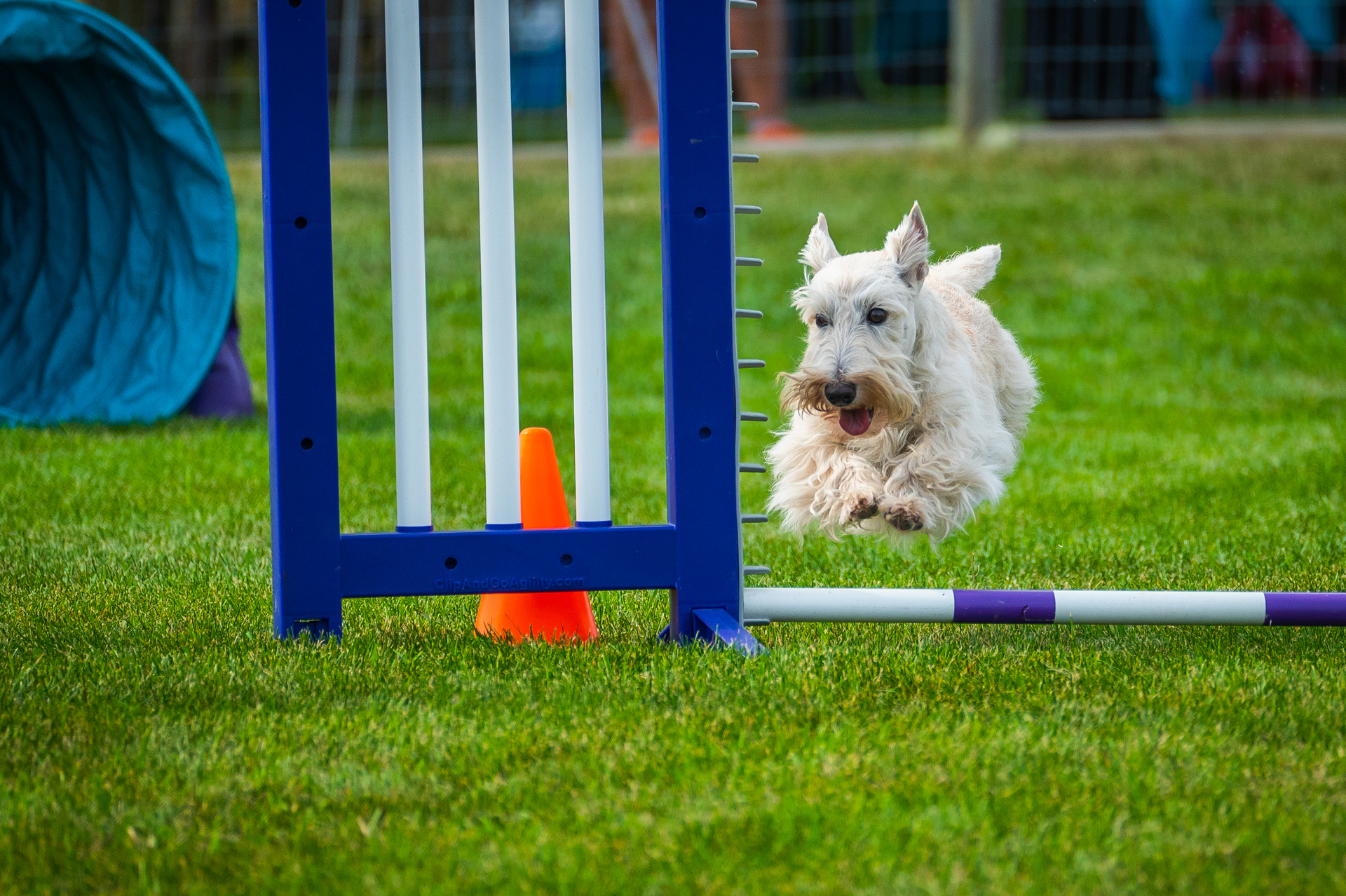
Black, Black brindle, Brindle, Grey, +5 more
Key Characteristics
General information
Origin
When Scotch Terriers were first discussed in print, it was noted there were two distinct types – one smooth-coated and high on leg, the other short-legged and rough-coated. It was from the latter that many of the better-known terriers evolved. The introduction of dog shows in Britain in 1859 brought out much indignation when fanciers saw all manner of terriers winning as Scottish Terriers. Eventually, a standard was drawn up and in 1881, the name of Hard-haired Scotch Terrier was accepted. Later, the breed name was changed to the present Scottish Terrier.
Temperament
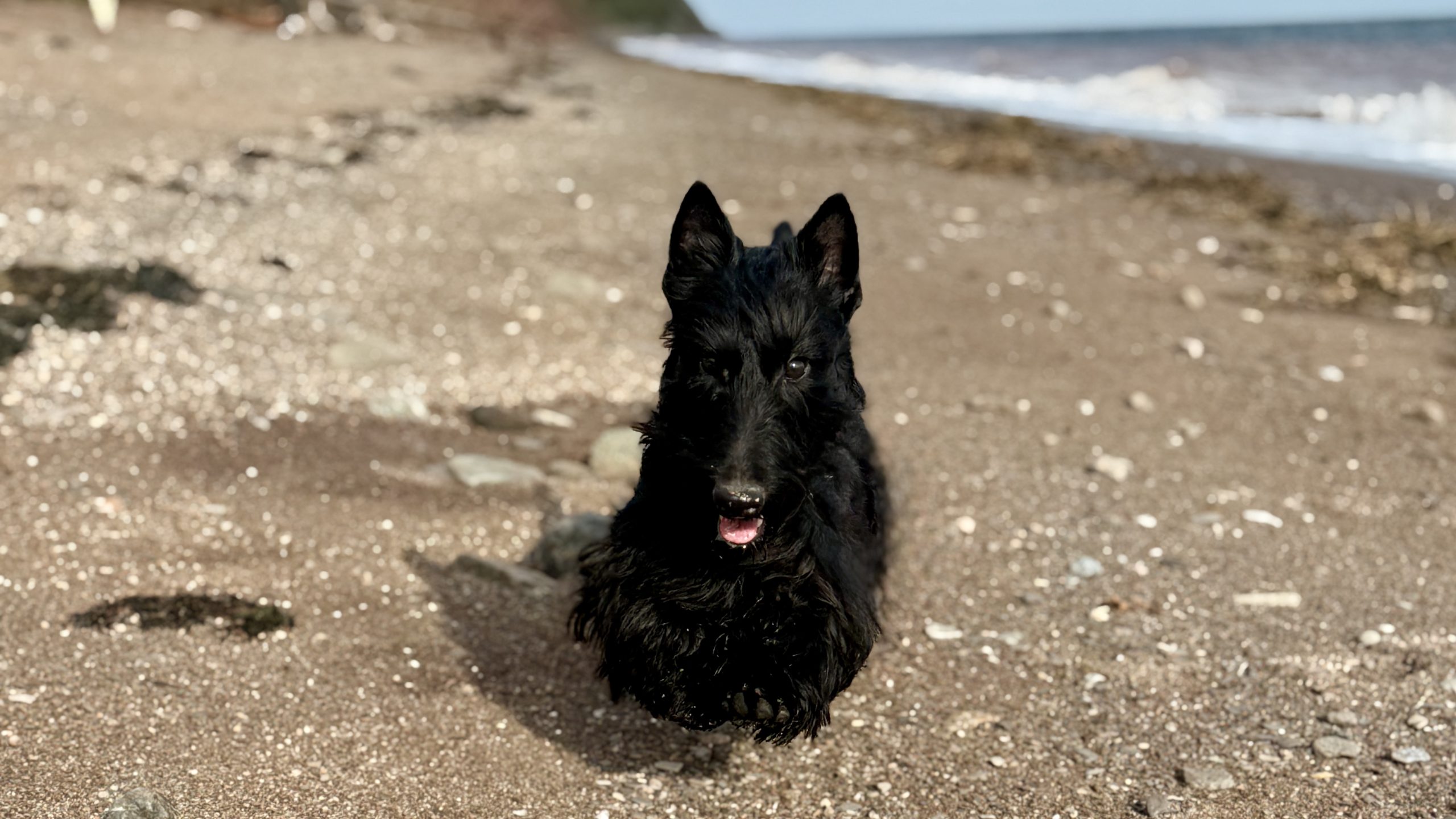
Loyal, loving and playful with his family, the Scottie may be scrappy with other dogs, cats, and passing squirrels. Alert and spirited, he is also stable and courageous.
Activity Level
Nicknamed the ‘Diehard,’ the Scottie exemplifies power in a small package. He’s an excellent watchdog suited to almost any accommodation. However, he enjoys the outdoors and should have at least one brisk walk a day.
Coat
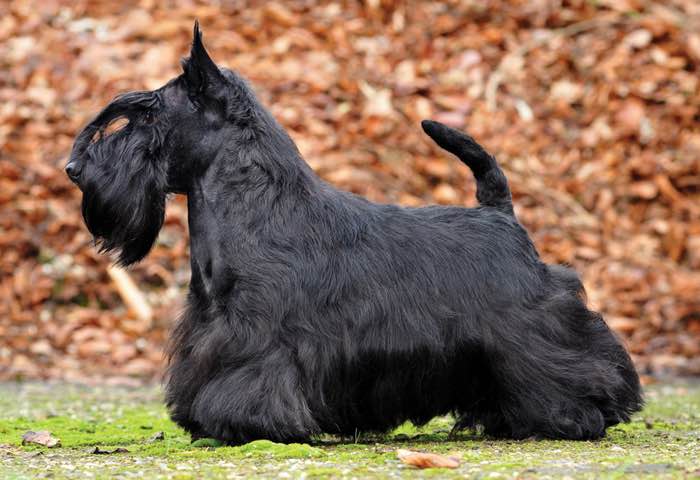
The short outer coat is very hard and wiry with a dense, soft undercoat. Hair is longer on the muzzle and over the eyes, forming a beard and eyebrows. The coat is also allowed to grow longer on the sides, underbelly and legs.
Colour
Grooming
Regular grooming is needed to keep the Scottie looking trim. A companion Scottie’s coat may be clipped but will lose the hard texture.
Caring for Scottish Terrier
Training, Socialization & Breed Specific Traits
Young Scotties should not be allowed to jump off furniture or other items as it may cause injury to developing joints.
Health
Male or females should not be neutered or spayed before 2 yrs of age. The pups are not fully developed, and the hormones associated with the growth and development are needed to assure the development of strong healthy Scotties. The hormones affect the growth of bones and joint strength. Vaccines should be given at regular intervals, not all at one time. Testing for ailments associated with Scotties need to be within the first 2 years; von Willebrand’s Disease (vWD), Craniomandibular Osteopathy (CMO) and Thyroid.
Clubs
Canadian Scottish Terrier Club
Learn moreBreed standards outline the ideal characteristics, temperament, and appearance of a breed, and ensure that a dog can carry out its original purpose. They act as a blueprint for the ideal specimen and include size, weight, colour, coat, ear set, tail set, topline, feet, movement, temperament, structure, etc.
Scottish Terrier Breed Standard