
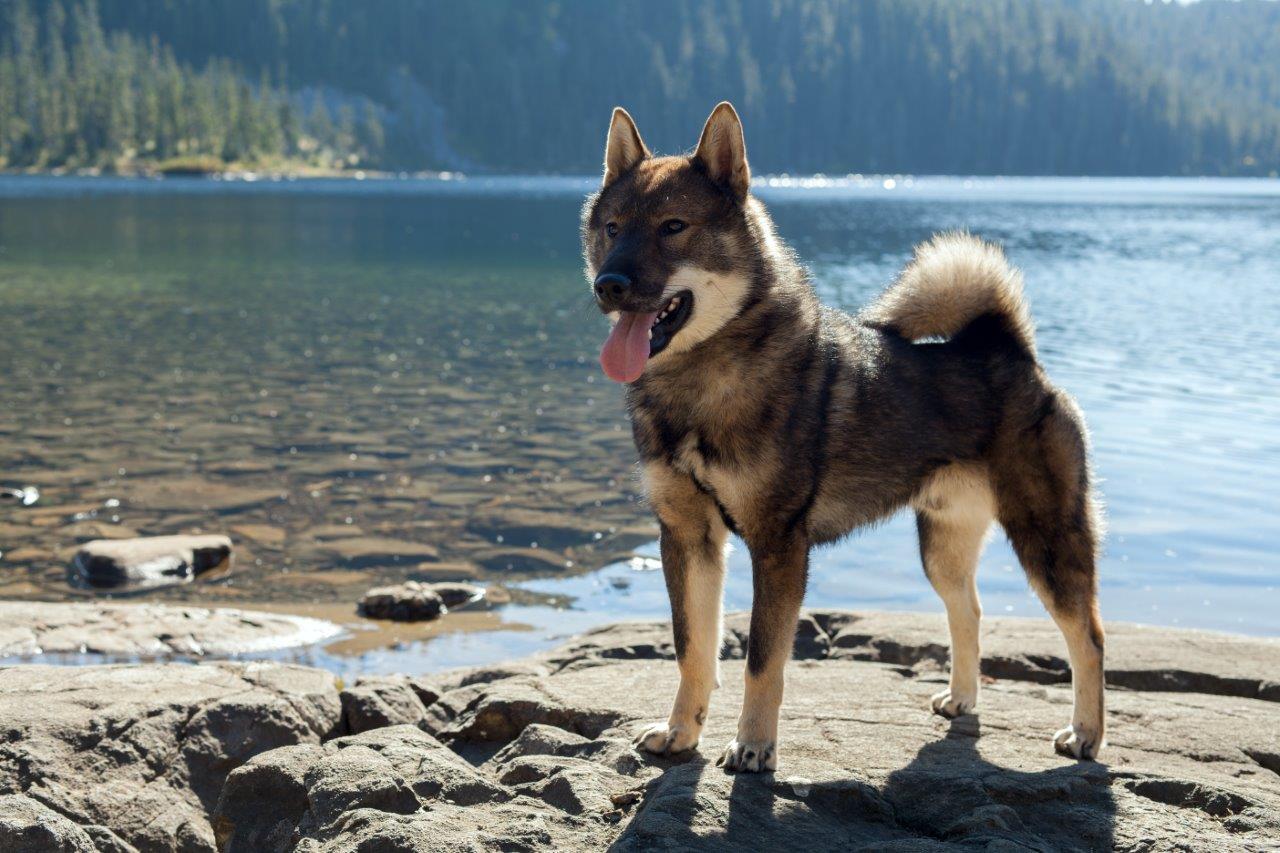
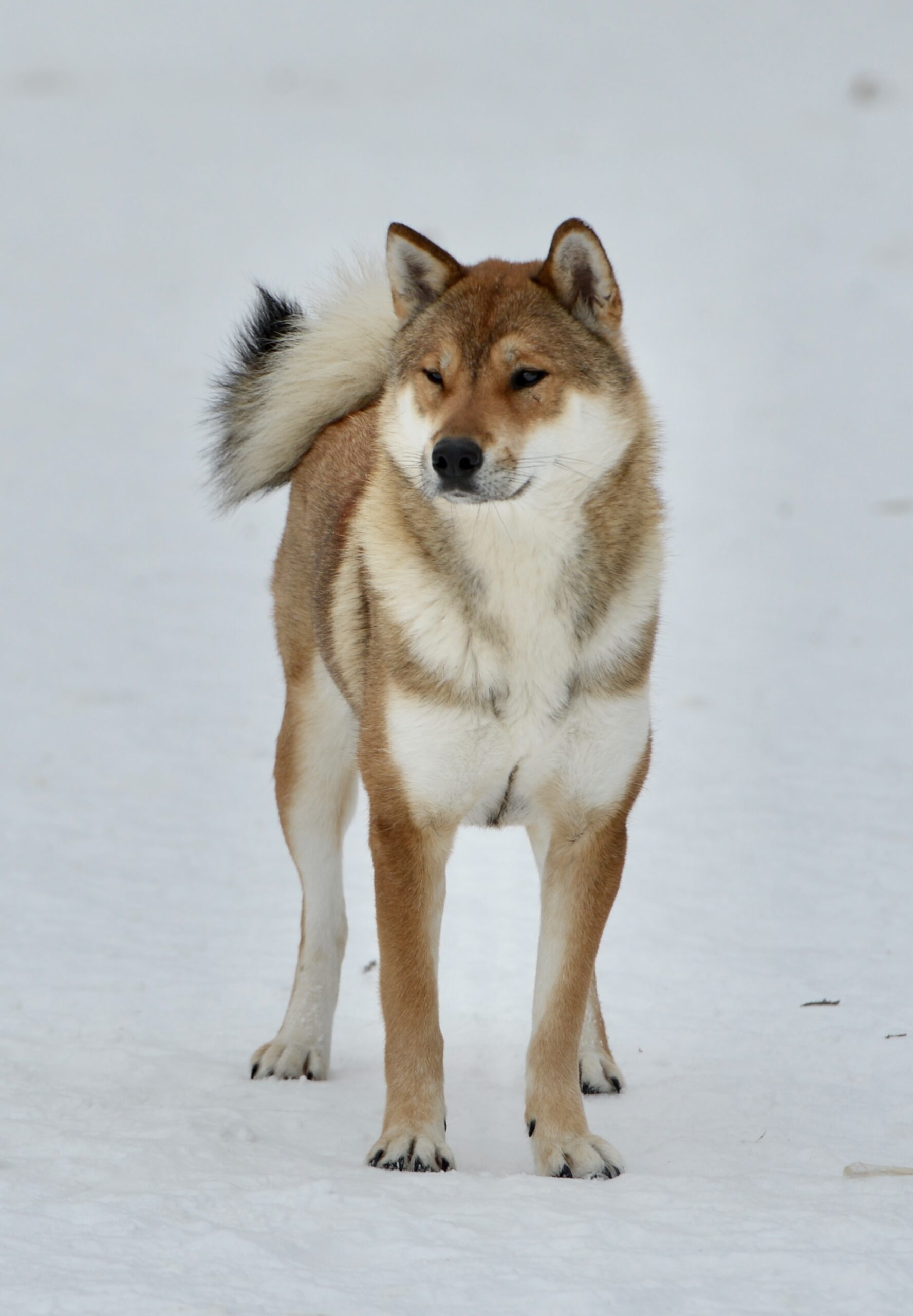
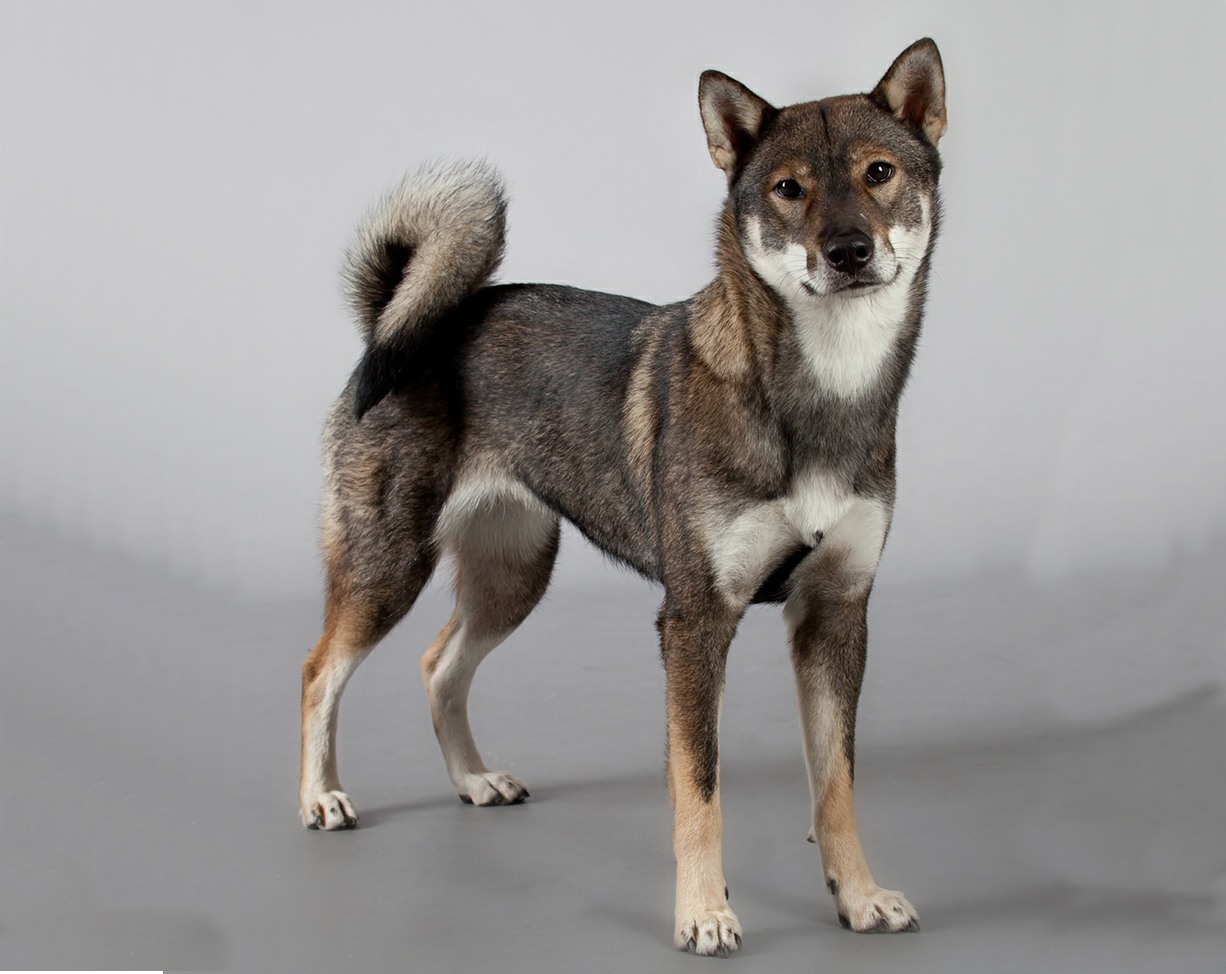
Height
Male: 19 - 22 in
Female: 16 - 19 in
Weight
Male: 45 - 55 lbs
Female: 38 - 42 lbs
Life expectancy
12 - 18 years
Colours
Black & sesame, Black & tan, Red sesame, +2 more
Key Characteristics
General information
Origin
Bred as a hunting dog, the Shikoku is classed as a primitive nordic spitz scent hound that was and is used mainly for hunting boar and deer in the mountainous districts of the Kochi Prefecture of Japan with its’ roots going back to the medium-sized dogs of ancient times. The breed was designated as a Natural Monument in Japan in 1937. Today there are about 300 Shikokus in Japan and very few elsewhere, making the Shikoku one of the rarest of the Japanese breeds.
Temperament
While docile in the company of his master, the Shikoku has keen senses, reacts quickly and possesses a certain innocent nature. Shikokus that are not properly socialized can be dog aggressive and shy towards people. These dogs have a strong hunting drive and as such require a fenced yard and need to be on a leash when on walks.
Activity Level
Energetic and highly alert, the Shikoku is an enthusiastic hunter possessing marked endurance. This tough and agile breed requires regular outdoor exercise.
Coat
The coat is double with a dense, soft undercoat and a short-to-medium length, harsher outer coat.
Colour
Grooming
Regular brushing and raking is a good idea particularly when they shed their undercoat which occurs about twice a year.
Caring for Shikoku
Training, Socialization & Breed Specific Traits
It is essential that Shikoku puppies be socialized as soon as they are in their new home.
Puppies need to meet new people, sights and sounds as well as exposure to other dogs. The need for socialization cannot be over emphasised
Health
• Hip, Patella, Elbow and Eye testing should be required
• DNA test for Cystinuria SLC3A1 and SLC7A9 is recommended
• Bitches under 18 months not to produce a litter
• Thyroid testing optional
Clubs
The Canadian Shikoku Ken Club
Learn moreBreed standards outline the ideal characteristics, temperament, and appearance of a breed, and ensure that a dog can carry out its original purpose. They act as a blueprint for the ideal specimen and include size, weight, colour, coat, ear set, tail set, topline, feet, movement, temperament, structure, etc.
Shikoku Breed Standard