
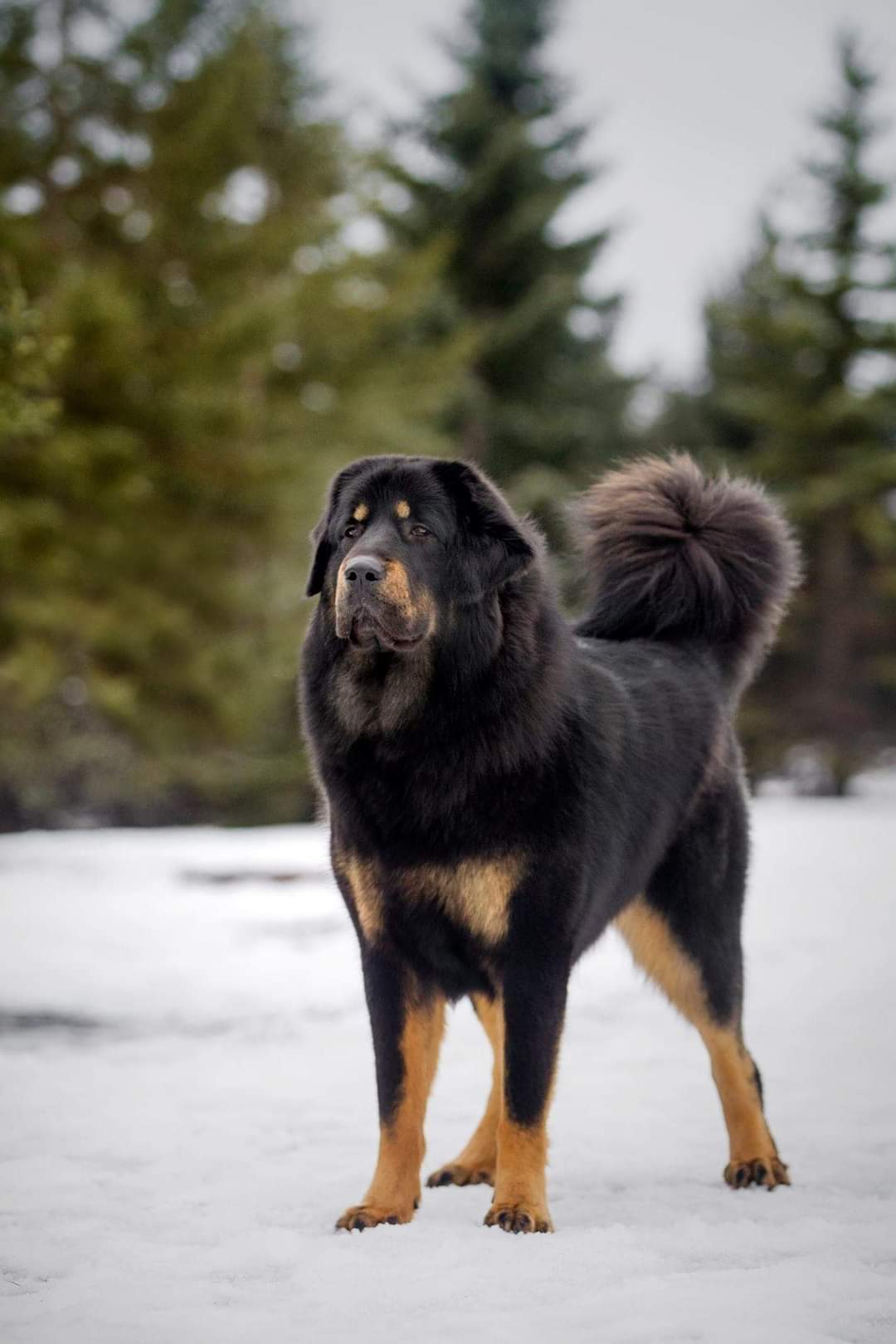
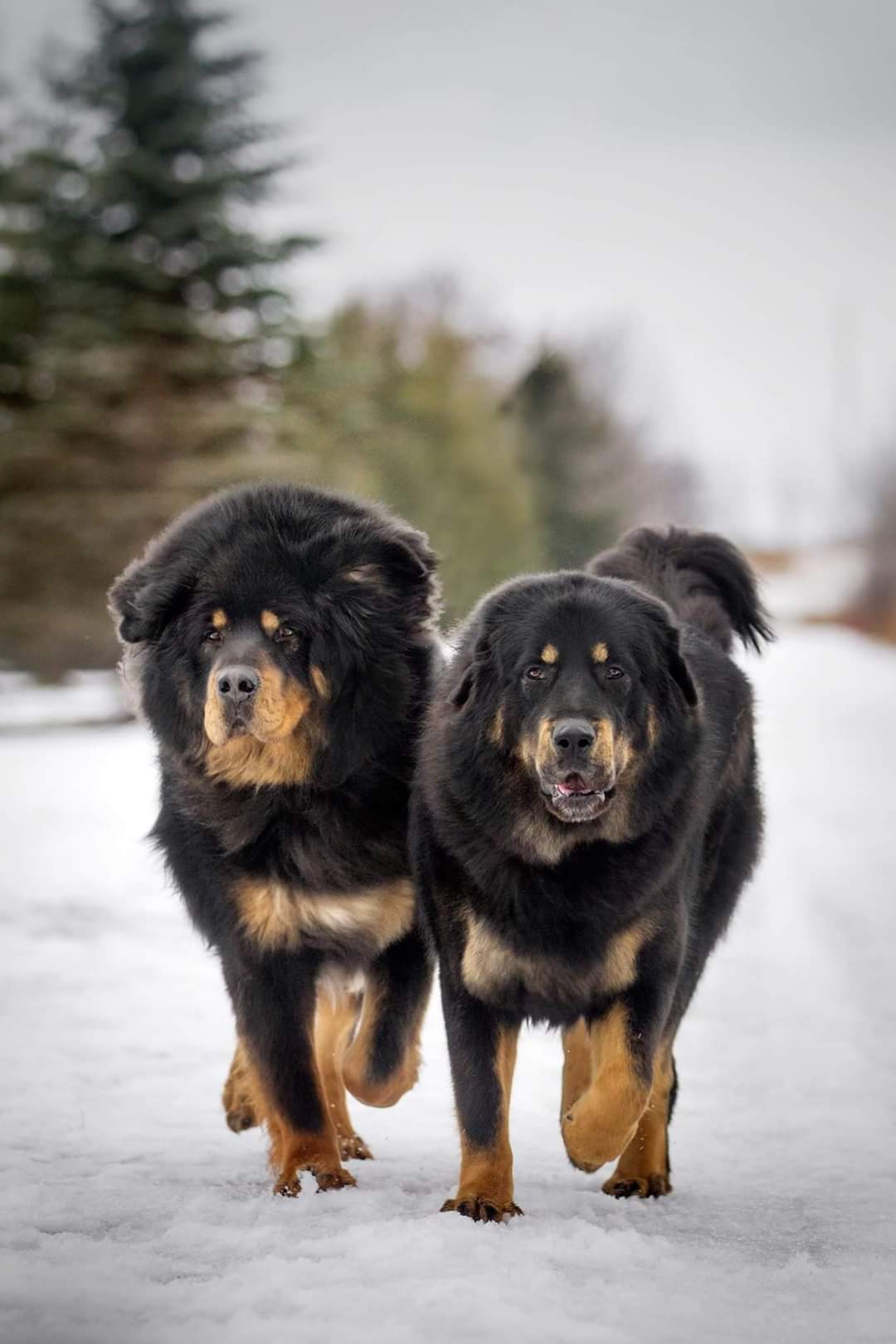
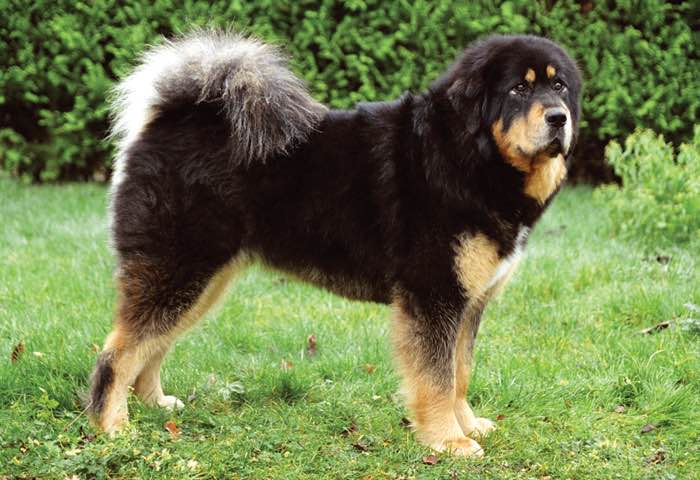
Colours
Black, Black & tan, Blue, Blue & tan, Gold, +1 more
Key Characteristics
General information
Origin
As early as the 13th century, Marco Polo wrote of seeing “dogs as big as donkeys” in his Far East wanderings. This ancient breed gained fame for its legendary fierceness as the outside guardian of Tibetan monasteries and also served as the fearless protector of homes, livestock, villages and caravans. Few breeds can claim to be the forerunner of so many other breeds. The Tibetan Mastiff is considered to be one of the ancestors of the Newfoundland, the Great Pyrenees, the Dogue de Bordeaux, the Great Dane and many others.
Temperament
Fanciers will quickly point out that this is not the dog for everyone and can be a real challenge, even for experienced dog owners. Though patient, gentle, stable and loyal, the TM is also independent, powerful and courageous, and prefers to think for itself. Bred for centuries as a guardian, it is apt to be suspicious of strangers, aloof and ready to defend fiercely. The intelligent TM can become destructive to relieve monotony. It has also been noted that the breed is inclined to be a nocturnal barker, which may not endear him to the neighbours.
Activity Level
Tibetan Mastiffs require a fair amount of attention and exercise to keep them occupied. Because of large size and nocturnal vocalizing, the TM is best suited to country living. Fenced property is an absolute must for this breed.
Coat
The TM wears a medium-length, thick, weather-resistant double coat.
Colour
Grooming
Regular, thorough grooming is recommended to remove dead coat.
Clubs
Breed standards outline the ideal characteristics, temperament, and appearance of a breed, and ensure that a dog can carry out its original purpose. They act as a blueprint for the ideal specimen and include size, weight, colour, coat, ear set, tail set, topline, feet, movement, temperament, structure, etc.
Tibetan Mastiff Breed Standard