
Weight
Male: 9 - 15 lbs
Female: 9 - 15 lbs
Colours
Biscuit, Black, Black Tan & White, Brown, +13 more
Key Characteristics
General information
Origin
A breed of ancient origin, Tibetan Spaniels were bred in monasteries and used as watchdogs, ‘hot water bottles,’ and to turn prayer wheels for the monks. Because China and Tibet were closely linked at one time, it has been theorized that the Chinese gave Pekingese to the Tibetans and they developed along different lines from the Pekes of the Imperial palace. In fact, paintings of 15th century Pekes portray the breed as looking more like the Tibetan Spaniels of today. The name “spaniel” is a misnomer and was only used because of the ear placement and the fact that “spaniel” was used to describe the small companion-comforter dogs favoured by ladies of European and Oriental courts.
Temperament
The Tibetan Spaniel is assertive, highly intelligent and may be aloof with strangers.
Activity Level
Bred as a small companion and watchdog, the Tibetan Spaniel enjoys his playtime. Because of his size, he adapts well to any size dwelling and his exercise needs are moderate, all Tibbies are playful and crave exercise.
Coat
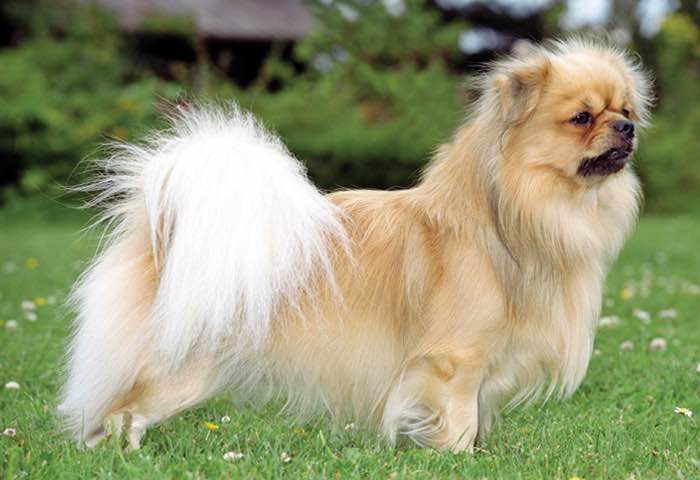
The moderate-length, flat-lying double coat is silky in texture. While the coat is smooth on the face and front of legs, there is longer hair on the ears, back of forelegs, tail and buttocks. They do shed. Males traditionally have a heavier coat than females.
Colour
Grooming
Minimal grooming is required. A thorough weekly session with brush and comb should suffice.
Caring for Tibetan Spaniel
Training, Socialization & Breed Specific Traits
Tibbies are active little dogs that need to be busy doing things with their owners, walks and daily outings from an early age will keep them occupied. They are hardy dogs that thrive on doing things with their owner every day.
Health
Tibetan Spaniels are a relatively health breed, often living 15 years or more. Responsible breeders screen their stock for health conditions such as progressive retinal atrophy (a genetic eye disease); ‘cherry eye,’ an inflammation of tissue adjacent to the eye that often is corrected surgically; and patellar luxation.
Clubs
Breed standards outline the ideal characteristics, temperament, and appearance of a breed, and ensure that a dog can carry out its original purpose. They act as a blueprint for the ideal specimen and include size, weight, colour, coat, ear set, tail set, topline, feet, movement, temperament, structure, etc.
Tibetan Spaniel Breed Standard