
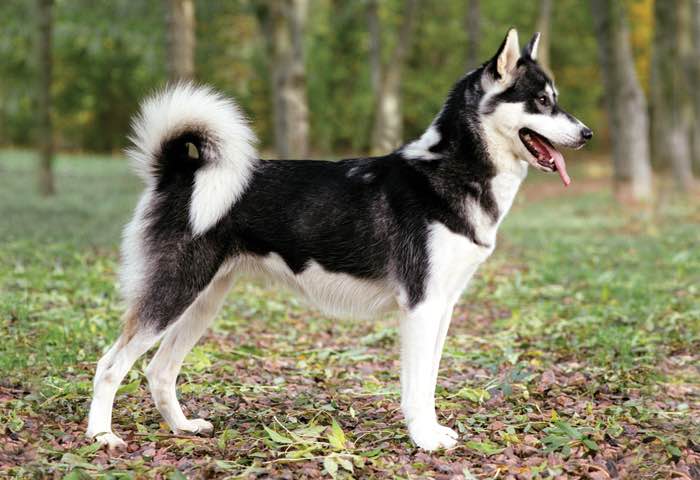
Taille
Mâle: 58 à 0 cm
Femelle: 56 à 0 cm
Couleurs
Beige, Noir, Noir et brun, Noir et blanc, Brun, +23 autres
Caractéristiques principales
Informations générales
Origines
Since the Inuit people of Canada’s Arctic were known to have emigrated from Greenland many centuries ago bringing their sled dogs with them, it’s possible this hardy polar Spitz breed is the forerunner of our native Canadian Eskimo Dog. The relationship to other northern Spitz breeds – such as the Alaskan Malamute, Siberian Husky and Canadian Eskimo – is unmistakable. Used primarily as sled dogs in the Scandinavian countries, Greenland Dogs were also put to work by the native people as hunting dog whose superior sense of smell was used to track down seal breathing holes.
Tempérament
Loyal and affectionate with their owners, the Greenland Dogs have a lively outlook on life. Since they were bred to work on teams, they can get along with other dogs once a pecking order is established.
Niveau d'activité
The breed is known to be energetic and boisterous in play. Bred as a working dog for the Arctic climes, it is exceptionally hardy and is ideally suited for pulling sleds. This is definitely an outdoor dog that requires lot of exercise.
Robe
The dense, straight coarse outer coat is rather short on the head and legs but rather long and abundant on the body and tail. Beneath the outer coat, a soft, dense undercoat provides insulation against frigid Arctic weather.
Couleur
Toilettage
The dense double coat should be raked regularly – and especially during seasonal shedding – to remove dead hair.
Clubs
Les standards de race décrivent les caractéristiques, le tempérament et l'apparence idéaux d'une race, et garantissent qu'un chien peut remplir sa fonction d'origine. Ils servent de modèle pour le spécimen idéal et incluent la taille, le poids, la couleur, la robe, l’attache des oreilles, le port de la queue, la ligne du dessus, les pieds, les allures, le tempérament, la structure, etc.
Chien du Groenland Standard de race