Canadian Kennel Club - Skip to main content

As I reflect on my first year as Executive Director of the Canadian Kennel Club, I am filled with a deep sense of gratitude. It has been a year of learning, listening, and understanding the many people, programs, traditions, and values that form the foundation of our organization. Most importantly, it has been a year spent getting to know the passionate community that makes the CKC what it is. 

One of the greatest privileges of this role has been attending CKC-sanctioned dog shows and events across the country. At every event I attended, I was struck by the extraordinary dedication of our members. Whether exhibiting, competing, volunteering, judging, or simply supporting fellow enthusiasts, our community’s passion for dogs is unmistakable. I witnessed firsthand the commitment that breeders, owners, handlers, and fanciers bring to preserving and promoting Canada’s pedigree dog breeds. Their knowledge, enthusiasm, and stewardship serve as a powerful reminder of why the CKC’s work remains so important.

Over the past year, I have also had the opportunity to participate in numerous committee meetings. These experiences provided valuable insight into the tremendous amount of work that happens behind the scenes to support our organization. More than anything, I came away with an even greater appreciation for the volunteers who generously contribute their time and expertise. The CKC relies heavily on the commitment of volunteers across all facets of the organization, and their dedication continues to be one of our greatest strengths.

Sitting at the Board table has provided another important perspective. Throughout the year, I have listened to thoughtful discussions and healthy debate as Board Directors brought forward the comments, concerns, and priorities of the members they represent. What has consistently stood out to me is the passion each Board Director has for the future of the CKC and the care they take in ensuring that the voices of their constituents are heard. While viewpoints may differ, the shared commitment to the organization and the dogs we serve remains a common thread.

I have also been fortunate to work alongside an exceptional staff team. Every day, I see employees who are committed to finding better ways of doing things, not only from an operational and efficiency standpoint, but also with a focus on improving service to our members. Their willingness to embrace change, seek solutions, and continuously improve has been inspiring. The dedication of our staff is a critical component of the CKC’s success, and I am grateful for their support and expertise. 

Beyond the organization itself, I have had the opportunity to meet with a variety of industry stakeholders and partner organizations. These conversations have reinforced the importance of collaboration and have highlighted opportunities for alignment on issues that matter to dog owners, breeders, and the broader dog community. Strong partnerships will continue to play an important role in helping us advance our mission and amplify the impact of our work.

As we look to the future, one thing is clear: ensuring the long-term success of the CKC requires adaptability. While we will always remain grounded in our proud history and traditions, we must also be willing to evolve and embrace new opportunities.

We are on the cusp of an exciting period for the organization.

The launch of FETCH has signalled a growing appetite for performance-based sports and provided another avenue for dogs and owners to engage in meaningful activities together. We have established a Future Leaders Committee to better understand how we can attract, support, and retain new participants in our community while ensuring the next generation has a voice in shaping the future of the CKC. We are also exploring exciting opportunities to strengthen partnerships within the broader dog community and position the CKC as the trusted, national voice on matters relating to dogs, including their health, welfare, and well-being.

The opportunities ahead are significant. By building on our strengths, embracing innovation, and remaining responsive to the needs of our members, I believe we can continue to grow the relevance and impact of the CKC for years to come.

As I conclude my first year, I would like to sincerely thank our members for the trust you have placed in me as your Executive Director. This year has been one of learning the foundation upon which the CKC was built, listening carefully to feedback, understanding the challenges and opportunities before us, and working with many dedicated individuals to position our organization for future success.

I am excited about what lies ahead and look forward to continuing this journey together.

Thank you for an unforgettable first year.

— Natalie
A Message from Natalie

As I reflect on my first year as Executive Director of the Canadian Kennel Club, I am filled with a deep sense of gratitude. It has been a year of learning, listening, and understanding the many people, programs, traditions, and values that form the foundation of our organization. Most importantly, it has been a year spent getting to know the passionate community that makes the CKC what it is. 

One of the greatest privileges of this role has been attending CKC-sanctioned dog shows and events across the country. At every event I attended, I was struck by the extraordinary dedication of our members. Whether exhibiting, competing, volunteering, judging, or simply supporting fellow enthusiasts, our community’s passion for dogs is unmistakable. I witnessed firsthand the commitment that breeders, owners, handlers, and fanciers bring to preserving and promoting Canada’s pedigree dog breeds. Their knowledge, enthusiasm, and stewardship serve as a powerful reminder of why the CKC’s work remains so important.

Over the past year, I have also had the opportunity to participate in numerous committee meetings. These experiences provided valuable insight into the tremendous amount of work that happens behind the scenes to support our organization. More than anything, I came away with an even greater appreciation for the volunteers who generously contribute their time and expertise. The CKC relies heavily on the commitment of volunteers across all facets of the organization, and their dedication continues to be one of our greatest strengths.

Sitting at the Board table has provided another important perspective. Throughout the year, I have listened to thoughtful discussions and healthy debate as Board Directors brought forward the comments, concerns, and priorities of the members they represent. What has consistently stood out to me is the passion each Board Director has for the future of the CKC and the care they take in ensuring that the voices of their constituents are heard. While viewpoints may differ, the shared commitment to the organization and the dogs we serve remains a common thread.

I have also been fortunate to work alongside an exceptional staff team. Every day, I see employees who are committed to finding better ways of doing things, not only from an operational and efficiency standpoint, but also with a focus on improving service to our members. Their willingness to embrace change, seek solutions, and continuously improve has been inspiring. The dedication of our staff is a critical component of the CKC’s success, and I am grateful for their support and expertise. 

Beyond the organization itself, I have had the opportunity to meet with a variety of industry stakeholders and partner organizations. These conversations have reinforced the importance of collaboration and have highlighted opportunities for alignment on issues that matter to dog owners, breeders, and the broader dog community. Strong partnerships will continue to play an important role in helping us advance our mission and amplify the impact of our work.

As we look to the future, one thing is clear: ensuring the long-term success of the CKC requires adaptability. While we will always remain grounded in our proud history and traditions, we must also be willing to evolve and embrace new opportunities.

We are on the cusp of an exciting period for the organization.

The launch of FETCH has signalled a growing appetite for performance-based sports and provided another avenue for dogs and owners to engage in meaningful activities together. We have established a Future Leaders Committee to better understand how we can attract, support, and retain new participants in our community while ensuring the next generation has a voice in shaping the future of the CKC. We are also exploring exciting opportunities to strengthen partnerships within the broader dog community and position the CKC as the trusted, national voice on matters relating to dogs, including their health, welfare, and well-being.

The opportunities ahead are significant. By building on our strengths, embracing innovation, and remaining responsive to the needs of our members, I believe we can continue to grow the relevance and impact of the CKC for years to come.

As I conclude my first year, I would like to sincerely thank our members for the trust you have placed in me as your Executive Director. This year has been one of learning the foundation upon which the CKC was built, listening carefully to feedback, understanding the challenges and opportunities before us, and working with many dedicated individuals to position our organization for future success.

I am excited about what lies ahead and look forward to continuing this journey together.

Thank you for an unforgettable first year.

— Natalie
When the Unexpected Happens: Miller’s Story

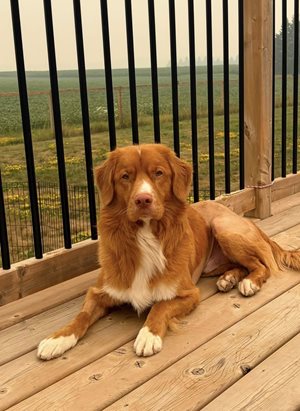
At nearly two years old, Miller was everything you would expect from a young Nova Scotia Duck Tolling Retriever. Happy, active and full of enthusiasm. He was happiest running through fields and chasing birds.

“Everyone always jokes that his tail never stops wagging and that we should have named him ‘Thumper,'” said his owner, Dallas Hodgins.

IMG_2685.jpeg

Dallas is the breeder, owner and handler behind RedAero Nova Scotia Duck Tolling Retrievers. A Canadian Kennel Club member for 10 years and Vice President of the Ontario Toller Club, she participates in a variety of CKC events with her dogs, including conformation, field, sprinter and rally.

Miller, born on October 20, 2023, was intended to become Dallas’s next hunting and field dog. However, an unusual medical issue would put those plans on hold and lead to months of veterinary visits, tests, surgeries and uncertainty.

In October 2025, Dallas noticed that Miller’s hip area had begun to swell. He was periodically lame, and seemingly overnight, the swelling became large and tender.

IMG_1826.jpeg

The team at Thames Road Veterinary performed an ultrasound and collected a sample from the area. Because the sample primarily contained red blood cells, the swelling was initially thought to be a hematoma. Miller was prescribed antibiotics, the swelling resolved and he appeared to return to normal.

A few weeks later, Miller underwent hip X-rays and passed his Orthopedic Foundation for Animals evaluation. There were no further signs of the unexplained swelling.

For approximately six months, all seemed well. Then, over Easter weekend in April 2026, the swelling suddenly returned.

Within 48 hours, the area had grown to the size of a softball and Miller had developed a fever from the infection. His veterinarian provided antibiotics and pain and inflammation medication before the clinic closed for the long weekend. The abscess ruptured overnight on Easter Sunday, and Miller was brought in for exploratory surgery the following morning.

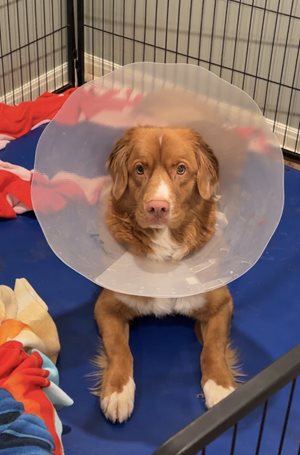
Based on how the infection presented and the development of a draining tract, the veterinary team suspected that a foreign object was responsible. However, nothing was found during the surgery. The area was thoroughly flushed, and Miller returned home with antibiotics and instructions for strict crate rest.

Once again, he appeared to heal.

Approximately one month after Miller’s first surgery, his incision began to reopen and drain. It was clear that the underlying problem had not been resolved.

IMG_1114.jpeg

Miller was referred to King Animal Hospital for further investigation. During a consultation in mid-June, a CT scan revealed what appeared to be a foreign object measuring approximately 20 millimetres by 1.5 millimetres. The veterinary team suspected that it was plant material, possibly a thorn or foxtail, that Miller may have ingested before it migrated through his stomach lining and into the muscle near his hip.

A second exploratory surgery was scheduled for June 30. Dallas hoped the object could be found and removed, bringing Miller’s ordeal to an end.

Unfortunately, the veterinary team was unable to locate it during the procedure.

“It was heartbreaking to hear that the surgery had been unsuccessful and that Miller would have to go through another,” Dallas said.

There was still hope that the object had been flushed out during the procedure, even if it had not been seen. Miller returned home for another course of antibiotics and more crate rest, but approximately three weeks later, the same area began to swell again.

The swelling progressed quickly. Within about 48 hours, another softball-sized abscess had formed.

On July 22, Miller returned to King Animal Hospital for a third exploratory surgery. This time, the suspected foreign object could not be seen on the CT scan or located during surgery. The area was thoroughly flushed once again.

IMG_2682.jpeg

By the time Dallas shared Miller’s story with the CKC in early August, he had undergone three exploratory surgeries, two CT scans and a tissue biopsy and culture since April. His care had cost approximately $32,000.

Dallas enrolled Miller with Trupanion in July 2025. She had recently sent home a litter whose new owners received Trupanion coverage and decided to enroll Miller as well because of his future as a hunting and field dog.

Until this experience, Dallas had never needed to use his coverage for a significant veterinary expense.

That changed when Miller required specialized testing and repeated surgeries. His two surgeries at King Animal Hospital each cost approximately $10,000 to $12,000, while each CT scan cost between $2,000 and $3,000.

Of Miller’s approximately $32,000 in veterinary costs, Dallas said Trupanion covered approximately $26,000.

“Having coverage did affect our decision process,” she said. “We simply would not have been able to pay more than $30,000 out of pocket for this issue. Surgery was the only potentially curative option, and I’m glad we were able to go that route.”

King Animal Hospital requires payment based on the high end of its estimate before surgery. Dallas said Trupanion was able to confirm her coverage amount within minutes by email, allowing Miller’s treatment to proceed. Through direct payment, Trupanion could also pay the hospital rather than requiring Dallas to cover the entire cost and wait for reimbursement.

IMG_1112.jpeg

“The whole process has been effortless on my end, and I am just so thankful to have had him insured,” she said.

For Dallas, that support meant more than help with the veterinary bills. It allowed her to focus on Miller’s needs during an already frightening and uncertain experience.

“Trupanion lifted a huge weight off my shoulders,” she said. “It made the process so much easier, and I felt as though we could make better decisions to get better results because of it. Without Trupanion, we may not have Miller right now.”

As a breeder, Dallas has always sent her puppies home with a month of Trupanion coverage. Miller’s experience has reinforced how strongly she will encourage puppy buyers to maintain that coverage throughout their dogs’ lives.

“There’s nothing worse than having to make some of the hardest decisions about your dog because of financial hurdles,” she said.

She also believes Miller’s experience illustrates why relying solely on personal savings may not be enough when an unexpected medical emergency occurs.

“Miller’s situation was a complete fluke that likely happened while he was running through the fields,” she said. “When bad things happen, I’d rather be able to make the best decisions for my dog without feeling completely limited by finances.”

IMG_0009.jpeg

At the time Dallas shared her story, Miller was two weeks out from his third surgery. His incision was healing well, there had been no further swelling and he had finished his antibiotics. Although he remained on crate rest, his spirits were high.

The suspected foreign object was never definitively located, and Miller’s recovery continued to be monitored. Still, Dallas was hopeful that the latest procedure had finally resolved the issue.

“Miller is a very young, active dog who is full of potential once this is cured for good,” she said. “This horrible fluke has been so difficult to navigate, but Trupanion has made everything so much more bearable.”

Through three surgeries and months of uncertainty, Miller’s resilience and endlessly wagging tail have remained. Dallas hopes that once his recovery is complete, he will be able to return to the fields and the active life he loves.

Meet Katja: Alberta’s First Library Facility Service Dog

At Red Deer Public Library, some young readers have a particularly attentive audience waiting for them. She does not correct missed words, hurry anyone through a sentence or mind if they need to start again. She simply settles in beside them and listens. 

Her name is Katja, a CKC-registered chocolate Labrador Retriever and Alberta’s first library facility service dog.

6c036106-a237-4b27-9294-53b07a2cbc13.jpeg

Since completing her final assessment in October 2023, Katja has become an important part of daily life at Red Deer Public Library (RDPL). She listens as children practice reading, joins school and community visits, supports stress-relief activities and helps make the library feel welcoming to people of all ages.

Katja’s journey with the library began before she had completed her training. In August 2021, RDPL Strategic Planning and Engagement Manager Tatiana Tilly became Katja’s volunteer puppy raiser through Aspen Service Dogs.

Katja initially entered Aspen’s fully trained program. As the connection between Katja, Tatiana and the library grew, Tatiana began to see another possibility for her future.

“I fell in love with Katja and approached our CEO, Shelly Ross, about the possibility of training Katja as a facility service dog for the library,” Tatiana said.

With support from the library and Aspen Service Dogs, Katja transferred into Aspen’s Owner Trained Program. Tatiana trained alongside her, and fellow RDPL team member Karen Drok later joined them as Katja’s co-handler.

The program follows a structured two-year path in which dogs and their handlers develop their skills and working relationship together. Training includes foundational skills, experience working in public and individualized tasks based on the needs of each team.

13c95ca3-88c7-495d-ad1a-ce2f117210f1.jpeg

Aspen Service Dogs CEO Caelan Snow explained that a dog working in a public environment needs much more than basic obedience. Libraries can include children moving quickly, rolling carts, doors opening, unexpected sounds, groups gathering and many people hoping to say hello.

Dogs must learn to remain calm, focused and responsive while navigating those experiences. For a facility dog like Katja, training also encourages her to settle quietly beside a child reading or someone who needs a little extra comfort.

“Successful facility dogs need to genuinely enjoy people, be happy settling and providing a calm and comforting presence, and also be confident and adaptable to a changing environment,” Caelan said.

Training also prepared Tatiana and Karen to understand their working partner. They learned to recognize when Katja is engaged, when an environment is becoming too stimulating and when she needs a break.

Public libraries have grown into community spaces where people can learn, connect, find support and feel that they belong. After seeing the benefits of volunteer therapy dogs in previous reading programs, RDPL recognized that a dedicated facility service dog could help create an even more welcoming, low-pressure environment.

Katja’s core program, Sit, Stay, Read, gives children in Grades 1 to 5 an opportunity to read with her individually. She settles onto her reading couch while each child reads aloud, usually with plenty of cuddles included.

“There is something wonderfully non-judgmental about a dog,” the RDPL team shared. “Katja does not care how quickly somebody reads, whether they stumble over a word or need to start a sentence again. She is simply happy to sit beside them.”

1ecbe5ad-ac91-462b-86a2-2c1f09bb4604.jpeg

That accepting presence can change how a child experiences reading. Instead of worrying about making a mistake, young readers can focus on sharing a story with a patient friend.

The results are reflected in both the numbers and the individual moments. Since 2024, children have completed 361 reading sessions with Katja and read her 1,135 books. In 2026 alone, she has also participated in at least eight school and childcare visits, in addition to library outreach and larger community events.

For Katja’s handlers, however, the smaller moments often say the most.

Tatiana remembers a parent sharing that her daughter had read more books during one visit with Katja than she ever had in a single sitting. Another young reader arrived with her own beloved “mini Katja.” After reading several books, she simply wanted time to sit and cuddle with the real Katja beside her.

“A child had connected reading, the library and a feeling of comfort and happiness together,” Tatiana said. “I think that is something she will remember.”

Although Katja’s role was originally centered on literacy and connection inside the library, it quickly expanded.

She now works across RDPL branches and has developed a following of regular readers. She participates in school and childcare visits, story times, community events, stress-relief activities and special library programs. She has even served as a “living book” in a Human Library and represented RDPL in the annual Westerner Days Parade. 

9957b0d9-3195-4b00-97e4-fe050ed020cf-3.jpeg
Screen-Shot-2026-08-19-at-3-49-53-PM-1.png

Katja also helps begin conversations. At a community event, someone who might otherwise pass a library information table may stop when they see her. A visit with Katja can naturally lead to a conversation about the library’s programs and services.

Her growing role is carefully balanced with her wellbeing. Katja usually works at the library two or three days each week, with breaks, a midday walk and quiet time built into her schedule. Between appointments, she returns to a pillow beneath Tatiana’s desk, where she knows she can switch off and nap.

“Knowing how to relax is just as important for a facility dog as knowing how to work,” Tatiana explained.

The library also considers the comfort of everyone who uses its spaces. Signs let visitors know when Katja is in the building, helping people with allergies, fears or other considerations make informed choices. Interactions are never forced, for Katja or for library visitors.

Away from work, Tatiana says Katja is “very much a Labrador.”

She loves walks, swimming, meeting dog friends and spending time with her older dog sister. She enjoys car rides, especially when she can watch the world pass by through the window, and she is happiest cuddled between her people on the couch.

That balance between enthusiastic working partner and relaxed family companion is part of what makes Katja so well suited to her role. Her training gave her the skills to work successfully in a busy public environment, but it is her connection with people, supported by handlers who understand her needs, that allows her to thrive.

From reading alongside children to representing the library throughout Red Deer, Katja is helping people connect with books, their community and one another. Sometimes, all it takes to make reading feel a little less intimidating is a comfortable couch and a Labrador ready to listen.

Follow Katja’s adventures on Instagram at @katjardplfacilitydog or learn more about her work through the Red Deer Public Library.

Canada’s Favourite Dogs: The Top Five Most Popular Breeds by CKC Zone

While some breeds enjoy popularity from coast to coast, others have developed loyal followings in specific regions of the country.

Using Canadian Kennel Club registration data, we took a closer look at the top five most popular breeds in each CKC Zone to see which breeds Canadians welcomed into their homes in 2025.

Unsurprisingly, Retrievers continue to reign supreme across much of the country. Labrador Retrievers and Golden Retrievers appeared in the top five in nearly every zone, demonstrating their enduring appeal among Canadian dog owners.

Labrador and Golden Retrievers Continue Their Reign

The Labrador Retriever ranked among the top five breeds in 11 of the 12 CKC Zones and claimed the number one spot in Zones 1, 6, 8, 9, 10, and 12.

The Golden Retriever was equally impressive, appearing in the top five in 11 zones and taking the top position in Zones 4 and 5.

Known for their versatility, intelligence, and affectionate nature, it is easy to see why these two breeds remain perennial favourites with Canadian families.

Poodles Prove Their Lasting Popularity

Poodles also enjoyed widespread popularity, ranking in the top five in seven zones and taking the top spot in Zones 2, 3, and 11.

Available in three size varieties and renowned for their intelligence, athleticism, and low-shedding coat, Poodles continue to appeal to a wide range of dog owners across the country.

Regional Preferences Tell a Story

While some breeds appeared consistently across multiple regions, several zones demonstrated unique preferences.

In Zone 1, the Beagle claimed the top spot, highlighting the breed’s enduring popularity in Atlantic Canada.

Zone 7 showed strong support for the German Shepherd Dog, which ranked as the region’s most popular breed, while Zone 9 saw the Shetland Sheepdog secure second place.

Meanwhile, in Zone 12, the Nova Scotia Duck Tolling Retriever earned a place among the region’s top five breeds, a fitting result for Canada’s smallest native retriever.

French Bulldogs also continued their rise in popularity, appearing in the top five in seven different zones and ranking as the second most popular breed in Zones 10 and 11.

Not Sure Which CKC Zone You Belong To?

The Canadian Kennel Club divides the country into 12 geographic zones. These zones help organize member representation and governance across Canada.

Take a look at the map below to see how CKC Zones are divided across the country and find out which zone you call home.


The Top Five Breeds by Zone

Zone 1 – Nova Scotia, Newfoundland & Labrador

  1. Labrador Retriever
  2. Beagle
  3. Golden Retriever
  4. French Bulldog
  5. Australian Shepherd

Zone 2 – New Brunswick, PEI

  1. Poodle
  2. Labrador Retriever
  3. Golden Retriever
  4. Pembroke Welsh Corgi
  5. Miniature Long-Haired Dachshund

Zone 3 – Quebec

  1. Poodle
  2. Labrador Retriever
  3. Golden Retriever
  4. Chihuahua
  5. French Bulldog

Zone 4 – Ontario North

  1. Golden Retriever
  2. Labrador Retriever
  3. German Shepherd Dog
  4. French Bulldog
  5. Havanese

Zone 5 – Ontario East

  1. Golden Retriever
  2. Labrador Retriever
  3. German Shepherd Dog
  4. French Bulldog
  5. Havanese

Zone 6 – Ontario West

  1. Labrador Retriever
  2. Golden Retriever
  3. German Shepherd Dog
  4. Havanese
  5. French Bulldog

Zone 7 – Ontario Central

  1. German Shepherd Dog
  2. Golden Retriever
  3. Cavalier King Charles Spaniel
  4. Labrador Retriever
  5. Poodle

Zone 8 – Manitoba

  1. Labrador Retriever
  2. Golden Retriever
  3. Poodle
  4. German Shepherd Dog
  5. Shetland Sheepdog

Zone 9 – Saskatchewan

  1. Labrador Retriever
  2. Shetland Sheepdog
  3. Cavalier King Charles Spaniel
  4. Poodle
  5. Havanese

Zone 10 – Alberta, NWT & Nunavut

  1. Labrador Retriever
  2. French Bulldog
  3. Golden Retriever
  4. Miniature Long-Haired Dachshund
  5. Poodle

Zone 11 – B.C. Southwest

  1. Poodle
  2. French Bulldog
  3. Golden Retriever
  4. Boston Terrier
  5. German Shepherd Dog

Zone 12 – B.C. Interior & Yukon

  1. Labrador Retriever
  2. Golden Retriever
  3. French Bulldog
  4. Nova Scotia Duck Tolling Retriever
  5. Havanese

Whether you share your home with one of these popular breeds or champion a lesser-known breed, every purebred dog contributes to the rich and diverse Canadian dog community.

Did your breed make the list? Let us know in the comments.

Meant to Be: Kayl McCann and Bee-Line’s Final International Adventure

When Team Canada arrives in Finland for the Agility World Championship this September, Kayl McCann will once again be among the country’s top competitors.

It will mark her 24th appearance at a World Championship, but this year’s event carries a significance unlike any before it. Over the course of her international career, she has earned 36 medals for Team Canada, but this year’s event carries a significance unlike any before it.

It will also be the final international competition for her Border Collie, Bee-Line.

DSC_6881.jpg

“My excitement actually grows with each World Championship, because I know exactly what to expect and I know the caliber of talent that will be there,” says McCann. “There’s an intensity and passion among the competitors that I share completely – it’s incredible to be surrounded by people who want to be there just as much as I do.”

After nearly a quarter-century of competing internationally, there is still one tradition she looks forward to every time.

“One moment that always sticks with me is opening ceremonies – it’s one of the few times every competitor from every country is in the stadium at once. I like to take a second just to look out at that sea of jerseys and flags and realize we’re all there for the same thing. There’s no other competition that feels quite like the Agility World Championships.”

That excitement has remained constant throughout McCann’s career, but Bee-Line’s journey to the world stage has been anything but straightforward.

Just as the pair were ready to begin competing internationally, the COVID-19 pandemic put those plans on hold. When competition resumed, another obstacle followed. Shortly after their first World Championship together in 2022, Bee-Line was diagnosed with Lyme disease.

In 2023, McCann achieved another milestone by earning her first invitation to the FCI Agility World Championship. But after arriving in the Czech Republic, Bee-Line measured over the event’s height cut-off, leaving the pair unable to compete.

A9_03480.jpg

The setbacks didn’t end there.

During the 2024 World Agility Open finals, Bee-Line broke a toe in an accident on the teeter, sending the pair to the emergency veterinary clinic instead of the podium. After recovering in time to compete at the Agility World Championship in Belgium, they finally enjoyed a drama-free championship the following year in Sweden, earning a clean round and finishing among the top five.

Through every disappointment and every triumph, one thing never changed.

“Bee-Line and I have always had a special connection. She picked me as her human at four weeks old, born right in my home – there was never a version of life where we weren’t going to be together. She’s a bit quirky, but I understand her and she understands me. Everything about our relationship has always been effortless. Her kennel name is ‘Meant to Be,’ and it couldn’t be more true.”

This September, that partnership will reach an emotional milestone.

Knowing Finland will mark Bee-Line’s final international competition brings a mixture of emotions.

“If I think about it too much, it makes me emotional – sad, proud, grateful, all of it at once.”

But after everything they have overcome together, McCann says she is approaching this championship differently.

“At this point, I feel like we don’t have anything left to prove, so in a way we get to go into this with no pressure, just doing our best. That feels nice, honestly.”

Rather than worrying about results, she is focused on soaking in every moment.

“My plan is to savour every moment of it, take lots of pictures and videos so I can look back on this trip for years to come, and try not to let my emotions get the best of me.”

406324958_10160628687380379_7697535748797893610_n.jpg

While this championship carries special meaning for McCann and Bee-Line, it is also another opportunity to represent Canada alongside some of the country’s top agility competitors.

“This year’s Canadian team has some excellent talent and a lot of experience, but we’ve also got some newcomers who I just know are going to have a bright future at the international level. I’m really looking forward to watching everyone compete. One of the things I love about being on Team Canada is that at these events, we’re all on the same team instead of competing against each other – which is such a different feeling from the rest of the season.”

Representing Canada on the world stage is something she never takes for granted.

“As a proud Canadian and a competitive person, I love having the opportunity to represent our country and prove that we deserve to be there. Our country may be big in size, but we have a very small population of handlers who compete at this level. Unlike many European countries, we don’t get to train on courses like the ones we’ll see at AWC on a regular basis – we work hard to set up and simulate that level of competition as best we can to prepare. Competing on the world stage as a Canadian is a real honour, and it’s also genuinely challenging to do.”

DSC_6897.jpg

She also hopes people watching from home appreciate just how much dedication goes into competing at the sport’s highest level.

“Agility at this level is NOT anything like what you see on TV or even at a local trial. It’s so much more than ‘running around with your dog.’ … The calibre of handler and dog competing at the World Championships is like comparing the NHL to a pickup game on someone’s backyard pond. We spend almost the entire year thinking about, training for, and preparing for these events. It teeters on crazy, honestly!”

Canadian agility fans won’t have to wait until September to cheer on Team Canada.

The Junior Open Agility World Championship and Senior Open Agility World Championship take place July 10 to 12 in Mannheim, Germany, where Canada’s youngest and most experienced handlers will compete against the world’s best. Later this month, Team Canada will also head to Fontainebleau, France, for the FCI European Open, taking place July 23 to 26.

While Canada’s agility teams prepare for a busy summer of international competition, McCann is already looking beyond Finland.

A9_04561.jpg

“What’s next is figuring out fun things Bee and I can do together that never require her to get on an airplane again – that’s a promise I made to her!

She is also preparing for the next chapter alongside her other dog, 5-Alive.

“For me personally, the Agility World Championship goal continues with my young dog, 5-Alive. I’ve been training him for a few years now, and we’re ready to rip off the Band-Aid and throw our name into the ring for 2027 Team Canada. Unfortunately, he won’t be eligible for AWC itself since he’s a mixed breed, but we’ll focus on the other events that do accept him. He’s absolutely incredible, and I can’t wait to start his journey.”

For now, though, the focus isn’t on what’s next. It’s on one final trip to the world stage with the dog who has been beside her through every challenge and every triumph.

Not to prove anything. Simply to celebrate a partnership that, from the very beginning, was meant to be.

More Than Your Best Friend: Exploring the World of Working Dogs

Whether guiding individuals with vision loss, comforting patients in hospitals, helping locate missing persons, or starring on the big screen, dogs perform an incredible variety of jobs.

For thousands of years, humans have selectively bred dogs to perform specific tasks. These historic roles helped shape the physical and behavioural traits we still see in dogs today, from a retriever’s love of carrying objects to a herding dog’s instinct to gather and control movement.

While many dogs today are cherished family companions, countless dogs continue to perform important work in communities around the world. Understanding these breed purposes can help owners better appreciate their dogs and make informed decisions when choosing a breed that fits their lifestyle. It can also help owners find activities and outlets that allow their dogs to thrive.

Guardians and Protectors

Livestock Guardian Dogs
For centuries, livestock guardian breeds have protected sheep, goats, and other livestock from predators. Unlike herding breeds, which move and control livestock, guardian breeds live alongside the animals they protect, using their size, instincts, and protective nature to deter threats.

Examples:

  • Great Pyrenees
  • Komondor
  • Anatolian Shepherd Dog

Police Dogs
Police dogs play an important role in law enforcement across Canada. Working alongside their handlers, these highly trained dogs assist with tracking suspects, locating evidence, detecting narcotics or explosives, and searching for missing persons.

The RCMP Police Dog Service, established in 1935, is one of Canada’s best-known police canine programs. Today, police agencies across the country rely on canine teams to support frontline operations and public safety.

Breeds commonly used:

  • German Shepherd Dog
  • Belgian Shepherd Dog (Malinois)
  • Labrador Retriever

Rescuers

Search and Rescue Dogs
Search and rescue dogs use their exceptional sense of smell to help locate missing or lost individuals in wilderness, urban, and disaster environments.

These dogs may search vast wilderness areas, assist following natural disasters, or locate individuals buried in avalanches.

Organizations such as the Canadian Search Dog Association help train and support canine teams that respond to emergencies across the country.

Breeds commonly involved:

  • Labrador Retriever
  • German Shepherd Dog
  • Golden Retriever

Water Rescue Dogs
Some breeds have a long history of working in and around water. Newfoundlands are renowned for their strength, swimming ability, and natural lifesaving instincts.

Today, many owners continue to celebrate this heritage through organized water rescue training and demonstrations. The Newfoundland Dog Club of Canada’s Water Rescue Tests help preserve and showcase the traditional water rescue abilities of this remarkable breed. These tests encourage the development of the Newfoundland’s instinctive water rescue skills while strengthening the working partnership between dog and handler.

While the Newfoundland is perhaps the breed most closely associated with water rescue, other breeds, including the Portuguese Water Dog, Leonberger, and several retriever breeds, also have long histories of working in and around water.

Helpers and Healers

Service Dogs
Service dogs are specially trained to assist individuals living with disabilities. Depending on the needs of their handler, service dogs may guide individuals who are blind or visually impaired, alert to medical conditions, retrieve items, or provide mobility assistance.

Organizations such as the Canadian Association of Service Dog Trainers and Disability Advocates work to promote professional standards, advocacy, and education surrounding service dogs in Canada.

Breeds commonly selected for service work include:

  • Labrador Retriever
  • Golden Retriever
  • Standard Poodle

Therapy Dogs
Therapy dogs visit hospitals, schools, long-term care homes, libraries, and other facilities to provide comfort, companionship, and emotional support.

Unlike service dogs, therapy dogs work with many people rather than assisting a single individual.
Across Canada, organizations such as St. John Ambulance facilitate therapy dog visits in healthcare settings, schools, and community programs, helping improve the well-being of countless individuals.

Hunters, Retrievers, and Herders

Sporting Dogs
Many breeds were originally developed to assist hunters by locating, flushing, or retrieving game.

Examples:

  • Labrador Retriever
  • Golden Retriever
  • English Springer Spaniel
  • Pointer
  • Nova Scotia Duck Tolling Retriever

Today, many owners continue to enjoy these activities through CKC field events, hunt tests, and tracking events.

Herding Dogs
Herding breeds were developed to move and manage livestock. Even dogs living as family companions often retain strong herding instincts.

Examples:

  • Rough Collie
  • Australian Shepherd
  • Pembroke Welsh Corgi
  • German Shepherd Dog
  • Old English Sheepdog
  • Shetland Sheepdog

Modern outlets for these instincts include herding trials and many other CKC performance events.

Modern Canine Careers

Conservation Detection Dogs
Conservation dogs assist researchers and conservationists by locating wildlife scat, identifying invasive species, and supporting environmental monitoring efforts. Their work contributes to wildlife conservation and ecosystem management.

Detection Dogs
Dogs are increasingly used to detect everything from bed bugs to agricultural pests and invasive species. Their remarkable noses make them valuable partners in many industries.

Facility and Courthouse Dogs
Some dogs provide comfort and support to individuals navigating stressful situations, including court proceedings, interviews, and victim support services. These specially trained dogs can help reduce anxiety and provide emotional reassurance.

Canine Actors
From films and television shows to commercials and social media campaigns, dogs have entertained audiences for generations. Working as a canine actor requires extensive training, patience, and the ability to perform specific behaviours on cue in busy and distracting environments.

One recent example is Good Boy, a horror film starring Indy, a Nova Scotia Duck Tolling Retriever. The film, which is told largely from the dog’s perspective, showcased the intelligence, trainability, and versatility that dogs can bring to the screen.

Although the jobs dogs perform have evolved over time, the instincts and abilities that generations of breeders carefully preserved continue to benefit society in remarkable ways.

Whether working on farms, assisting individuals with disabilities, comforting people in need, helping first responders, or entertaining audiences, dogs continue to demonstrate why they remain one of humanity’s most valued partners.

For many breeds, these historic purposes are still reflected in the instincts and behaviours we see today. Learning about breed purpose can help owners better understand their dogs and choose activities that allow them to thrive.

Does your dog have a job?

The Canadian Kennel Club would love to hear from members whose dogs are involved in any of the roles highlighted in this article, or perhaps a unique job we haven’t mentioned. Whether your dog works in therapy, search and rescue, conservation, film and television, livestock management, service work, or another field, we’d love to learn more about your experience.

To share your story, please contact us at [email protected].

This article is the first in a new CKC series exploring the many ways dogs contribute to society. In upcoming editions, we’ll take a closer look at several of these remarkable canine careers and meet some of the dogs and handlers performing these important roles.

A Message from Natalie: Reflecting on My First AGM and Looking Ahead Together

This year’s Annual General Meeting marked an important milestone for me personally – it was my first AGM as Executive Director of the Canadian Kennel Club. More importantly, it served as a meaningful touchpoint with our members and a reminder of how essential open, consistent communication is to the strength of our community.

I want to extend my sincere thanks to the CKC staff whose dedication and hard work ensured a smooth and successful event. Whether you joined us in person or participated virtually, I am equally grateful to our members for taking the time to engage, ask thoughtful questions, and contribute to the conversations that shape our future.

I would also like to acknowledge the Board of Directors for their leadership throughout the AGM. Our new Board Chair, Bob Whitney, offered a poignant reminder that resonates deeply: it is not only about what the CKC can do for its members, but also what members can do for the CKC. At its heart, this organization is about community – one built on shared purpose, shared passion, and shared responsibility.

We find ourselves at a pivotal moment in the CKC’s history. Many of the challenges we face are not unique; kennel clubs around the world are navigating similar pressures and shifts. With this in mind, the Board is working diligently on the 2027–2029 Strategic Plan. This plan will outline the CKC’s objectives for the next three years, and we look forward to engaging our members throughout this process. Your insights and lived experience are invaluable, and your participation will help ensure that the plan reflects the needs and aspirations of our entire community.

As we explore new opportunities to grow and strengthen our community, I want to be clear: this does not signal a shift away from the core purpose for which the CKC exists – the preservation and advancement of purebred dogs. I believe we all share a deep respect for this foundation. At the same time, we must recognize our current and future needs as a community and adapt accordingly. It is a delicate balance, but one that many organizations must navigate.

If Henry Ford had focused solely on improving the pedigree of the horse to make it faster, imagine what that would have meant for the automobile industry. Innovation requires perspective, courage, and a willingness to evolve – without losing sight of what matters most.

Growing our community is a shared responsibility. I encourage members to keep this in mind the next time you’re out walking your dogs, and someone stops to ask about your breed, or when you’re at an event and notice a curious onlooker. These small moments of connection are powerful. When our community grows, so too does our success – and our ability to fulfill our mission of preserving purebred dogs for generations to come.

I invite our members to be thoughtful in their critiques and open in their conversations. Every effort we make is grounded in a commitment to ensuring the long‑term sustainability of the CKC, so that our core purpose remains strong, impactful, and enduring.

Finally, I want to extend heartfelt thanks to the many volunteers who give their time, energy, and expertise to the CKC. Your willingness to show up, participate, and contribute to the work of this organization is invaluable. Our community thrives because of you, and your dedication is a powerful reminder of what it means to truly support and strengthen the CKC.

Thank you for your continued trust, passion, and partnership. I look forward to the work ahead – and to building our future together.

— Natalie

Flying with Dogs in 2026: What CKC Members Need to Know

Whether you’re travelling to a dog show, performance event, breeding appointment, or family vacation, understanding airline pet travel policies is an important part of planning your trip.

Over the past several years, airlines have continued to update their pet transportation requirements, with differences in breed restrictions, seasonal embargoes, destination limitations, and travel options. While some airlines continue to offer checked baggage and cargo services for dogs, others have shifted to in-cabin travel only.

Several developments have shaped pet travel in recent years:

  • Air Canada introduced a requirement that all pets travelling in the cabin use soft-sided carriers, effective June 1, 2025.
  • WestJet’s brachycephalic and strong breed restrictions introduced in 2023 remain in effect.
  • Porter Airlines and Flair Airlines continue to offer in-cabin travel only, with no checked baggage or cargo options for pets.
  • Seasonal and destination-specific restrictions remain an important consideration for travellers planning to fly with dogs.

Here’s a look at the current pet travel policies offered by Canada’s four major airlines.

AirlineIn CabinChecked BaggageCargoInternational Travel
Air CanadaYesYesYesYes
WestJetYesYesYes (via WestJet Cargo)Yes
Porter AirlinesYesNoNoYes
Flair AirlinesYesNoNoNo (domestic flights only)

Air Canada
Air Canada offers the most comprehensive pet travel program of Canada’s major airlines, with options for pets travelling in the cabin, as checked baggage, or through Air Canada Cargo.
One recent change that may affect travellers is Air Canada’s requirement that all pets travelling in the cabin be transported in soft-sided carriers.

For pets travelling through Air Canada Cargo, several seasonal and temperature-related restrictions are in place.

Temperature Restrictions

Warm-blooded animals are not accepted for transport when the outside ground temperature is 29.5°C or higher at the departure city, destination, or any connection point along the route.

Seasonal Restrictions

May 15 to September 30: Warm-blooded animals are not accepted to or from several U.S. destinations due to extreme heat, including Atlanta, Dallas, Fort Lauderdale, Houston, Las Vegas, Miami, Orlando, and Phoenix.

July 1 to August 31: Additional restrictions apply to some destinations in Asia, the Middle East, Greece, and Italy.

November 1 to March 31: Warm-blooded animals may not be accepted on certain aircraft with unheated cargo holds.

December 15 to January 12: Cats and dogs are not accepted through Air Canada Cargo within Canada, to and from the United States, or on international flights connecting through Canada. This restriction also applies to many breeder, kennel, and freight-forwarder shipments.

Air Canada also maintains restrictions for certain brachycephalic breeds and strong breeds travelling through cargo services.

WestJet

WestJet continues to offer pet travel in the cabin and as checked baggage on eligible flights, with cargo services available for certain animals through WestJet Cargo.

The airline maintains some of the most extensive destination-specific pet travel restrictions among Canada’s major carriers.

Holiday Restrictions

Due to limited space during peak holiday travel periods, restrictions apply to pets travelling as checked baggage.

From December 18 to January 4, pets are not accepted as checked baggage on WestJet flights.

Seasonal Heat Restrictions

WestJet does not accept pets as checked baggage to many warm-weather destinations between May 15 and October 31.

Affected destinations include:

  • Bahamas
  • Cayman Islands
  • Puerto Rico
  • St. Lucia
  • Turks and Caicos
  • Most destinations in Mexico
  • Most destinations in the Dominican Republic

Restrictions also apply to several U.S. destinations during the same period, including:

  • Atlanta
  • Dallas-Fort Worth
  • Fort Lauderdale
  • Houston
  • Las Vegas
  • Miami
  • Orlando
  • Phoenix
  • Tampa Bay

Breed Restrictions

For bookings made after July 4, 2023, WestJet requires brachycephalic breeds travelling in the baggage compartment to be transported through WestJet Cargo. The airline also maintains separate requirements for strong breeds, which must travel in reinforced containers that meet IATA requirements.

Owners travelling with breeds subject to additional restrictions are encouraged to review the airline’s policies carefully before booking.

Porter Airlines

Porter Airlines offers a straightforward pet travel program that allows small cats and dogs to travel in the cabin with their owners. Unlike Air Canada and WestJet, Porter does not transport pets as checked baggage and does not offer cargo services.

Pets must remain in a soft-sided carrier that fits beneath the seat in front of the passenger throughout the journey.

Notable restrictions include:

  • One pet per passenger.
  • Pets may not travel with unaccompanied minors.
  • Pets may not travel with passengers seated in exit rows.
  • Pets may not travel with passengers travelling with infants.

For owners of larger breeds, Porter is generally not an option, as all pets must fit comfortably within an approved in-cabin carrier.

Flair Airlines

Flair Airlines permits small dogs and cats to travel in the cabin on domestic flights within Canada. Like Porter, Flair does not offer checked baggage or cargo options for pets.

Pets travelling with Flair must:

  • Be at least 12 weeks old and fully weaned.
  • Travel in an approved soft-sided carrier.
  • Remain in the carrier throughout the flight.
  • Be added to the reservation at least 48 hours before departure.

One notable difference is that Flair currently does not allow pets to travel on flights to the United States or other international destinations. For CKC members travelling outside Canada with their dogs, this may significantly limit travel options.

Before booking travel with your dog, consider the following:

  • Review the airline’s most current pet travel policies.
  • Confirm whether your dog is eligible to travel in the cabin, as checked baggage, or through cargo services.
  • Check for seasonal restrictions and destination-specific limitations.
  • Review any breed-specific requirements that may apply.
  • Confirm carrier and kennel specifications before travelling.
  • Allow extra time to obtain any required documentation or health certificates.

Don’t Forget Destination Requirements

Getting your dog on the plane is only one part of the journey. Before travelling, it is important to review the import requirements for your destination country, as these requirements may differ from airline policies and can change over time.

For example, dogs entering the United States must currently (June 2026):

  • Be at least six months of age.
  • Appear healthy upon arrival.
  • Have an ISO-compatible microchip.
  • Have a CDC Dog Import Form receipt.

Additional requirements may apply depending on where the dog has travelled in the previous six months and whether the dog is travelling for personal or commercial purposes.

This distinction is particularly important for CKC members, as dogs travelling to shows, trials, breeding appointments, veterinary appointments, or other dog-related activities may be subject to different requirements depending on the circumstances of travel.

Before travelling, review the most current requirements published by the CDC, including the CDC Dog Import Form Instructions and Bringing a Dog into the U.S. guidance. Depending on the purpose of travel, additional requirements published by the USDA may also apply.

If you’re booking a trip outside of the U.S. or Canada, be sure to review the most current requirements published by the appropriate government authorities for your destination.

Considering an Alternative to Air Travel?

For some trips within Canada, train travel may be another option for owners travelling with small dogs.
On Corridor routes between Quebec City and Windsor, VIA Rail permits cats and dogs to travel on board in approved carriers. Reservations must be made at least 48 hours in advance, space is limited, and a fee applies.

Like Porter and Flair Airlines, pets travelling on VIA Rail must remain in an approved carrier throughout the journey. Carrier dimensions cannot exceed 55 cm x 40 cm x 27 cm, and pets must be at least 12 weeks old and fully weaned.

While train travel may not be practical for every trip, it can be a useful alternative for owners travelling shorter distances with small dogs, particularly when airline restrictions, seasonal embargoes, or cargo requirements make flying less appealing.

Travelling with your dog requires more planning today than ever before. In addition to understanding airline policies, owners should also consider destination-country import requirements, seasonal restrictions, breed-specific requirements, and available transportation options before booking their trip.

For owners of larger breeds, Air Canada and WestJet currently provide the greatest flexibility through checked baggage and cargo programs. For owners of smaller dogs, Porter and Flair offer convenient in-cabin options, while train travel may be a practical alternative for some journeys within Canada.

Whether you’re travelling to a dog show, performance event, breeding appointment, veterinary visit, or family vacation, taking the time to research requirements in advance can help prevent unexpected challenges and make the experience more comfortable for both you and your dog.

Because airline and import regulations can change, travellers should always review the most current requirements published by their airline and destination country before making travel arrangements.

After Westminster: Catching Up with Penny and the Team Behind the Historic Win

A few months have passed since Penny the Doberman Pinscher made history with her Best in Show win at the Westminster Kennel Club Dog Show.

The excitement of the moment may have settled, but within the Doberman community, especially here in Canada, the impact of Penny’s win is still being felt.

PennyWKCBIS1.jpgBred in Ontario by Greg Chan and Theresa Connors-Chan of ConnQuest Dobermans, Penny captured international attention earlier this year when she stepped into the spotlight at Madison Square Garden and emerged victorious on one of the world’s biggest stages.
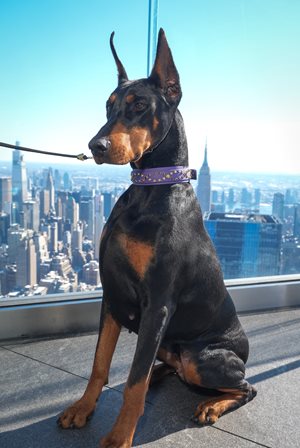
Now, with a little distance from the whirlwind that followed Westminster, CKC caught up with Theresa to reflect on Penny’s journey, the breeding program behind her success, and the conversations this landmark win has sparked within the Doberman community.

“We knew she was something special.”

For Theresa Connors-Chan, Penny stood out long before Westminster.

“We knew very early,” she recalled. “There was just something about her. Her temperament, her structure, the essence of who she was.”

Penny was one of 20 puppies born across two litters just four days apart. At six weeks old, Theresa and Greg were already beginning to evaluate the puppies’ personalities, confidence, and structure.

MediaDay24.jpgOne evening, while sitting in the puppy pen giving the litter their bedtime meatballs, Penny made her presence known.
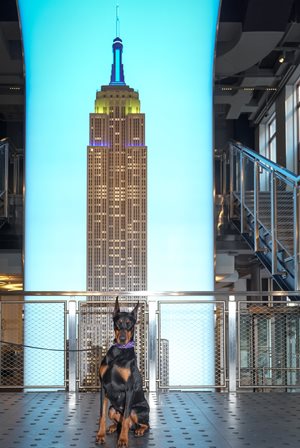
“She climbed right up onto me and then growled at the other puppies when they tried to climb up too.”

Theresa laughed. “I said to Greg, ‘I don’t know what this one’s going to be all about, but we may have to keep her.’”

As Penny matured, those early signs only became more apparent.

When Theresa first placed Penny on the table to evaluate her structure, she immediately noticed something different.

“When I baited her and she arched her neck, I just thought, ‘Oh my God, I need to look at this again.’ There were four very nice sisters in that litter, but she stood out.”

Years later, Theresa says Penny has “spoiled” her eye for every Doberman that has come after her.

“There’s absolutely nothing I would change about her,” she said.


Life after Westminster

Although Penny’s Westminster win brought international attention to ConnQuest Dobermans, Theresa says life at home has largely returned to normal.

Having Penny back home after being on the road has been especially meaningful.

MediaDay16.jpg“She’s just happy to be home,” Theresa said.
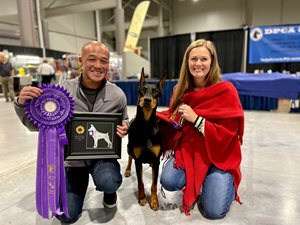
And despite becoming one of the most recognizable Dobermans in the world, Penny is still, at heart, a deeply affectionate dog who loves being around people.

“She’s unusually friendly for a female Doberman,” Theresa explained. “Dobermans tend to be a little aloof with strangers, but Penny actively seeks people out. She genuinely loves attention.”

In fact, Theresa has even explored the possibility of having Penny certified as a therapy dog.

“She would absolutely love it,” she said. “She just loves meeting people.”

That softer side of the breed is something both Theresa and the Doberman Pinscher Club of Canada hope more people will come to understand following Penny’s win.

“Dobermans are intelligent, alert, and energetic dogs who thrive with structure, purpose, and consistent guidance,” said Cindy Harrison, President of the Doberman Pinscher Club of Canada. “While not suited to every household, in the right environment they are exceptional companions: loyal, devoted, and deeply bonded to their families.”


The breeding program behind Penny

The ConnQuest breeding program officially began in 2012, though Theresa had been involved in Dobermans long before that. From the beginning, she and Greg focused on finding mentors and foundation dogs that aligned with their goals for health, structure, longevity, and temperament.

“We looked for people who bred to the standard and really understood their pedigrees,” Theresa explained. “Dobermans are genetically predisposed to conditions like DCM (dilated cardiomyopathy), so longevity and health history were extremely important to us.”

That philosophy continues to guide every decision they make.

Theresa also strongly believes mentorship is one of the most important pieces of becoming a successful breeder.

“You need a mentor who shares common goals with you,” she said. “Somebody who will help guide your vision and be honest with you.”

Evaluating puppies, she explained, also requires breeders to make difficult decisions.

“You can’t fall in love with a puppy that isn’t structurally sound or temperamentally sound,” she said. “There have been beautiful puppies that left my house as pets because they didn’t have the temperament I was looking for in a show dog.”

For Theresa, responsible breeding goes far beyond producing beautiful dogs.

“It’s about matching the right temperament with the right home,” she explained. “These dogs become part of your life forever.”


A bigger conversation around the breed

For the Doberman community, Penny’s Westminster win represented more than a major show win.
“Penny’s win is a powerful moment for the Doberman Pinscher community and for Canadian breeders who have dedicated decades to preserving their breeds through careful planning, thoughtful training, and lifelong stewardship of their dogs,” said Cindy Harrison, President of the Doberman Pinscher Club of Canada.

PennyGreg3.jpgThe Club also noted that moments like this can help challenge outdated misconceptions about the breed.
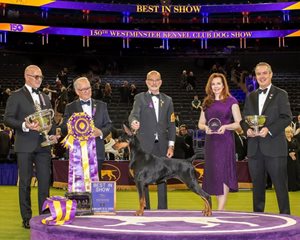
“Seeing a Canadian-bred Doberman succeed on one of the world’s most prestigious stages helps shift public perception away from outdated stereotypes and toward a more informed understanding of the breed’s true temperament and capabilities,” added Harrison.

At the same time, Theresa acknowledges that increased attention on the breed also comes with new challenges.

“The average person sees a beautiful dog and wants one immediately,” she said. “But Dobermans are not a breed for everybody.”

She describes Dobermans as deeply intelligent, emotionally connected dogs that require daily mental and physical engagement.

“This is not a dog you can ignore all week and then take for a run on the weekend,” she explained. “They need to be with you. They need stimulation. They need purpose.”

That is why responsible breeding and careful puppy placement remain such an important priority.

“If people are breeding the same dogs repeatedly, if they aren’t doing health testing, if they always have puppies available, those can all be red flags,” Theresa said.

She also emphasized the lifelong responsibility ethical breeders take on.

“I just took back a dog recently because the owner was going through personal challenges,” she explained.

“That’s part of the commitment. You always take responsibility for the dogs you produce.”

“I’m going to win Westminster with her.”

Penny’s journey to Westminster also brought together an extraordinary team.

After finishing her Canadian championship and making an impression at the Doberman Pinscher Club of America National Specialty, Penny eventually caught the attention of renowned handler Andy Linton.

When Greg first met Andy to discuss Penny’s future, he asked a simple question:
“What’s the goal here?”

Andy’s response was immediate.

“I’m going to win Westminster with her.”

Years later, that prediction became reality.

For Theresa, the victory feels especially meaningful given Andy’s long history with the breed and his recent Parkinson’s diagnosis.

“What a wonderful way for him to finish his career in Dobermans,” she said. “It’s pretty cool.”


Looking ahead

Now that the excitement of Westminster has settled, Theresa hopes Penny’s story continues to encourage thoughtful conversations about responsible breeding, mentorship, and the realities of living with a Doberman.

PennyWKCBIS.jpg“I think we have a responsibility now to educate people about what it really means to own a Doberman,” she said.
The Doberman Pinscher Club of Canada agrees.

“Achievements like this reflect what responsible dog ownership looks like at its very best, not only in the show ring, but in daily life,” said Harrison.

For Theresa, the journey has already surpassed anything she once imagined.

“We’ve reached the pinnacle,” she said.
And even months later, Penny’s Westminster win continues to leave a lasting impression, not just because of what she accomplished in the ring, but because of the conversations her story continues to inspire.

Sarah Petrie and Bowie Set Their Sights on the World Dog Show

Tomorrow, thousands of dogs and exhibitors from around the globe will gather in Bologna, Italy, for one of the biggest international canine events in the world: the World Dog Show.

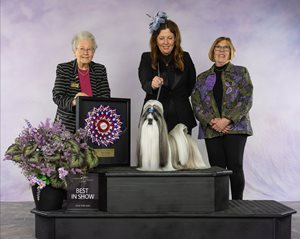
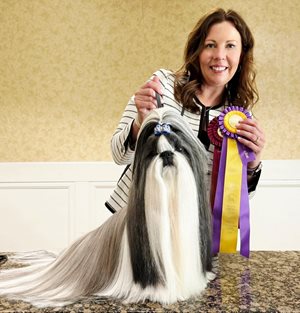
Among them will be a familiar Canadian team proudly representing the Canadian dog community, Sarah Petrie and her Shih Tzu, Bowie.

1000007368.jpg

Bred by Sarah alongside her parents, Patti and Mark Paquette, Bowie has already made an impressive name for himself in the sport. In 2025, he was ranked Canada’s #4 All-Breed Dog and the #1 Owner-Handled Dog of All Breeds. Sarah has handled Bowie exclusively throughout his career, making their success together even more meaningful.

“It is truly an honour to be at the end of his lead,” says Sarah. “I am proud to owner-handle him exclusively.”

After a standout year competing in both Canada and the United States, Sarah and her family felt the time was right to take Bowie to the international stage.

“Competing at the World Dog Show felt like the perfect next step for him,” she explains. “It is an incredible opportunity to showcase Bowie on an international stage.”

For Sarah, the opportunity means more than simply competing. It is a chance to represent Canada and the dedication behind her family’s breeding program at one of the most prestigious dog shows in the world.
“It is an incredible honour to represent Canada on the world stage,” she says. “We hope to make everyone in the Canadian dog community proud.”

1000008375.jpg

Preparation for the trip has included selective showing to keep both handler and dog sharp heading into the competition season. Bowie recently earned Best in Show at the Olde York Kennel Club show in March, followed by Best in Specialty wins at both American Shih Tzu Club Regional Specialties in April. Alongside competing, Sarah says Bowie continues a strict conditioning and coat care routine to ensure he is in top form for Italy.

While the competition itself is exciting, Sarah is equally looking forward to the experience surrounding the event.

“My sister and I have never been to Italy before, so the experience itself will be very special,” she says. “The show will also feature over 30,000 dogs from around the world, which is incredibly exciting.”

Like many in the purebred dog community, Sarah’s journey has always been rooted in family. She began attending dog shows with her mother at a young age, and both she and her sister competed in junior handling. Now, as she prepares for one of the biggest moments of her showing career, her family will once again be by her side.

“Showing dogs has always been a family affair for us,” says Sarah. “Having their support during this journey means a great deal to me.”

Screen-Shot-2026-06-02-at-12-41-40-PM.png

The World Dog Show will also be a family milestone in more ways than one. Sarah’s cousin, Jody Paquette, will be competing, too.

Although this will be Sarah’s first time competing outside Canada and the United States, international success is not new to the Paquette family. Sarah’s mother, Patti, previously attended the World Dog Show in Brazil, where one of their Shih Tzu, “Shandy,” won the breed.

As Sarah and Bowie prepare to take on the world stage, they do so carrying the support of the Canadian dog community with them.

“We will represent Canada with great pride,” says Sarah. “Bowie and I truly appreciate all of the support and encouragement we have received throughout this journey.”

The Canadian Kennel Club wishes Sarah, Bowie, and all Canadians attending the 2026 World Dog Show the very best of luck in Bologna.

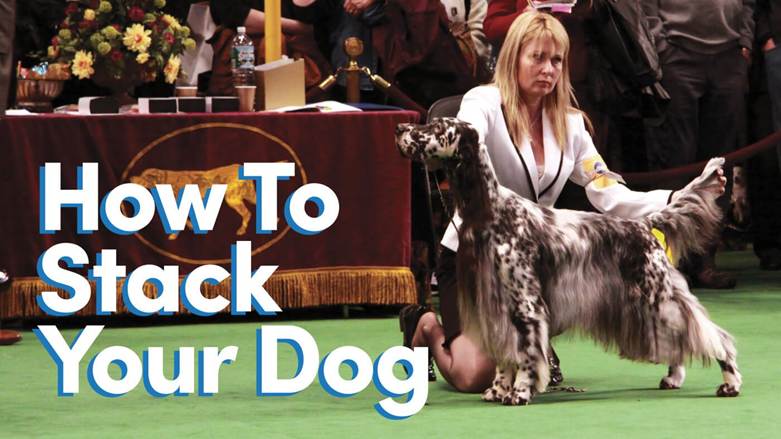
Guest Blog: How to Stack Your Dog

In order to show your dog, one of the handling techniques you must know is how to stack your dog. Stacking your dog refers to placing the legs and holding your dog still in a straight line for the judge to examine them in the conformation ring. While your dog is stacked, the judge will evaluate their conformation; either hands-on during the judge’s exam or visually.

Stacking requires you to control your dog’s head and body, pick up each leg by the elbow or hock and place it correctly, and to hold the head and tail in the correct position for your breed. There are lots of things to learn about how to stack your dog, and this blog will outline the key steps.

If you are a visual learner, Leading Edge Dog Show Academy offers a completely free course “How to Stack Your Dog”. The course covers everything you need to know to start stacking your dog in no time!

Essential Handling Techniques – What do you need to know to show your dog?

To show your dog, you must know several handling techniques including stacking, gaiting, free baiting, and general control of your dog. You must also have the proper show lead and collar. There are many things to know about showing your dog but in this blog series, we will teach you each technique to get started showing your dog in conformation. Up first, let’s talk about stacking.

What is “Stacking”?

If you have ever watched dogs being judged in a conformation dog show, you will have seen the handlers placing their dogs body and legs in a certain position; this is “stacking”. Stacking your dog refers to placing the legs and holding your dog still in a straight line for the judge to examine them in the conformation ring. You will most likely stack your dog when you first enter the ring, before the judge examines your dog (and throughout the non-gaiting portion of the examination) and once all of the dogs have been examined and the judge is ready to make their placements. You need to know how to stack your dog so that the judge can properly examine them; it is essentially a required handling technique for conformation judging.

Read on to learn the steps on how to stack your dog for a conformation dog show. To see a video demonstration on how to stack your dog, click here.

What’s so important about the stack?

The judge’s examination, with your dog stacked, is one of the only times the judge is completely focused on your dog. During the exam, they are feeling your dog’s structure and anatomy and comparing it to the written breed standard. In order to properly compare your dog to the breed standard and the other dogs in the ring, you should give them every opportunity to evaluate your dog’s conformation by having them properly stacked up. By properly stacking your dog you can also highlight your dog’s conformation.

Overview of Stacking

The typical steps to stack your dog are:

  1. Control your dog’s head
  2. Stack the first front leg
  3. Stack the second front leg
  4. Stack the first rear leg
  5. Stack the second rear leg
  6. Hold the head and tail as appropriate for your breed
  7. Support your dog as the judge examines them, including showing the bite to the judge.

Setting Up For The Perfect Stack

A little bit of preparation helps you to stack your dog efficiently, and to perfection! See what I recommend you do to set yourself up for success before you start the stack.

  • Make sure your dog is wearing the proper show lead and collar.
  • Have the collar right under the chin and behind the ears, with any excess skin pulled out of the way.
  • PRO TIP: Know exactly where you are going to stop in the ring to stack your dog. This saves you time, instead of fumbling to decide where to stop. I call this “pick a speck” because sometimes I will even pick a speck of tape on the floor to mark where I’m going to stop and stack.
  • Practice, practice, practice! You should be able to stack your dog quickly and efficiently; ideally in under 20 seconds.

How to Stack Your Dog: Step-By-Step

Step 1: Head Control

The most common mistakes when stacking your dog happen when you do not have proper control of the head. By controlling your dog’s head, you control their spine and the rest of their body, creating the “controlled stack”.

Head control involves you using your hand(s) to make sure you have control of your dog’s head; they are unable to move out of the stack if you are controlling the head. You can use a gentle grip with your hand and/or a finger through the show collar to ensure control.

Step 2: Stacking the Front

The front legs are placed by picking up the leg by the elbow and placing the leg in the proper position. This is typically with the front legs perpendicular to the ground, but make sure to consult your breed standard and resources for further guidance about your breed.

  • PRO TIP: The best way to choose which of your dog’s front legs to stack first is to stack whichever foot is furthest forward, and move it back to match your dog’s second front leg. Learn more about this in Leading Edge Dog Show Academy’s advanced tutorials.
  • With your dog’s head in your right hand, reach to your dog’s left (outside) leg with your left hand. Pick up the left leg by the elbow; place it on the ground. The leg should be under your dog’s body, in a straight line perpendicular to the ground.
  • With your dog’s head in your left hand, reach to your dog’s right (inside) leg with your right hand. Just like with the left leg, pick up the right leg by the elbow; place it on the ground. The leg should be under your dog’s body, in a straight line perpendicular to the ground and should be lined up with your dog’s left leg.

Step 3: Stacking The Rear

The rear legs are placed by picking up the leg by the hock and placing the leg in the proper position. This is typically with the hocks perpendicular to the ground; there are exceptions including the German Shepherd Dog. When stacking the rear, make sure to consult your breed standard and resources for further guidance about your breed.

  • Now it’s time to stack the rear legs. Hold your dog’s head in your right hand and use your left hand to reach back and stack the left (outside) rear leg. Pick up the left leg by the hock; place it on the ground. The hock should be perpendicular to the ground at a 90* angle.
  • With your left hand, now pick up the right (inside) rear leg. Pick up the right leg by the hock; place it on the ground. The hock should be perpendicular to the ground at a 90* angle.

Step 4: Hold the Head and Tail

Once all the legs are stacked, finish the stack by holding the head and tail. Where you hold each of these (or if you hold the tail at all) is breed-specific. Consult the Canadian Kennel Club breed standard to find out where the head and tail are meant to be placed.

  • With your right hand, hold the head in the proper position. This might include holding up the collar, holding the right side of the head, using bait to get expression, or simply holding your dog still if they are not yet trained.
  • With your left hand, hold the tail in the proper position, if required. For example, a Poodle’s tail will be held up, while a Whippet’s tail is left naturally down.
  • If you are not holding up the tail, you can use your left hand to help hold the head, show expression, or simply out of the way.

The Stack In-Depth

Knowing the stack inside and out involves knowing the proper order of the stacking steps, as well as how to execute the stack quickly and efficiently. In this video guide from Leading Edge Dog Show Academy, I will show you the stack in real time with all of these steps put together.

The Difference Between “Stacked” and “Shown”

The difference between “Stacked” and “Shown” refers to the difference between simply setting up your dogs’ legs properly and stacking them with the proper head placement, proper tail placement, creating tension in the body, and creating a frame where your dog is the featured “artwork” (so to speak). When you are doing this, you are truly “SHOWING” your dog to the judge.

It is the difference between your dog simply standing, and them standing with posture. Think about yourself standing with bad posture, versus straightening up with proper posture; it is the same for stacking your dog. It is also making sure that the entire dog’s body (silhouette) looks pleasing and according to their breed. 

Watch how I showed the difference between “SHOWN” versus “just stacked” in this tutorial.

https://www.youtube.com/embed/C9B5DQ67iYE?si=xW8MUOHyqTYVpiNj

3 Things to Remember When Stacking – Conclusion

The stack is essential for showing your dog. It is not hard, but there are several things to keep in mind!
Being able to confidently stack your dog will make your time in the ring much easier (and perhaps more successful!). It will allow the judge to properly evaluate your dog and compare them to the breed standard.

Always remember these 3 tips for success when stacking your dog.

  1. Always have complete control of your dog’s head.
  2. Not only do all 4 feet need to be stacked properly, but the head, tail, tension and silhouette need to be perfect for your stack to stand out and look breed-specific.
  3. The outcome of the stack is up to you. You can do it!!

Building Community, One Bernese Mountain Dog at a Time

More than 50 Bernese Mountain Dogs recently gathered in Guelph, Ontario, for a community walk organized by CKC member breeder Karina Freiburger of Freiberners. What began as a simple idea to bring together owners and dog lovers quickly turned into something much bigger, drawing attendees from across Ontario and even the United States.

For Karina, the event was about more than just getting dogs together for a walk. It was about creating lasting connections between people who share a love for the breed.

“The idea for the Bernese Mountain Dog walk in Guelph really came from wanting to create connection, both for the dogs and the people who love them,” she explained. “Bernese Mountain Dogs naturally bring people together wherever they go.”

Karina says she has remained closely connected with the families who have welcomed one of her dogs into their homes over the years, and events like this are an opportunity to strengthen those relationships while watching the dogs grow and mature.

5-18.png

“We have always stayed connected with our puppy families, and events like these are such a meaningful way to continue those relationships while also watching our lines grow and develop over time,” she said. “It gives us the opportunity to observe not only how the dogs are maturing physically, but also to see their temperaments and personalities as they grow, which is incredibly valuable to us as breeders.”
Although this was the first large-scale walk Karina had organized, the response exceeded every expectation.

“Seeing so many Bernese Mountain Dogs gathered together, along with owners, families, and members of the community, was incredibly rewarding and emotional,” she shared. “We had people travel from all over Ontario to attend, and even one couple who drove more than four hours from Ohio just to be part of the event.”

Throughout the day, owners exchanged stories, shared advice, reconnected with littermates, and celebrated the breed they love.

Karina says her experience organizing puppy yoga events in the past helped inspire the larger community walk. Those events originally began as a fun and enriching way to socialize puppies, but they also revealed just how eager people were to connect with fellow Bernese owners.

“The walk felt like such a special way to bring that extended Berner community together,” she said.
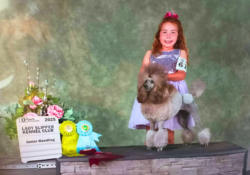
For Karina, one of the most meaningful moments was watching owners connect not only with her, but with one another.

“As a CKC member breeder, my relationship with families doesn’t end when a puppy goes home,” she explained. “I truly value staying connected throughout the dog’s life, offering support, guidance, and celebrating milestones alongside them.”

She believes that sense of ongoing support is an important part of responsible breeding and ownership.

7-19.png

“My journey as a CKC breeder of Bernese Mountain Dogs began with a deep love and admiration for the breed itself over 10 years ago,” said Karina. “Over time, that passion grew into a commitment to preserving and improving the breed responsibly through health testing, thoughtful breeding practices, and prioritizing temperament and structure.”

For those considering adding a Bernese Mountain Dog to their family, Karina encourages prospective owners to thoroughly research the breed and connect with reputable breeders.

“Berners are incredibly loving and devoted companions, but they are also a large working breed that requires time, training, grooming, exercise, and commitment,” she said. “They thrive when they are included as part of the family and do best with owners who understand both the joys and responsibilities that come with the breed.”
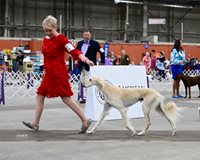
Following the overwhelming response to the walk, Karina is already planning future community events, including another Berner walk this fall and more puppy yoga classes later this summer.

“I would love to continue creating opportunities for Berner owners and dog lovers to come together through walks, meetups, and other community-focused events in the future,” she said.
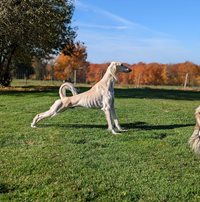
To follow along with future events and updates from Freiberners, visit @Freiberners on Instagram.

Finding the Right Breeder: What to Look For

Bringing a dog into your life is a big decision, and choosing the right breeder is just as important as choosing the right breed.

If you’re starting your search, it can be hard to know what to look for. Not all breeders operate the same way, and understanding the difference can help you feel confident in your decision.

So, what does an accountable breeder actually look like?

3-17.png

They want to get to know you
An accountable breeder isn’t just focused on placing puppies. They are focused on placing them in the right homes.

You can expect them to ask questions about your lifestyle, your experience with dogs, and what you’re looking for in a companion. This isn’t about being selective for the sake of it. It’s about making sure each dog is set up for success.

If a breeder isn’t asking questions, it may be worth taking a closer look.

They’re open and transparent
Accountable breeders are proud of their dogs and how they are raised. They are open to showing you where their dogs live and are happy to answer your questions.

Whether in person or virtually, you should be able to see the environment your future dog is coming from. If someone avoids this step or suggests meeting in a neutral location only, that’s something to be cautious of.

They provide health information and documentation
Responsible breeders prioritize the health and well-being of their dogs.

They should be able to provide health records, discuss any relevant testing, and walk you through the details of your dog’s background. Clear documentation helps you understand your dog’s history and gives you confidence moving forward.

If paperwork isn’t available, it can leave important questions unanswered.

4-17.png

They’re knowledgeable and involved
Many accountable breeders are actively involved in the dog community, whether through events, training, or other activities.

Their involvement reflects a genuine interest in their breed and a commitment to maintaining its health, structure, and temperament. They are also a valuable resource for you, both before and after you bring your dog home.

They’re there for the lifetime of the dog
One of the most important signs of an accountable breeder is their long-term commitment.

They don’t disappear after a puppy goes home. Instead, they remain available to answer questions, offer guidance, and support you throughout your dog’s life.

This ongoing relationship can make a meaningful difference, especially for first-time owners.

Take your time
Finding the right breeder doesn’t happen overnight, and it shouldn’t.

Take the time to ask questions, do your research, and find someone you trust. A thoughtful approach at the beginning can help set both you and your future dog up for success.

Choosing responsibly starts here
At the Canadian Kennel Club, we’re committed to supporting responsible dog ownership and helping Canadians make informed decisions.

Because you and your future dog deserve the right start.

Purebred Dogs: Where It All Began

On National Purebred Dog Day, we’re celebrating more than just the dogs we know and love. We’re recognizing generations of purpose, care, and community behind them.

Purebred dogs did not appear overnight. They were developed over time, shaped by the needs of people and the environments they lived in. Whether herding livestock, retrieving game, guarding property, or offering companionship, dogs were bred with intention. Over generations, those shared traits became consistent, forming the breeds we recognize today.

Canada is also home to several breeds developed to suit its unique landscape and climate, reflecting the close relationship between dogs and the people who relied on them.

Screen-Shot-2026-05-01-at-10-44-05-AM.png

What “Purebred” Means in Canada
The word “purebred” is often used casually, but in Canada, it has a very specific meaning. Under the Animal Pedigree Act, a dog is considered purebred only if it is registered, or eligible for registration, with an authorized registry.

For the Canadian Kennel Club, this means a dog must be part of a recognized breed and have documented ancestry through a certified pedigree. This documentation is not just a formality. It provides transparency, helps protect buyers, and supports the long-term integrity of each breed.

Maintaining accurate records is an important part of preserving breeds over time, ensuring their history and characteristics are not lost.

The Role of the Canadian Kennel Club
Founded in 1888, the Canadian Kennel Club was established to bring structure and consistency to the growing interest in purebred dogs and dog events in Canada.

In its early years, the CKC helped standardize rules for dog shows and field trials, bringing consistency to events that were growing in popularity across the country.

Today, the CKC is the primary registry body for purebred dogs in Canada. It operates under the Animal Pedigree Act and serves as a national, non-profit organization dedicated to advancing the interests of purebred dogs and their responsible owners and breeders.

The CKC maintains breed standards, registers dogs, and supports a wide range of events and activities across the country. These standards act as a blueprint for each breed, outlining the characteristics, temperament, and structure that allow dogs to perform the roles they were originally developed for.

Screen-Shot-2026-05-01-at-10-45-05-AM.png

Why Purebred Still Matters Today
While many dogs today live as companions, their original purpose still plays an important role in who they are.

A dog bred for retrieving may still love the water. A herding breed may show instinctive awareness of movement. These traits are not accidental. They are the result of thoughtful, intentional breeding over generations.

While the roles of dogs have evolved, the principles behind responsible breeding and breed preservation remain the same.

Understanding a dog’s breed can help owners better meet their needs, support their wellbeing, and build a stronger bond.

The People Behind the Dogs
Behind every purebred dog is a community committed to doing things the right way.

Responsible breeders prioritize health, temperament, and long-term wellbeing. They take the time to match each puppy with the right home and remain a resource for owners throughout the dog’s life.

This commitment helps ensure that dogs are not only well-bred, but well cared for at every stage.

Looking Ahead
Purebred dogs are part of a long and evolving story. One that continues through responsible breeding, informed ownership, and a shared appreciation for the role dogs play in our lives.

Whether you are a long-time member or just beginning to learn about purebred dogs, there is always more to discover.

We’re continuing the conversation on our Facebook and Instagram. Let us know what you’d like to learn more about. We’ll be answering your questions in upcoming posts.

Dogs Who Save the Day: Meet Mr. Magoo

April 28 is National Superhero Day, and at the Canadian Kennel Club, we’re recognizing the real-life heroes in our community.

When Alberta resident Ross Schmidt suffered a massive heart attack in December 2022, he collapsed and lost consciousness in an unheated sunroom. With no one else around, help seemed out of reach.

IMG_1416-1.jpg

But Mr. Magoo knew something was wrong.

Magoo, a Chesapeake Bay Retriever bred and owned by Ross under the LivingSkies prefix, even knew how to open door handles. He made his way out of the house, crossed the street, and found a neighbour.

Sensing the urgency, he began pulling them toward the home. The neighbour followed, knowing the dogs would not be outside alone unless something was wrong.

Magoo led them directly to Ross.

Emergency responders were called immediately. When they arrived, Ross had only a faint pulse and required defibrillation before being transported by air ambulance for emergency surgery.

Thanks to Magoo’s quick thinking and determination, help arrived just in time.

Stories like this are a powerful reminder of the deep bond between people and their dogs, and the extraordinary ways they show up for us when it matters most.

We were blown away by the incredible stories shared by CKC members. This is just the beginning. More heroic dog stories are coming soon.

CKC Members in the Spotlight Across Canada

CKC members and their dogs were in the spotlight across Canada following the release of the Top 10 Most Popular Breeds in March. Through media interviews, community events, and online features, they helped connect Canadians with the world of purebred dogs, giving the public a closer look at the people and purpose behind them.

Media coverage reached audiences across the country, with features appearing on television, radio, digital platforms, and in print. Stories were shared by major national and regional outlets, as well as local publications in communities from British Columbia to the Maritimes. Highlights included a Global Morning Show segment in Halifax featuring CKC Zone Director Janice Kivimaki, as well as widespread coverage through national distribution channels and regional news networks. CKC representatives also took part in interviews in both English and French, helping to ensure the message reached a broad and diverse audience.

Together, these efforts resulted in an estimated audience reach of 10 to 15 million Canadians, with strong interest from media across multiple regions. Coverage was particularly prominent in British Columbia, Alberta, and Ontario, with additional features appearing in Manitoba, Saskatchewan, Quebec, and Atlantic Canada, reflecting the national interest in the Top 10 list.

CKC representation in media interviews included Board and member voices from across the country. Janice Kivimaki (Zone 1 – Nova Scotia & Newfoundland and Labrador), Ramona Bauer (Zone 6 – Ontario North), Sylvain Sirois (Zone 3 – Quebec), and CKC member breeder Nancy McKenzie each contributed to sharing insights on purebred dogs, responsible breeding, and the role of the CKC.

Janice Kivimaki shared that the experience was a valuable opportunity to connect with the public.
“It was refreshing to be able to share who we are, what we do, and what we stand for,” she said. “The general public is often unaware of who the CKC is, so it was nice to be able to talk about it.”
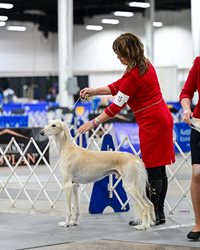
During her interview, Janice noted that there was strong interest in both the organization and her work as a breeder.

“They asked who we were and what we did, and we also spoke about my breed, what to look for in a well-bred dog, and the #1 Labrador Retriever,” she explained. “I received a few compliments afterwards about the interview, which was nice to hear.”

One of the biggest takeaways for her was the need for continued public awareness.

“What stood out to me is that we need more exposure so the public knows who we are,” she said. “That same weekend, I was at our booth at the Sports Expo, and many people thought the CKC was a local dog club.”
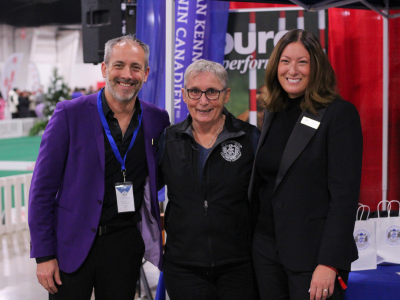
Ramona Bauer also reflected on the experience of connecting with audiences through media opportunities.

“I’ve thoroughly enjoyed being a CKC spokesperson,” she shared. “I’ve had the opportunity to speak about breeds, our junior handler program, and the sports that we offer. I look forward to doing more in the future.”

This level of visibility is made possible through the collaboration of CKC members, clubs, volunteers, and partners across the country. By sharing their knowledge and experiences, they help ensure that accurate, experience-based information about purebred dogs continues to reach Canadians.

As coverage continues to be shared online, these stories remain an important way to connect with the public and highlight the people and dogs at the heart of the CKC community.

What to Expect When Bringing Your Puppy Home for the First Time

Bringing home a puppy is an exciting milestone, but it also comes with a learning curve. Those first few weeks are all about adjustment for both you and your new companion, and it’s completely normal if it feels like a lot at first. There will be good days and challenging ones, and that’s all part of the process.

Adjusting takes time
Your puppy is experiencing everything for the first time, from new sights and sounds to being away from their littermates. At the same time, you are learning how to care for them, communicate with them, and build a routine together. If things feel overwhelming in the beginning, you’re not alone. It takes time to settle into a rhythm.

iStock_000016949111Large.jpg

Routine builds confidence
Consistency is one of the most important things you can offer your puppy. Regular feeding times, scheduled potty breaks, and predictable sleep routines help them feel secure and understand what to expect each day. For example, taking your puppy outside first thing in the morning, after meals, and before bedtime can help reinforce good habits early on. A consistent routine also makes training easier and helps prevent confusion as your puppy learns the rules of their new home.

Training takes patience

Puppies are constantly learning, but good habits don’t happen overnight. Focus on rewarding the behaviours you want to see and gently redirecting the ones you don’t. Keep training sessions short, positive, and consistent. Progress may feel slow at times, but every small step adds up.

iStock-589434138.jpg

You don’t have to do it alone
Support can make all the difference, especially in those early weeks. Your breeder, veterinarian, and local training community are all valuable resources. If you purchased your puppy from a CKC member breeder, they can be a helpful source of guidance as your puppy grows and develops. Starting off with the right guidance helps set the foundation for responsible dog ownership and long-term success.

Looking ahead
As your puppy grows and develops, you may choose to explore opportunities that help reinforce good behaviour and social skills. Programs like the Canadian Kennel Club’s Canine Good Neighbour (CGN) test recognize dogs that demonstrate responsible behaviour in everyday situations.

Every dog is different, and not every path looks the same. Some dogs may progress quickly, while others may need more time, patience, or support, especially if they are more sensitive or reactive. What matters most is building a strong, trusting relationship and helping your dog feel confident in their environment.

For some, programs like CGN become a meaningful goal. For others, everyday progress at home is just as important.

iStock-866106654.jpg

Enjoy the process
It’s easy to get caught up in doing everything “right,” but don’t forget to enjoy this stage. The early days may be challenging, but they are also where the bond between you and your puppy begins to take shape.
Every experienced dog owner started exactly where you are. With time, patience, and consistency, your puppy will grow into a well-adjusted companion and the effort you put in now will make all the difference.

Looking for a puppy?
Start your search on our website to connect with CKC member breeders and take the first step toward welcoming a puppy into your home.

Canada’s Top 10 Most Popular Breeds in 2025

Each year, the Canadian Kennel Club compiles national registration data to determine the most popular purebred dog breeds in Canada.

This year’s rankings highlight a remarkable milestone. The Labrador Retriever has now been Canada’s most popular dog breed for 32 consecutive years, reflecting the breed’s enduring appeal among Canadian families.

From sporting dogs that thrive outdoors to devoted companions who rarely leave your side, this year’s Top 10 showcases the remarkable diversity of purebred dogs across the country.


300-dpi-01-Labrador__Retriever_0328179_MARY-ANNE_LAUZON_8da95d4d-0e21-43a7-8dd1-f60b8f1a25a4.jpg#1 Labrador Retriever

Year after year, the Labrador Retriever continues to lead the pack.

Descended from dogs brought to Newfoundland by early settlers and fishermen, the Labrador earned its reputation retrieving fish and game in harsh coastal conditions. Today, the breed’s versatility remains unmatched. Labradors serve as guide dogs, excel in field work and performance sports, and are beloved family companions.

They enjoy outdoor exercise, especially swimming, and benefit from regular brushing to manage shedding. Friendly, adaptable and eager to please, it’s no surprise the Labrador remains Canada’s most registered breed.
300-dpi_02-Golden__Retriever_4517145_Stephanie_Gunby_14611a45-fa61-42c3-a877-ffc62aa74376-1.jpg

#2 Golden Retriever

Developed in the mid-19th century by Sir Dudley Majoribanks, the Golden Retriever was bred to retrieve game with enthusiasm and reliability.

Today’s Golden retains that active, willing spirit. Powerful and energetic, the breed thrives in homes where it receives plenty of outdoor exercise. Goldens are also known for their success in obedience and as guide dogs, reflecting their intelligence and steady temperament.

Regular brushing keeps their beautiful coat in good condition. Gentle, devoted and highly trainable, the Golden Retriever continues to win Canadian hearts.
300-dpi_03-German_Shepherd_Dog_1471465_Erica_Taylor_aac2fb50-7fac-4e10-a6e3-9cfc60b8664e.jpg

#3 German Shepherd Dog

Developed in Germany in the late 1800s, the German Shepherd Dog was originally bred as a versatile herding dog.

Renowned for intelligence, courage and loyalty, the breed’s working ability has led to widespread use in police work, tracking and search and rescue. Despite their calm and steady nature indoors, German Shepherd Dogs require substantial exercise and benefit from structured training.

Regular brushing helps maintain their coat. Confident and dependable, they remain a top choice across Canada.
300-dpi_04-Miniature_Poodle_4401930_Robin_Miller_f711599d-d332-4688-9160-90739828bf36.jpg

#4 Poodle

Known in Europe since the 16th century, the Poodle was originally used as a retriever of waterfowl.
Available in Standard, Miniature and Toy varieties, the Poodle combines athleticism with remarkable intelligence. The breed requires regular exercise and consistent grooming, including clipping and brushing, to maintain its distinctive coat.

Whether competing in performance events or sharing quiet time at home, Poodles bring elegance and energy in equal measure.
300-dpi_05-French-Bulldog-1.jpg

#5 French Bulldog

Developed from miniature Bulldogs brought from England to France in the 19th century, the French Bulldog has long been prized as a companion.

Compact and well-mannered, the breed is well suited to less active households. Grooming is quick and easy, and moderate exercise is typically sufficient.

Their expressive faces and affectionate personalities continue to make French Bulldogs a popular choice nationwide.
 
Screen-Shot-2026-03-12-at-10-22-48-AM-4.png

#6 Australian Shepherd

Despite its name, the Australian Shepherd’s development traces back to Europe before becoming firmly established in North America.

Bred to herd livestock, the breed thrives on activity and requires regular exercise and mental stimulation. Australian Shepherds excel in agility, herding and other performance disciplines.

Low maintenance but not maintenance-free, their coat benefits from regular brushing. Energetic and highly trainable, they continue to grow in popularity.
07-Havanese_1495282_Gabrielle_Kube_08f0bdff-c049-4fa3-b067-e009ffda6b12.jpg
#7 Havanese

A Cuban member of the Bichon family, the Havanese was bred primarily as a companion.

Affectionate and adaptable, the breed’s exercise needs are easily met, making it suitable for both city and suburban living. Regular brushing prevents matting and keeps the silky coat in good condition.

Its cheerful temperament continues to make it a favourite among Canadian families.
08-Cavalier_King_Charles_Spaniel_1500958_Alexandra_Wood_c9d4daeb-6547-4ff4-9e13-a6ab99117654.jpeg
#8 Cavalier King Charles Spaniel

Once favoured by King Charles II, the Cavalier King Charles Spaniel remains a devoted companion breed.
Playful and gentle, their exercise needs are easily satisfied. The silky coat requires brushing but no trimming is necessary.

Their affectionate nature ensures they remain firmly within Canada’s Top 10.
09-Bernese_Mountain_Dog_1495282_Debra-_Bowles_599aacc9-7a13-45eb-9172-8e5d38129fa3.jpg
#9 Bernese Mountain Dog

Originating in Switzerland’s Canton of Bern, this all-purpose farm dog once drove livestock and pulled carts to market.

Strong yet gentle, the Bernese Mountain Dog requires regular exercise and thorough brushing to maintain its striking tri-colour coat. They are calm, devoted and well suited to cooler climates.
10-Shetland_Sheepdog_4587209_Jane_McLaren_38135b7e-c7bd-4a8e-90d0-551f31ec9654.jpg

#10 Shetland Sheepdog

The Shetland Sheepdog originated in the rugged Shetland Islands off the northeast coast of Scotland, where smaller dogs were well suited to managing the region’s equally small livestock.

Often affectionately called the “Sheltie,” the breed is known for its intelligence, responsiveness and strong desire to please. These qualities have helped the Shetland Sheepdog excel in obedience and other performance activities.

Alert, agile and sturdy, Shelties enjoy staying active and benefit from regular exercise and mental challenges. Their long double coat requires consistent brushing to keep it free of mats.

Loyal and affectionate companions, Shetland Sheepdogs round out this year’s Top 10.

What the 2025 Rankings Tell Us

Canada’s Top 10 continues to reflect a balance between versatile working breeds and devoted companions. Sporting and herding dogs remain strong, while smaller companion breeds maintain steady popularity across the country.

At the top of the list, the Labrador Retriever’s 32-year streak as Canada’s most popular breed highlights the enduring appeal of a dog known for its adaptability, intelligence and friendly temperament.

From active outdoor partners like the Australian Shepherd to affectionate companion breeds such as the Havanese and Cavalier King Charles Spaniel, the rankings reflect the many roles purebred dogs play in the lives of Canadians.

Whether helping on the farm, competing in performance sports or simply sharing everyday moments at home, these breeds demonstrate the lasting partnership between dogs and the people who love them.

Choosing the Right Breed for You

Inspired by this year’s Top 10? While popularity can be a helpful starting point, the most registered breed isn’t always the best match for every household.

Each breed has its own history, purpose and temperament, along with specific exercise, grooming and training needs. Taking the time to research thoroughly, connect with knowledgeable breeders and, whenever possible, meet dogs of the breed in person can make all the difference.

Consider your daily routine, activity level and long-term plans. A breed that thrives in an active outdoor setting may not be content in a quieter lifestyle, just as a devoted companion breed may prefer closer daily interaction.

For more detailed information about each breed, explore the Canadian Kennel Club’s breed pages and connect with the recognized national breed club for additional education and breeder referrals. Making an informed decision helps set both you and your future dog up for a successful partnership.

Canada’s #1 Leonberger Competes at Crufts

Koa, Canada’s #1 Leonberger, made the journey to the world’s largest dog show earlier this month, travelling alongside his owner, Gaye Sihin, handler Jennifer Driessen, and Canadian dog expert Allison Alexander.
Known formally as CR Prince Charming, Koa has built an impressive record in just over two and a half years on the Canadian show scene. During that time, he has earned multiple Best in Show and Reserve Best in Show wins and became the first Leonberger in Canadian history to achieve the Grand Champion Gold title. The team brought that success to the international stage when they competed at Crufts.

In the ring, Koa is known for his commanding presence and balanced movement, combining power and masculinity with the steady, kind temperament typical of the Leonberger breed. For a dog of his size, his movement is particularly striking, covering the ground with fluidity and drive while maintaining the strength and presence expected of the breed.

At home, however, Koa is simply a devoted companion. Despite his imposing stature, he is affectionate and deeply bonded to his family. He shares daily life with another Leonberger, Ginny, enjoying ocean swims, long “sniffari” walks, and relaxing at home with his people.

For owner Gaye Sihin, the path to Crufts was an unexpected one. Koa is her first show dog, and she admits she entered the world of dog shows with very little experience.

“I used to think you wash your dog, walk into the ring, and hope for the best,” she says. “What I’ve learned is that the few minutes in the ring are the smallest part of the process. The real work happens long before the show.”

Crufts-Blog-2.png

Through the process of preparing Koa for competition, Sihin says she developed a new appreciation for the dedication required to present dogs at the highest level.

“The dogs competing at a high level are not just beautiful, they are prepared,” she explains. “Their strength, stamina, and presence are built intentionally over time. It doesn’t require extraordinary expense, but it does require consistency, patience, and commitment.”

Much of that preparation was a team effort. Canadian professional handler Jennifer Driessen guided and presented Koa throughout his career. While Driessen is an experienced handler, Koa represents her first Leonberger, making the journey something both handler and owner embraced together.

Behind every successful show dog is also a dedicated breeder. Cindy Hunt, who bred Koa, recalls that even as a young puppy he stood out among his littermates.

“In every litter there are one or two puppies that sparkle,” Hunt says. “They carry themselves in a way that captures your attention. From five weeks old, Koa was a standout puppy.”

The team’s journey to Crufts also included a meaningful full-circle moment.

Years ago, when Sihin was new to dog shows, she struggled during an early outing in the ring. A fellow exhibitor took the time to offer encouragement and demonstrate a few handling basics. Later that evening, while searching online to learn more, Sihin realized that the person who had helped her was none other than Allison Alexander, one of Canada’s most accomplished handlers and educators.

Crufts-Blog-6.png

That early act of kindness helped spark her confidence to continue in the sport. Years later, Alexander travelled with the team to Crufts.

“When I think back to that moment encouraging someone new to take a step forward in our sport, it genuinely feels like a shared success,” Alexander says. “Watching someone grow in confidence and skill, and seeing that early encouragement turn into tangible achievement, is one of the most rewarding parts of being involved in this sport.”

Alexander also played an important role at Crufts itself. This year marked the introduction of the show’s first-ever dog grooming competition, and she was invited to judge the Open and Champion classes for Poodles.

“To be invited to judge the first-ever Poodle Grooming Competition at Crufts is both humbling and deeply meaningful,” she says. “Crufts represents the pinnacle of excellence in our sport, and it is an honour to be entrusted with a role in such a milestone event.”

As Team Koa stepped into the ring at Crufts, the moment represented far more than another competition.

It was the result of years of preparation, mentorship, and teamwork between an owner, handler, breeder, and mentor who believed in a remarkable dog from the very beginning. And for Koa, Canada’s Leonberger champion, the journey to the world’s biggest stage became another chapter in a story that began with a promising puppy and a bit of encouragement ringside.

Crufts-Blog-1-1.png

While Koa and his team represented Canada in the ring, they were far from alone. According to Crufts, 18 Canadian owners and 21 Canadian dogs were entered in this year’s show, including Canadian Gchb Cr Zulu “Lurch”, the Best of Breed winner for Leonbergers (owners Barb & Kevin Spears, and handler Rafael Puerta).

From conformation to performance events, Canadian exhibitors continue to make their mark on the international stage, bringing their passion, preparation, and dedication to one of the world’s most prestigious dog shows.

Congratulations to all Canadians who competed at Crufts this year!

The Power of Junior Handling and Stella’s Journey to Shine

When Stella turned eight, she didn’t ask for a big birthday party with her classmates.
She asked to go to a dog show.

There were balloons and streamers decorating the setup, and cupcakes shared ringside. Fellow Juniors sang “Happy Birthday” during competition. She wore a birthday shirt before changing into her ring dress, and in between celebrating, she did what she loves most.

“Going in the ring,” Stella says simply, when asked what she enjoys most about Junior Handling.

That love for the sport has grown quickly. Stella began in PeeWee at six years old and finished the 2025 season in Junior Open. In just two seasons, her confidence has soared, something her mom, Rianna, has witnessed firsthand.

“Junior Handling has been night and day for my daughter’s confidence,” Rianna says. “First season to second season she’s a whole new kid. Her personality has bloomed and her confidence has grown so much.”
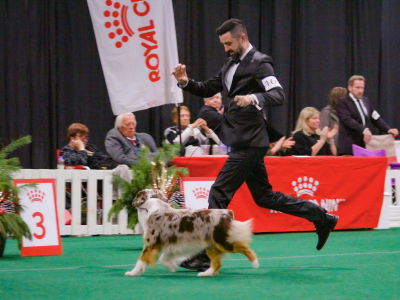
The ring hasn’t always felt easy. Stella remembers her first time vividly.

“The first time was really scary and I cried,” says Stella.

Now, the nerves are still there, but they feel different.

“Now it’s still scary to go in the ring, but it’s like an exciting scary. I’m excited all day for my turn, but I still get nervous.”

That shift didn’t happen alone. Rianna describes a conformation community that shows up for its Juniors in ways big and small.

“The conformation community as a whole wants to see the kids succeed. In every situation, adults are ready to step up on behalf of the kids. Offering dogs, making them aware of ring times, offering encouragement. I’m not sure if other exhibitors know how much those tiny interactions mean to the kids.” Junior-Handler-Blog-Photo-3.png
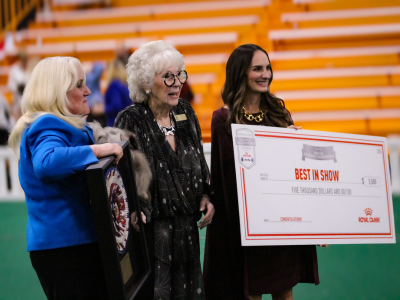
She recalls one pivotal show when Stella was still finding her footing. After reaching out for advice on encouraging a young Junior, the response was overwhelming.

“At that show, adults sought her out to tell her how gorgeous her dress was. Another Junior brought her a glittery bag with grooming tools, a little apron, bubbles and candy. When we went ringside someone started playing Dolly Parton’s 9 to 5, Stella’s favourite song, so by the time she went into the ring she was grinning ear to ear and strutting like a queen.”

“That was the turning point,” says Rianna.

From that moment on, Stella begged to attend every show and handling class. When she chose to celebrate her birthday at a dog show, the community once again stepped in, decorating, celebrating, and making the weekend unforgettable. Rianna also speaks passionately about the mentorship Stella has received.

“Our rep, Bonnie White, has answered a million and a half questions. Her daughter Madison checks in with Stella every show and talks kid to kid about things to do in the ring. The kids look out for each other, encourage each other, calm each other’s nerves.”

Junior-Handler-Blog-Photo-4.png
Even when things don’t go as planned, support is immediate. At one specialty, a dog offered to Stella proved too rambunctious.

“Another handler stepped in before I could even blink. She had Stella pep talked and a new dog to go back out with so fast there was no time for it to be anything but a good experience.”

For Rianna, that safety net means everything.

“As a parent I love that feeling of knowing someone always has the kids’ backs if something doesn’t go as planned.”

Stella has already handled Miniature Poodles, German Wirehaired Pointers and Golden Retrievers, and has practised with spaniels. Her favourite remains the Mini Poodle.

“I have fun with the hairdo,” she says proudly. Looking ahead, she is “really excited to go to Zones for the first time” and is determined to earn a Best Overall Junior ribbon.

“I got a Reserve, but I don’t have that giant one yet,” she says. “So, I’m going to try to get one of those this year.”

For parents wondering whether to get involved, Rianna does not hesitate.

“Absolutely do it. I can not believe the difference a single season of showing made, let alone how much she grew in her second season. It doesn’t matter if you don’t own a dog or have never shown before. The community will help guide you. Everyone watches out for the kids and wants them to have good experiences and succeed.”

Junior Handling has given Stella more than ribbons and ring time. It has given her mentorship, friendship, courage, and a place where she feels completely at home. And for one determined eight-year-old in New Brunswick, that ring has become a space where she can shine.Junior-Handler-Blog-Photo-5.png

Stella’s story is just one example of what can happen when young people are given the opportunity to step into the ring and discover what they’re capable of. Through the Canadian Kennel Club’s Junior Handling program, children across Canada are building confidence, forming friendships, and finding their own place to shine.

If your child is ready to try something new, we invite you to explore Junior Handling and see where the journey could take them.

Find out how to get involved by clicking here.

Canadian Winners at the 2026 Westminster Kennel Club Dog Show

Canadian dogs and their dedicated breeders, owners, and handlers made their mark at the Westminster Kennel Club Dog Show. From breed competition to a historic Best in Show win, the following dogs earned recognition on one of the world’s most prestigious stages.

Leading the way was Penny, the Canadian-bred Doberman Pinscher bred by Theresa Connors-Chan and Gregory Chan, whose Best in Show victory marked a long-awaited return for the breed, with the last Doberman Pinscher claiming the top honour at Westminster in 1989. Adding to the moment’s significance, Penny was handled by Andy Linton of the United States, who also handled the last Doberman Pinscher to win Best in Show at Westminster more than three decades ago. Penny’s win represents a milestone moment for Canadian dogs at Westminster, becoming the first Canadian-bred Best in Show winner since 2015, when a Beagle bred in Canada earned the title.

Penny’s historic Best in Show win was part of a broader showing of success for Canadian dogs at Westminster. The following list recognizes Canadian-bred, owned, and handled dogs whose performances earned placements across breed and group competition at the 2026 Westminster Kennel Club Dog Show.

Kunik the American Eskimo Dog
GCHB CH Nuuktok’s Atka Kunik BCAT
Sharon Robertson & Graeme Burdon
Best of Breed

Sage the American Eskimo Dog
CH Nuuktok’s The Spice Of Life
Sharon Robertson & Graeme Burdon
Best of Opposite Sex

Kinslee the Bearded Collie
GCHB CH Dreamchaser’s You Had Me At Hello BCAT
Dawn Robitalliem & Deborah Furlow
Best of Opposite Sex

Brabus the Border Collie
GCH CH Nahrof Semper Supra CGCA CGCU TKN
Zihui Lin & Yuan Wang
Select Dog

Capri the Border Collie
GCHB CH Leboria Wishing Star
Zihui Lin & Yuan Wang
Best of Opposite Sex

Leia the Border Collie
GCHB CH BellaClan Don’t Step On My Groove
Laura K. S. Wright and Morgan Little
Award of Merit

Riot the Border Collie
GCHB CH Qeltynn One Night Only
Laura K. S. Wright and Hannah Kelly
Award of Merit

Johnny the Border Terrier
CH Bridan Kilmarnock At Thistle Do
Cythia Lubinsky, Cathy Meyer, Jose Miguel Sanchez & Emily Burdon
Award of Merit

Whiskey the Border Terrier
GCHP2 CH Roschel Foxrun Thistle Do
Emily Burdon, Jose Miguel Sanchez, Cynthia & Randy Lubinsky, Jen Holder & Rosemary & Michael Shoreman
Select Dog

Farrah the Bouvier des Flandres
GCHB CH Quiche’s Vogue Covergirl CGC TKN
Elaine & Louise Paquette
Best of Breed & Group 4th

Frankie the Boxer
GCH CH Tybrushe’s Come Fly With Me @ Glenmere
Pamela Holzapel, Sheila McAvoy & Darren Lovely
Best Opposite Sex

Ridge the Boxer
GCHP CH Tybrushe Livin’ On The Edge Of X-Cellence
Barbara Tan
Best of Breed

Tag the Bulldog
CH Bulldacious Don’T Crack Under Pressure
Lisa S. Bosada, Amanda Mcallister & Tammy Mcallister
Select Dog

Abigail the Bull Terrier (White)
GCHB CH Alaric Star Spangled Sister
Greg Armstrong
Best of Breed

Anime the Bull Terrier (Coloured)
GCH CH Grabo Paint The Town Red At Magor
Sarah Byzewski, Grace & Robert Thomas
Best of Breed

Lada the Cesky Terrier
CH Bluefire A Little Night Music
Jody Davidson, Tim Smith, Holly Million & Pamela Bales
Select Bitch

Smash the Chinese Shar-Pei
Gumby’s Hey Now You’re An Allstar NWR
Robert & Jeanne Bryant, Andrea Robins, Katherine Smooth, Simone Demirjian, Leah Troisi & Jeff Nixon
Best of Opposite Sex

Cowboy the Collie (Smooth)
GCHS CH Aryggeth’s Swagman Of Eden HT FDC DCAT SCN
Dona Williams, Anick Berthiaume, Sylvain Sagala & Michele Cousineau
Best of Opposite Sex

Penny the Doberman Pinscher
GCHP CH Connquest Best Of Both Worlds
Francis & Diana Sparagna, Theresa Connors-Chan & Gregory Chan
Best of Breed, Group 1st & Best in Show

Cosmo the Dogue de Bordeaux
GCHB CH Brazen Shine On Darkstar CGC TKN
Kim Lellig & Pauline Da Silva
Best of Opposite Sex


Aurinko the Finnish Lapphund
GCHG CH Sugarok Here Comes The Sun BCAT
Linda Marden & Katelyn Sutton
Award of Merit

Margeaux the Giant Schnauzer
GCHB CH Selectiondor Aspen Leaf’s Margeaux
Marne Martin-Tucker, Michael Tucker & Carole Pellerin
Select Bitch

Cossette the Havanese
GCH CH That’s Amyla’s Castle On A Cloud 
Myriam Archambault
Select Bitch

Radar the Havanese
GCH CH Mistytrails Caught On Radar
Bev Dorma & E Dorma
Select Dog

Cloud the Ibizan Hound
CH Requiem N Dragorra’s Cloud Strife
Jean-Christophe Boulinguez & Dawne Deeley
Best of Opposite Sex

Neville the Leonberger
GCHB CH Corleone Navigator At Kalizmar
Lee Studholme & Lucie Perron
Best of Breed

Trillé the Manchester Terrier (Toy)
GCH CH Bonwild Black Magic Woman
Amanda Kelly, Sari Laitinen & Carolyn Horowitz
Best of Opposite Sex

Oshi the Miniature American Shepherd
GCHP CH Alta Oceans Symphony Of The Seas
Valerie Nilsson
Best of Opposite Sex

Valentina the Miniature Pinscher
GCHG CH Rexroth Kimro Valentina
Lesley & Stefan Walter, Kimberly Calvacca & Robin Greenslade
Best of Breed

Buster the Miniature Schnauzer
GCH CH Massawippi It’s A Mad, Mad World
Murray Clarke
Award of Merit

Emmett the Norwegian Elkhound
GCHS CH Kingdom N Daggarwoods Silverado
Nicole Casavechia
Best of Breed

Tovah the Norwegian Lundehund
GCH CH Solkanata’s Teal The Show
Rebecca Benedikte Lyngmo-Zoellick, Garret Wayne Zoellick, Tanja Minder & Brad Jorgenson
Best of Breed

Pauline the Old English Sheepdog
GCHB CH Bagatelle Moonday Good Morning
Roberta Corbett, Joanne & Bernard Charest
Best of Opposite Sex

Jax the Papillon
GCHG CH Riesa’s Jack Of All Trades
Darlene & Douglas Kelly, Mardell Leppington, Joy Carpenter & Linda Foiles
Select Dog

Remington the Papillon
GCHP2 CH Riesa N Passionpaps Locked And Loaded
Darlene & Douglas Kelly, Madeline Mosing & Linda Foiles
Best of Breed

Dancer the Pomeranian
GCH CH Dance For You Of Paradise House
MinSoo Jung & Marina Persic
Award of Merit

Gracie the Pomeranian
GCH CH Artistry’s Elegance N Grace Of Paradise House
MinSoo Jung, Zayla & Tina Zaner, Marina Persic
Select Bitch

Ried the Poodle (Standard)
GCHS CH Dawin Ready Set Go 
Linda A. Campbell & Sarah Perchick
Award of Merit

Valencia the Poodle (Standard)
GCH CH Lakeridge Put That In Your Hat At Heritage 
Sonia Domingue
Best of Opposite Sex

Aurora the Retriever (Nova Scotia Duck Tolling)
CH Redshadow’s Light Up The Sky
Shauna Canjar Dainton
Select Bitch

Lemonade the Retriever (Nova Scotia Duck Tolling)
CH Roaneden’s Summer Squeeze
Christine, Robert & Chloe Jones
Best of Opposite Sex

Luca the Retriever (Nova Scotia Duck Tolling)
GCHS CH Roaneden’s Shorelander
Christine, Robert & Chloe Jones
Best of Breed & Group 3rd

Ochre the Retriever (Nova Scotia Duck Tolling)
GCH CH Redshadow’s Here’s The Kaboom BCAT
Shauna Canjar Dainton & Sherri Canjar
Select Dog

Kaspian the Saluki
GCHS CH Haefen Phaeton Kaspian
Brittany Parton, Roberta Parish, Eric Steel
Best of Breed & Group 4th

Jack the Samoyed
GCHS CH Vanderbilt’s Lucky Day
Judi & Blair Eflord, Janice & David Schuler
Award of Merit

Maverick the Samoyed
GCHS CH Vanderbilt’s Lucky Shot FDC
Judi & Blair Elford, Suzanne Danza & Steve Tursi
Best of Breed & Group 4th

Reba the Samoyed
GCHS CH Vanderbilt’s Lucky In Love
Judi & Blair Elford, Carl Vitner
Select Bitch

Sweetie the Samoyed
GCHB CH Vanderbilt’s Sweet Little Lies
Judi & Blair Elford, Eliza Wai Yan Wong
Best of Opposite Sex

Fannie the Setter (English)
CH Aerden’s Funny Girl
E Yvonne & Hope Norton
Award of Merit

Porter the Setter (Irish Red and White)
GCH CH Caniscaeli All That Jazz 
Debra Peterson & Gail Harrison
Select Dog

Eva the Shetland Sheepdog
GCHG CH Mystic Suntime Everclear 
Barbara Wohlferd, Tracy Robinson & Ni Yadong
Best of Opposite Sex

Valencia the Shetland Sheepdog
GCH CH Emmys Lady Marmalade
Hanna Campbell
Select Bitch

Bowie the Shih Tzu
CH Souyen’s Ziggy Stardust
Patti & Mark Paquette, Sarah Paquette Petrie
Select Dog

Arthur the Spaniel (Brittany)
GCHS CH Rivermist Broxden Magnuttic
Craig & Diane Storey, Allison Godfroid, Amy & Phil Booth
Select Dog

Stormy the Spaniel (English Cocker)
CH Especially’s One Night Stand At Cherrywood 
Yvonne Van Wyk, Kassandra McCartney & Marsh Wallace MD
Select Bitch

Java the Spaniel (Welsh Springer)
GCHS CH Clussexx Cafe Jumping Bean 
Brenda Trofanenko, Jeane Haverick & Kaileigh Gonzalez
Best of Opposite Sex

Grip the Weimaraner
GCHG CH Koping Versa Hold On For Dear Life BCAT
Fran Harrison, Patricia Kopec & Rosemarie Adams
Select Dog

Draco the Welsh Terrier
GCH Darwyn’s Black Magic
Larisa Hotchin
Best of Opposite Sex

Violet the Xoloitzcuintli
CH Dajen’s Violets Are Blue 
Jennifer Bittner & Rebecca Dickson
Award of Merit


Canadian judge Raymond Yurick judged multiple breeds within the Hound Group, including Afghan Hounds, Borzois, Greyhounds, Ibizan Hounds, Scottish Deerhounds, and Whippets. Fellow Canadian judge Shawn Nichols provided last-minute support by assisting with ring stewarding.

At Westminster’s 2nd annual Flyball competition, Ontario’s Some Ruff Competition delivered a second-place finish in the top division, posting a best time of 16.288.

The Canadian Kennel Club congratulates all Canadian participants who competed at the 2026 Westminster Kennel Club Dog Show. We thank you for proudly representing Canadian dogs and dog sports on an international stage.

These results have been compiled using the official Westminster Kennel Club results. If we have missed a result or made an error, please contact us at [email protected].

Source: Westminster Kennel Club – Results by Breed

A First-Time Westminster Experience: Sandra Drouin and Smiler

For many exhibitors, qualifying for the Westminster Kennel Club Dog Show is a lifelong dream. For Canadian exhibitor Sandra Drouin, that dream is becoming reality this year, as she heads to New York for her very first Westminster with a dog who means more to her than words can capture.

Smiler_hound_group_usa.jpg
Smiler isn’t just any show dog. He comes from Sandra’s very first litter of Salukis, making him the first generation bred under her Feinouk prefix in Quebec. From the very beginning, Sandra sensed the bond she and Smiler would share. “I knew we would have a special relationship,” she says. “He loves to be close to me and make me happy.” That bond is evident both in and out of the ring.

Finding out they would be attending Westminster was a moment Sandra will never forget. “When I received the email, I was just speechless. I couldn’t believe it,” she recalls. For a first-time participant, the magnitude of the moment hasn’t been lost.

Like many seasoned show dogs, Smiler has his own pre-ring routine. Before stepping into the ring, he enjoys a good stretching session and, perhaps most importantly, having his bottom scratched, a small ritual that helps him relax and focus before the spotlight is on.

yoga-smiler.jpg

Participating in such a historic and iconic event holds deep meaning for Sandra as a Canadian exhibitor. She takes great pride in presenting a Canadian-bred dog that conforms beautifully to the Saluki breed standard on an international stage.

And while Smiler may appear polished and composed in the ring, he has a playful side that spectators might not notice at first glance. During the final stack, he often turns his head to look directly at the judge, as if to say, “Stop looking away, I’m just here!”

smiler-4-1.jpg
While this will be Sandra’s first time competing at Westminster, she is far from alone. This year’s event will welcome a strong contingent of Canadian dogs, breeders, owners, and handlers, each proudly representing Canada on one of the sport’s most iconic stages.

As Sandra prepares for the journey ahead, one thing is certain. “It will be an amazing experience to be at this show with my special boy,” she says.


Photo credits: 
Fisher Photography
 
Sandra Drouin 


Canadian Participants at the 2026 Westminster Kennel Club Dog Show

Sandra and Smiler are just one example of the many Canadian exhibitors taking part in this year’s Westminster Kennel Club Dog Show. Below is a list of Canadian dogs, breeders, owners, and handlers who will be representing Canada at the 2026 event:

Breed/RaceCall Name
Nom usuel
Breeder(s)
Éleveur(euse)s
Owner(s)
Propriétaire(s)
Location/Lieu
BarbetsRiverCarole Bouthillette & Jean-François GodboutJulie Brzobohaty & Janet Black EvansOntario
BarbetsMartineOdette GirardOdette Girard & Jean-Claude SurprenantQuébec
Brittanys
Bretons
ArthurAllyson Godfroid & Amy Booth & Phil BoothCraig Storey & Diane StoreyOntario
Brittanys
Bretons
ClydeMargot TogneriMargot TogneriOntario
Pointers (German Shorthaired)
Braques (allemand à poil court)
FreyaMaryann Koropecky & Lise CereLise CereQuébec
Retrievers (Chesapeake Bay)
(Baie Chesapeake)
BurtDarren Sausser & Elizabeth H HumerRobert Boyd & Cindy Meyer & Amanda McAllister & Tammy McAllisterOntario
Retrievers (Golden/doré)MorrisonSharon Wilson & Star Beckwith & Suzanne & Lauryn Wilson & Madeline McCueRebecca Kennedy & Sharon WilsonOntario
Retrievers (Labrador)PepperPatrick CoadyPatrick Coady & Caitlin O’BrienNewfoundland & Labrador
Terre-Neuve et Labrador
Retrievers (Labrador)PrestonSusan BenningtonLiane Chaput Brennan & Sharon LuckhartQuébec
Retrievers (Nova Scotia Duck Tolling)LemonadeChristine & Robert JonesChristine Jones & Robert JonesOntario
Retrievers (Nova Scotia Duck Tolling)AuroraShauna K Canjar DaintonShauna K Canjar DaintonOntario
Retrievers (Nova Scotia Duck Tolling)LucaChristine Jones & Robert Edward JonesChristine Jones & Robert Jones & Chloe JonesOntario
Retrievers (Nova Scotia Duck Tolling)MauiChristine & Robert JonesChristine Jones & Robert Jones & Chloe JonesOntario
Retrievers (Nova Scotia Duck Tolling)BrieDallas Drury & David Hodgins & Kristin Lawless & Cole VanoverDrury Dallas & David HodginsOntario
Retrievers (Nova Scotia Duck Tolling)OchreShauna Canjar DaintonShauna K Canjar Dainton & Sherri CanjarOntario
Setters (English/anglais)FannieLaurie Engel & Rose MillerE Yvonne Norton & C Hope NortonOntario
Setters (English/anglais)KissJudi Hunter & John HigdonJeannette Desruisseaux & Nancy Warner & Judi HunterOntario
Setters (Irish/irlandais)RoseSheila DavidsonJulie JoanisseOntario
Spaniels (English Cocker)
Épagneuls (cocker anglais)
StormyYvonne Van WykYvonne Van Wyk & Kassy McCartney & Marsha T WallaceOntario
Spaniels (Welsh Springer)
Épagneuls (springer gallois)
JavaJeane Haverick & Kaileigh GonzalezBrenda Trofanenko & Jeane Haverick & Kaileigh GonzalezNova Scotia
Nouvelle-Écosse
VizslasNorthEileen Louise Wilkes & Ross WoolfordEileen WilkesOntario
VizslasGiGiTina TanziTina Tanzi & Brielle Tanzi-FoshayOntario
Weimaraners
Braques de Weimar
LuxBrenda B Doub & Jessica L Mendez CerveraJessica & Ricardo Mendez Cervera & Brenda DoubOntario
Wirehaired Pointing Griffons
Griffons d’arrêt (à poil dur)
SunnieRyan Wolfe & Kristi Libertore & Larry Delaney & Nicole RyanRon Belt & Mary BeltAlberta
Beagles, Over 13 In. But Not Exceeding 15 In.
Beagles, plus de 13 po mais ne dépassant pas 15 po.
SwanTracy Cartwright & William AlexanderMelodie-Ann Guerit & Sylvain GénéreuxQuébec
Beagles, Over 13 In. But Not Exceeding 15 In
Beagles, plus de 13 po mais ne dépassant pas 15 po.
ForemanKay Belter & William FriendDr William Friend & Douglas G BelterAlberta
Dachshunds (Longhaired)
Teckels (poil long)
KuziTatyana Godin & Carlos J PuigTatyana GodinOntario
Ibizan Hounds
Chiens ibizan
CloudJean-Christophe Boulinguez & Arial HarperJean-Christophe Boulinguez & Dawne DeeleyQuébec
Rhodesian RidgebacksJamieCarole Cockell & Valerie MichaudCarole CockellOntario
Rhodesian RidgebacksDukeConcetta M Pio JezFrance FlibotteQuébec
Salukis/Lévriers persansSmilerSandra DrouinSandra Drouin & Paule BlanchetQuébec
AkitasReignorMarissa Prokopshuk & Serge DesForges & Vincent RomeoMarissa ProkopchukOntario
Alaskan Malamutes
Malamutes d’Alaska
RipPaule Blanchet & Craig Keeling & Scarlett BurnsidePaule BlanchetQuébec
Alaskan Malamutes
Malamutes d’Alaska
MapleDarren Walker & Elaine WalkerJennifer Remazki & Darren WalkerNew Brunswick
Nouveau-Brunswick
BoxersVidaDawn Cornetto & Joseph CornettoTerri Pickett & Dawn CornettoBritish Columbia
Colombie-Britannique
Dogues de BordeauxCosmoK LelligK LelligManitoba
RottweilersSoloCelina DunfieldCelina DunfieldManitoba
Border Terriers
Terriers border
WhiskeyJen Holder & Rosemary Shoreman & Micheal ShoremanEmily Burdon & Jose Miguel Sanchez & Cynthia LubinskyQuébec
Bull Terriers (Colored)
(de couleur)
AnimeGrace S Thomas & Robert K ThomasSarah & Joe Byzewski & Grace & Bob ThomasOntario
Bull Terriers (Colored)
(de couleur)
NigelKrista Prater-Piles & Franne BerezCathy & Bill Sodomsky & Krista Prater-PilesOntario
Cesky Terriers
Terriers tchèques
LadaTim Smith & Jody Davidson & Holly Million & Pamela S BaleJody Davidson & Tim SmithManitoba
Miniature Schnauzers
Schauzers nains
BusterMurray ClarkMurray ClarkOntario
Norfolk Terriers
Terriers de Norfolk
TomLesley WalterLesley WalterOntario
Soft Coated Wheaten Terriers
Terriers wheaten à poil doux
VeronicaShari Robinson & Sydney Robinson & Priscilla TimsShari Robinson & Sydney RobinsonOntario
Welsh Terriers
Terriers gallois
DracoLarisa HotchinLarisa HotchinBritish Columbia
Colombie-Britannique
Cavalier King Charles Spaniels
Épagneuls cavalier King Charles
DannyNatasja MoonenSusan ThompsonBritish Columbia
Colombie-Britannique
Havanese
Bichons havanais
BerylSylvia MikSylvia MikAlberta
Havanese
Bichons havanais
CosetteDavid J Scheiris & Darlene R Scheiris & Myriam ArchambaultMyriam ArchambaultQuébec
Havanese
Bichons havanais
RadarBev DormaE DormaBritish Columbia
Colombie-Britannique
Pugs
Carlins
LuigiRosemary Robles & Mardi HintsHeidi MerkliOntario
Pugs
Carlins
JerryCarole WalkerCarole WalkerBritish Columbia
Colombie-Britannique
American Eskimo Dogs
Chiens esquimaux américains
KunikSharon Ann Robertson & Graeme BurdonSharon Robertson & Graeme BurdonOntario
American Eskimo Dogs
Chiens esquimaux américains
SageSharon Ann Robertson & Graeme BurdonSharon Robertson & Graeme BurdonOntario
Boston Terriers
Terriers de Boston
PortJanet Lianne PennerJanet Lianne PennerBritish Columbia
Colombie-Britannique
Bulldogs
Bouledogues anglais
TagAmanda McAllister & Tammy McAllister & Knut Pelzer & Christine PelzerAmanda McAllister & Tammy McAllister & Lisa BosadaOntario
Chinese Shar-Pei
Shar-pei chinois
RemiJeff Nixon & Leah TroisiKristy Parmenter & Sherrie Grant-Nixon & Jeff NixonOntario
Chinese Shar-Pei
Shar-pei chinois
HoneyRhonda Denise Holloway & John KolodziejRhonda HollowayOntario
Chow ChowsZeusAntonio Raposo & Sharon RaposoJoanna ParkerNova Scotia
Nouvelle-Écosse
French Bulldogs
Bouledogues français
LouisSitnikova TvEvi StrasserQuébec
Poodles (Standard)
Caniches (grands)
ValenciaDebra Ferguson JonesSonia DomingueOntario
Poodles (Standard)
Caniches (grands)
RiedLinda A Campbell & Sarah PerchickLinda A Campbell & Sarah PerchickOntario
Australian Shepherds
Bergers australiens
JosieRobert MannRobert MannOntario
Bearded Collies
Colleys barbus
KinsleeDawn Robitaille & Debra QuadlandDawn Robitaille & Debra Quadland & Debby FurlowOntario
Border Collies
Colleys border
BenLesley EarlyLorrie AshleyAlberta
Border Collies
Colleys border
BrabusLauren E Somers & Errol J BadiorZihui Lin & Yuan WangBritish Columbia
Colombie-Britannique
Border Collies
Colleys border
CapriZi Hui Lin & Yuan WangZi Hui Lin & Yuan WangBritish Columbia
Colombie-Britannique
Bouviers des FlandresFarrahElaine Paquette & Robert RealElaine Paquette & Louise PaquetteOntario
Collies (Rough)
Colleys (poil dur)
SawyerAmanda MacLeod & Maria BattagliaAmanda MacLeod & Maria Leblanc & Stephanie KruzynskiOntario
Miniature American Shepherds
Bergers américains miniatures
RamboGinger M FleguelKelli RettieOntario
Old English Sheepdogs
Bergers anglais
JackBernard Charest & Joanne CharestJoanne & Barnard Charest & Matt Vincent & Gaby CastroQuebec
Shetland Sheepdogs
Bergers Shetland
ValenciaHanna CampbellHanna CampbellAlberta
Shetland Sheepdogs
Bergers Shetland
VanessaKim Aston & Peter CulumovicKim Aston & Pete CulumovicOntario
Shetland Sheepdogs
Bergers Shetland
JoyKim Aston & Peter CulumovicKim Aston & Peter CulumovicOntario

Where Passion Meets Purpose: The 2025 National Show Recap

The 2025 CKC National Championship Dog Show was more than an event. It brought together the passion, dedication, and genuine love for purebred dogs that defines our community. All weekend, the International Centre in Mississauga, Ontario, buzzed with energy as exhibitors, breeders, and supporters filled the ringside with anticipation. It was hard to miss the joy and pride on every handler’s face, whether they were stepping into the ring for the first time or returning in hopes of securing another title. From unforgettable moments in the final line-up, when Prince the Pekingese earned Best in Show and Rambo the Miniature American Shepherd took Reserve Best in Show, to the heartfelt determination of our Junior Handlers, this year’s National Show reminded us why these events matter so deeply to our community.

National-Show-1.png

Prince, officially GCHS Diaquiris Sno-Peke Purple Rain CGN, bred and owned by Cynthia Dyson in partnership with Denise Cortelli, was handled by Cynthia throughout the weekend. Reserve Best in Show recipient GCHG Hilltops Best Kept Secret At KL, known as Rambo, bred by Ginger M. Fleguel, and owned by Kelli Rettie, was beautifully presented by handler Cody Longworth. Their accomplishments celebrate not only the excellence of the dogs themselves but also the dedication and expertise of the breeders, owners, and handlers behind them.

National-Show-4.png
National-Show-5.png

Best in Show judge Mike Macbeth reflected on the calibre of this year’s finalists, noting that each dog before her represented a high level of excellence. While every finalist was worthy of top consideration, she described how both Prince and Rambo demonstrated qualities that set them apart in an already remarkable line-up. She praised Rambo’s correct coat, sparkling condition, elegant movement, and showmanship, adding that he did not put a foot wrong and stood like a glorious statue when she asked him to pose.

National-Show-3.png

Her evaluation of Prince was equally rich with insight. Drawing on her lifelong background with Pekingese, Macbeth explained that the breed is particularly challenging to judge because so much of its structure lies beneath its coat, and true quality must be assessed by hand rather than eye. She added that a correct Pekingese must balance sound movement with the distinctive Pekingese roll, possess the proper head qualities, and have open nostrils essential for good health. Prince, she noted, embodied all of these rare traits. She described him as pear shaped, incredibly sound, with the correct envelope head, beautiful expression, and those uncommon open nostrils. His ability to move freely while retaining the classic roll was a standout feature, and she said it was a thrill to find and reward such a spectacular representative of the breed.

National-Show-7.png

Across every ring, stories unfolded with each class and group. Seasoned Champions moved with confidence, newcomers earned enthusiastic applause as they made their mark, and breeders proudly watched years of careful planning and dedication shine through in their dogs. One of the weekend’s standout moments came from the Junior Handling Finals, where Best Junior Handler in Show Amelia Clark impressed the crowd with her skill, composure, and teamwork with her Scottish Deerhound. Moments like Amelia’s were just one of countless highlights that made the weekend so special.

National-Show-8.png

The atmosphere throughout the show was something special. Macbeth described the weekend as electric, noting the positive energy shared by exhibitors and spectators and the excitement of seeing Canada host a national event of this calibre once again. The decor, festive touches, professional staging, and commitment from every participating club and partner helped make the National Show a truly memorable experience from start to finish.

National-Show-2.png

This event would not have been possible without the invaluable support of our partners. The Canadian Kennel Club extends heartfelt thanks to the Aurora and District Kennel Club, who organized this year’s National Show and whose dedicated team ensured a seamless and enjoyable experience for exhibitors and spectators alike. Our sincere appreciation also goes to the Canadian Pet Expo, whose collaborative spirit and event expertise helped bring thousands of dog lovers through the doors to share in the excitement. We are also deeply grateful to Royal Canin for their ongoing commitment to Canadian purebred dogs and for supporting this year’s National Show. Their contributions helped elevate the experience for exhibitors and attendees throughout the weekend.

More than anything, this year’s National Show was a testament to what our community can achieve when we come together. Long before the first dog entered the ring, volunteers, ring stewards, judges, clubs, and partners devoted their time and expertise to ensure a memorable experience for everyone involved. Their efforts shaped a weekend that celebrated excellence while keeping the focus on community, which is the heart of everything CKC stands for.

A Judge’s Perspective: Mike Macbeth on Her Final Assignment

Although Macbeth’s insights about this year’s finalists enriched the experience for many, her reflections on her judging career offer an even deeper appreciation for the passion and dedication she has brought to purebred dogs for decades.

National-Show-6.png

A second-generation dog fancier, Macbeth grew up immersed in the world of Dandie Dinmont Terriers. Her mother founded Glahms Kennels in the 1950s, and together they built a legacy that would define Macbeth’s lifelong devotion to the breed. Over the years, she imported promising dogs, studied bloodlines closely with mentors in the United Kingdom, and achieved major wins around the world. One of her proudest moments came in 2003, when her Dandie became the first dog from North America to win a breed show in Britain after the UK lifted its long-standing quarantine requirement for imported dogs. This change, which finally allowed overseas dogs to compete without a mandatory six-month quarantine, opened the door for North American exhibitors to return to British rings for the first time in decades. The following year, he became the first North American terrier to win the Group at the prestigious Windsor Dog Show.

Her judging career has taken her to more than 30 countries, where she became known for her kindness with novices, patience with puppies, and respect for exhibitors. She met dedicated dog people around the world and collected experiences she now recounts with her trademark humour and warmth. Judging Dandie Dinmont Terriers at Crufts in 2022, which she described as the pinnacle of her judging life, remains one of her most cherished memories. Her international assignments brought both prestige and adventure, including a glamorous televised show in Milan where she judged Best in Show wearing an elaborate beaded Oleg Cassini gown while seated on a golden throne made of plywood. As she recalled with amusement, sitting on thousands of beads cutting into her back and legs made for a memorable and painfully unforgettable assignment, the kind of moment that defined her remarkable journey in dogs.

Accepting the Best in Show appointment at the 2025 National Show as her final judging assignment carried special meaning, though she approached it with characteristic modesty. She noted that she did not feel nostalgic or emotional stepping into the ring, adding that when one feels it is time to retire, there is no point in lingering. Still, she admitted that while a tiny piece of her hopes she may be remembered for her attributes, she fully expects to be soon forgotten.

Her presence at this year’s National Show added depth, history, and personality to an already extraordinary weekend, reminding us of the expertise, mentorship, and passion that continue to shape purebred dogs in Canada.

Full Results

Full results from the 2025 CKC National Championship Dog Show can be found on CanuckDogs.com.

How to count points towards conformation title

Overview

Dogs earn Championship Points by winning specific awards at CKC-recognized conformation shows. These points accumulate toward the Canadian Champion title.

Eligibility for Points

Points awarded at Breed Level, Group Level & Best in Show Level. 
Awards points can be earned from: 

  • Winners Dog – all class dogs who enter the ring and are not excused or disqualified count towards dogs competing 
  • Winners Bitch – all class bitches who enter the ring and are not excused or disqualified count towards dogs competing 
    Best of Winners – all class dogs & bitches who enter the ring and are not excused or disqualified count towards dogs competing 
    If the winner of the opposite sex from best of winners also defeats the Specials entries to be awarded Best Opposite Sex, then all the
  • Specials entries of that sex would be counted towards dogs competing. 
  • Best of Breed – all dogs who enter the ring and are not excused or disqualified for Best of Breed are counted towards dogs competing 
  • Best of Opposite Sex – all dogs of the same sex who enter the ring and are not excused or disqualified for Best of Breed are counted towards dogs competing 
  • Group Placements 
  • Best in Show and Reserve Best in Show 

Point Calculation

1. Number of Dogs Competing at Breed level 
Points are based on the number of dogs competing (including your dog).

Dogs CompetingPoints Awarded
10
21
3-52
6-93
10-124
13+5

Only Winners Dog or Winners Bitch earns these points. Reserve Winners earns points only if the Winners is disqualified.
 
Tip: If your dog completes its championship and stays in classes only points earned at Best of Breed (BOB) and Best of Opposite Sex (BOS) count going forward and will be applied to their Grand Championship Title
 
Exception: At Specialty Shows: If the number of dogs in competition in the sex is at least twice the number required for a 5-point win, then the Reserve Winners Dog or Bitch may be awarded points.

2. Number of Dogs Competing at Group level 
Dogs placing in Group 1st to 4th earn points based on the number of breeds competing in their group. 

Number of Dog Competing at Group Level Group 1stGroup 2ndGroup 3rdGroup 4th
13 or more5432
10 to 124321
6 to 93211
52111
42110
32100
21000
10000

Tip: Make sure to check the group sheets at the end of show to confirm no breeds were absent from group 

3. Best in Show 
Best in Show earns 5 points. 
Reserve Best in Show earns 4 points. 

CKC Grand Champion Titles (including Bronze, Silver & Gold)

Once a dog has earned their championship, they can continue to earn Grand Champion level points by winning specific awards at CKC-recognized conformation shows. These points accumulate toward advanced titles beyond. 

Eligibility for Points

Points awarded at Breed Level, Group Level & Best in Show Level. 
Awards points can be earned from: 

  • Best of Breed – all dogs who enter the ring and are not excused or disqualified for Best of Breed are counted towards dogs competing 
  • Best of Opposite Sex – all dogs of the same sex who enter the ring and are not excused or disqualified for Best of Breed are counted towards dogs competing 
  • Select Dog – all dogs of the same sex who enter the ring and are not excused or disqualified minus either the Best of Breed/Best
  • Opposite Sex winner counted towards dogs competing 
  • Select Bitch – all dogs of the same sex who enter the ring and are not excused or disqualified minus either the Best of Breed/Best
  • Opposite Sex winner counted towards dogs competing 
  • Group Placements 
  • Best in Show and Reserve Best in Show 

Point Calculation

1. Number of Dogs Competing at Breed level 
Points are based on the number of dogs competing (including your dog).

Dogs CompetingPoints Awarded
10
21
3-52
6-93
10-124
13+5

2. Number of Dogs Competing at Group level 
Dogs placing in Group 1st to 4th earn points based on the number of breeds competing in their group. 

Number of Dog Competing at Group Level Group 1stGroup 2ndGroup 3rdGroup 4th
13 or more5432
10 to 124321
6 to 93211
52111
42110
32100
21000
10000

3. Best in Show 
Best in Show earns 5 points. 
Reserve Best in Show earns 4 points. 

The opinions expressed by authors on the Canadian Kennel Club Blog and those providing comments are theirs alone, and do not reflect the opinions of the Canadian Kennel Club or any of its employees.

What to Expect on Show Day: A Guide for All Breeds

Before You Leave Home

  • Double-check your gear: grooming tools and equipment, show lead/collar, water bowl, crate, paperwork (entry confirmation, vaccination records). For possible items to pack, check out an example of an equipment list, it may include all or some of what you need, and it may be missing an item specific to you or your dog. 
  • Prepare for all weather conditions and temperatures, for shows held indoors and outdoors, there are always things to consider. For hot weather you may need to pack additional things like fans, a cooler with ice for your cool coats, and for cold weather or breeds without heavy coats, you may need to pack a coat for your dog. For rainy weather, you may need boots for you and your dog or a tent to groom under.  
  • Groom your dog: Prepare your dog the day before, so you are starting with a fresh canvas. Make sure that your dog’s teeth are clean, nails short, and your dog is clean. 
  • Pack extras: towels, poop bags, snacks (for you and your dog), and a folding chair. 
  • Review site map, be familiar with where to park, where your ring is, where to set up for grooming/crating. Often exhibitors will go to the venue a day ahead to set up all their equipment and secure an electrical plug. The premium list will provide you with when the building opens, whether there is reserved grooming space. 

Arrival at the Show

  • Arrive early: at least 1-2 hours before your scheduled ring time, depending on your grooming requirements 
  • Check in: locate your ring, find the judging schedule, and confirm your class 
  • Find the event secretary, get your arm band number, check schedule changes or judge changes 
  • Settle in – crate your dog in a quiet area and let them relax before grooming 

Grooming & Prep

  • Make sure to potty dog before final grooming 
  • Make sure your dog is comfortable with the ring surface; if you are showing on wet grass, practice a few times before grooming 
  • Final grooming: This is breed specific but brush out coat, trim stray hairs, clean eyes and ears 
  • Keep your dog clean: avoid letting them sit or roll before going in the ring 
  • Make sure your dog is comfortable with all the ring procedures such as showing the bite, examination of testicles, being examined on the floor, ramp or table 

Attending a Dog Show for the First Time? 

Please be mindful that exhibitors often plan their grooming time carefully to minimize how long their dog stands on the grooming table. Always ask before approaching or touching a dog. If you do ask, be prepared for the exhibitor to say something like, “Now’s not a good time, can we touch base later?”  

It’s not that they don’t want to talk to you, they’re simply trying to do what’s best for their dog. Respecting their schedule helps ensure a smooth experience for everyone involved. If you reconnect with them later, they’ll likely be able to spend more time with you and answer your questions without feeling rushed. 

Ring Time

  • Be ready: arrive at ringside 10-15 minutes before your class 
  • Check in with the ring steward 
  • Bring essentials: show lead, bait (if allowed), and a comb for last-minute fixes 
  • Stay calm: your dog will feed off your energy – keep it positive and focused 
  • Watch the judge’s ring procedures; when you enter the ring where should you wait, does the judge move the dogs right away, or do they look at the dogs stacked? Is the down and back on the diagonal or along the side of the ring? 

In the Ring

  • Follow the judge’s instructions: stack your dog, gait when asked, and maintain control 
  • Present confidently: smile, make eye contact, and show off your dog’s virtues 
  • Sportsmanship matters: win or lose, congratulate others and thank the judge 

After the Show

  • Clean up: remove grooming products from your dog’s coat 
  • Hydrate and rest: offer water and let your dog relax 
  • Reflect: note what went well and what to improve for next time 
  • Check judge books to confirm points were awarded correctly. These are available at the Event Secretary table after group judging or at the end of the show. 
  • If your dog obtained their championship (and you have confirmed this by checking the judges’ books) you may wish to move your dog to the Specials class. The forms are available at the Event Secretary table. 
  • Once the entire show is over, make sure to leave your grooming area spotless 

Equipment List

The essentials for your dog

Familiarity is always comforting, try keep things as close to the same as possible to your dog’s regular home life.  

  • Crate – This is your dog’s safe space, a place they can relax and recover from all the excitement 
  • Crate Pad/s – It’s a good idea to bring extra in case they become wet or muddy 
  • Crate Cover/Blanket – Especially in loud buildings, it adds a little more privacy 
  • Water Bucket – Your dog should always have access to clean fresh water 
  • Bottled Water – You can bring water from home or bottled water, but it is always best to avoid giving water from unknown sources. 
  • Food Bowl – Your dog’s normal food bowl, also keep in mind, most dog show venues do not allow you to wash dog food bowls in the bathrooms. 
  • Dog Food – enough for the weekend plus an extra day 
  • Medications – anything your dog is currently taking, this may also include things like pro-biotics  
  • Treats – Any high value treats “bait” they are used to, it’s not a good idea to introduce new things while at the show. 
  • Exercise Pen – You may not need this and prefer to walk your dog for potty breaks, however they are handy to have especially in bad weather. 
  • Ground Mat – If using an Exercise Pen, it is a good idea to also have a ground cover mat, this prevents muddy feet and reduces likelihood of exposure to bugs such as ticks. 
  • Walking Leash – Even if using an Exercise Pen, sometimes it’s nice just to stretch your legs 
  • Poop bags – make sure to always have these on hand and you clean up after your dog 
  • Show Lead/Collar – The lead/collar you have been practicing with in handling class 
  • Squeaky Toy – These are small and will fit in your pocket, used to get expression in the right moment. Please be aware of how often you use this and if it is affecting other dogs in the ring around you. 
  • Wet Wipes – These often come in handy for both you and your dog 
  • Toys/Chews – If your dog enjoys toys or chews to pass the time pack their favourites 
  • Vaccine certificates – as required 
  • Confirmation of Entries – It’s always a good idea to have these in case of any discrepancy if entered in the wrong class, or you have moved your dog to Specials or from the Bred-By Class 

The essentials for you

  • Dog show outfits – you have likely attended a dog show and have seen regular attire. Make sure to practice all the movements you would in the ring such as bending down to pick up a dog, kneeling, walking/running etc. to make sure what you wear is comfortable and there is little chance of wardrobe malfunction.  
  • Comfortable ring shoes – even when you are not showing multiple dogs, the days can be very long, and you spend multiple hours on your feet, often on concrete. 
  • Wet weather clothing &  shoes – even if you are showing indoors, if rain is predicted, bring wet weather gear for potty walks, getting to and from the event location. 
  • A folding chair – for the long days, but also it’s nice to have a place to hang out. 
  • Something to drink – pack bottled water and or your preferred beverage 
  • Something to eat – your favourite snacks, you may even want to pack a cooler to keep these items in. Make sure to check the premium list to see what is available in the event venue and if there are any restrictions about bringing food not sold at the venue. 
  • Personal Items – any personal items, this may include band-aids or tape in case of blisters, a safety pin in case of wardrobe malfunction, a pen, or medication in case of a headache etc. 

Grooming equipment 

Your dog should be totally comfortable with the grooming process and well socialized to be comfortable in any environment. 

  • Grooming Table – This is a contained space where your dog can safely stand for the grooming process, but its also part of the routine to let your dog know they are about to get ready to go in the ring.  
  • Grooming arm & clamp – This is for the safety of your dog, make sure it is sturdy enough for your breed.  
  • Blow dryer – (force dryer/hand dryer) 
  • Towels – More than one is often needed 
  • Wash tub – Some events will provide a wash station, this will be listed in the premium list, you may need to bring a plastic tub if one is not available or use products like self rinse. 
  • Shampoo/Conditioner – Your usual products or products specifically used for show prep 
  • Brushes – specific to your grooming needs (slickers, pin brush, body brush) 
  • Combs – specific to your grooming needs 
  • Nail care – nail clippers/nail grinder 
  • Grooming Products – Specific to your grooming needs 
  • Paper towel – always handy to have 

Weather

Whether you are indoors or outdoors, there are always things to consider.

  • Pop Up Tent – not all venues offer a grooming tent, you may need a pop up tent to groom under if outdoors. Make sure to also have sturdy ground pegs and a rubber mallet 
  • Sun Shades – These may be needed to attach to your pop up tent in hot weather 
  • Tarps – These may be needed to attach to your pop up tent when its very windy or rainy 
  • Clamps – to attach shades and tarps  
  • Ground Mat – if muddy or sandy to help keep a clean area 
  • Cool Coats – These are used in hot weather to help keep your dog comfortable in hot weather, they are submerged in a cooler of ice water before using, so have more than one is helpful. 
  • Cooler with Ice – Other than for snacks, this can be used to submerge your cool coats 
  • Cool mats/bags – there are several types available, it’s a cool place for your dog to lie on and help keep them cool in hot weather. You may even use something as simple as a wet towel for your dog to stand on. 
  • Battery powered fans – These are handy both indoors and outdoors if its humid and the and the air feels close 
  • Jackets – for colder weather, your dog may require a jacket or blanket to snuggle up with 

The opinions expressed by authors on the Canadian Kennel Club Blog and those providing comments are theirs alone, and do not reflect the opinions of the Canadian Kennel Club or any of its employees.

Types of CKC Conformation Shows: A Guide for Exhibitors

The Canadian Kennel Club (CKC) offers a variety of conformation show formats to accommodate different breeds, clubs, and exhibitor interests. This guide explains the types of CKC-sanctioned conformation shows, helping exhibitors understand where their dogs can compete and what to expect. 

All-Breed Shows

All-breed conformation shows are open to all CKC-recognized breeds. These events offer a full range of classes and allow dogs to compete for championship points. They are the most common type of conformation show and provide opportunities for exhibitors of all breeds to participate. 

Multiple Shows

Multiple shows mean two all-breed conformation shows held on the same day at the same venue. Clubs may host morning and afternoon shows, allowing exhibitors to earn points at more than one event in a single day. They have a limited entry of either 175 or 200 dogs. 

Limited Breed Shows

Limited breed shows restrict entries to specific breeds or groups. These shows may focus on one CKC-recognized group (e.g., Working Group) or a themed subset of breeds with shared characteristics (Retrievers). Points for group placements are only awarded if all breeds in a group are competing. 

Theme Shows

Theme shows are a type of limited breed show that focus on breeds with a common thread, such as coat type, function, or origin. These shows allow clubs to highlight unique breed characteristics and attract targeted entries. Points for group placements are not awarded at these shows, only breed level judging. 

Group Specialties

Group specialties are shows dedicated to one CKC-recognized group, such as Sporting, Herding, or Toy. 

Specialty Shows

If your dog wins its class, it must continue to compete for higher awards (like Winners, Best of Winners, or Best in Group/Show) unless it’s a Puppy in Group or Show.  
  
Tip: Always check with the Show Superintendent if you need to excuse your dog. 
Exception: If your dog is marked absent in an official class, it can still participate in unofficial or non-regular classes at the same show. 

Final Notes

Each show type offers unique opportunities for exhibitors to showcase their dogs. Review the premium list carefully to understand eligibility, classes offered, and judging assignments. 

The opinions expressed by authors on the Canadian Kennel Club Blog and those providing comments are theirs alone, and do not reflect the opinions of the Canadian Kennel Club or any of its employees.

Order of Judging – From the Classes to Best in Show 

This guide outlines the progression of a dog through CKC conformation competition, from class level to Best in Show. It is designed to help new exhibitors understand the judging process and what to expect at each stage.

1. Class Judging

Judging begins with all classes for males, followed by females. Each sex is judged using the same format:
– Junior Puppy (6 – 9 months) 
– Senior Puppy (9 – 12 months) 
– 12 -18 Month 
– Canadian Bred 
– Bred by Exhibitor 
– Open 

At specialty shows, the 12 -18 Month class may be split into: 
– 12 -15 Month 
– 15 -18 Month 

Each dog is evaluated against the CKC breed standard. Judges award placements (1st through 4th) based on structure, movement, and temperament. 

2. Winners and Reserve Winners

First-place winners from each class compete for Winners Dog and Winners Bitch. The second-place dog from the class that produced the Winners may return to compete for Reserve Winners. Reserve Winners may receive points if the Winners award is disallowed.

3. Veterans Classes (Specialty Shows Only)

Veteran classes may be divided into up to three age groups per sex. These are judged after Reserve Winners and winners advance to Best of Breed judging. No championship points are awarded for Veteran class wins

4. Specials and Best of Breed Judging

Order of entry for Best of Breed judging:
1. Male Specials (Champions of record) 
2. Female Specials (Champions of record) 
3. Veteran Dog winner(s) 
4. Veteran Bitch winner(s) 
5. Winners Dog 
6. Winners Bitch 

The judge selects: 
– Best of Breed 
– Best of Opposite Sex 
– Best of Winners (between Winners Dog and Winners Bitch) 
– Select Dog and Select Bitch (from remaining Specials, excluding Winners Dog/Bitch) 
– Best Puppy in Breed (from undefeated puppies) 

At the completion of regular breed judging, the follow classes if offered will be judged to determine breed winners for the following classes: 
– Best Baby Puppy 
– Best Veteran 
– Best Altered 
– Best Brace (2 dogs) 
– Best Team (4 dogs) 
– All Unofficial classes for their Best in Breed (detailed in premium list) 

Tip: All dogs entered in an unofficial class must also be entered in a regular or non-regular class.

5. Group Judging

Best of Breed winners for every breed compete in their respective Groups (e.g., Sporting, Working, Toy). Judges award placements of 1 through 4, and Best Puppy in Group. 
  
If a puppy wins the group, it automatically receives Best Puppy in Group. If a puppy places 2nd – 4th, only puppies from higher-placing breeds compete against it. If no puppies place, all Best Puppy in Breed winners are judged. 
  
The order of judging for all breed/class winners:
– Regular Group 
– Best Puppy in Group 
– Best Baby Puppy in Group  
– Best Veteran in Group 
– Best Altered in Group 
– Best Brace in Group 
– Best Team in Group 
– All Unofficial classes for their Best in Group(detailed in premium list) 

Tip: You must compete at every level of judging (Breed, Group & Best in Show)  

6. Best in Show

If offered, Best Baby Puppy in Show will be judged BEFORE Best in Show. 
  
Group winners enter the ring for Best in Show judging. The judge selects Reserve Best in Show and Best in Show. 
  
Best Puppy in Show is judged as follows:
– If a puppy wins Best in Show, it automatically receives Best Puppy in Show 
– If a puppy wins Reserve Best in Show, it competes only against the Best Puppy in Group from the same group as the Best in Show winner 
– If no puppy wins BIS or RBIS, all Best Puppy in Group winners are judged  

The order of judging for all Group winners: 
– Best Baby Puppy in Show 
– Best in Show 
– Best Puppy in Show 
– Best Veteran in Show 
– Best Altered in Show 
– Best Brace in Show 
– Best Team in Show. 
– All Unofficial classes for their Best in Show (detailed in premium list) 

If your dog wins its class, it must continue to compete for higher awards (like Winners, Best of Winners, or Best in Group/Show) unless it’s a Puppy in Group or Show.  
  
Tip: Always check with the Show Superintendent if you need to excuse your dog. 
Exception: If your dog is marked absent in an official class, it can still participate in unofficial or non-regular classes at the same show. 

Final Notes

  • Dogs must be handled in accordance with CKC rules and handlers must exhibit good sportsmanship 
  • Judges follow CKC Conformation Show Rules, the Handbook for Conformation Judges, and breed standards 
  • Chapter 12 of Conformation Show Rules defines each class 
  • Section 12.6 outlines optional non-regular classes 
  • Chapter 13 provides definitions and requirements for Altered Dogs 

The opinions expressed by authors on the Canadian Kennel Club Blog and those providing comments are theirs alone, and do not reflect the opinions of the Canadian Kennel Club or any of its employees.

Finding the Right Breeder: What to Look For

885-2.jpg

Bringing a dog into your life is a big decision, and choosing the right breeder is just as important as choosing the right breed.

If you’re starting your search, it can be hard to know what to look for. Not all breeders operate the same way, and understanding the difference can help you feel confident in your decision.

So, what does an accountable breeder actually look like?

They want to get to know you

An accountable breeder isn’t just focused on placing puppies. They are focused on placing them in the right homes.

You can expect them to ask questions about your lifestyle, your experience with dogs, and what you’re looking for in a companion. This isn’t about being selective for the sake of it. It’s about making sure each dog is set up for success.

If a breeder isn’t asking questions, it may be worth taking a closer look.

3-17

They’re open and transparent

Accountable breeders are proud of their dogs and how they are raised. They are open to showing you where their dogs live and are happy to answer your questions.

Whether in person or virtually, you should be able to see the environment your future dog is coming from. If someone avoids this step or suggests meeting in a neutral location only, that’s something to be cautious of.

They provide health information and documentation

Responsible breeders prioritize the health and well-being of their dogs.

They should be able to provide health records, discuss any relevant testing, and walk you through the details of your dog’s background. Clear documentation helps you understand your dog’s history and gives you confidence moving forward.

If paperwork isn’t available, it can leave important questions unanswered.

4-17

They’re knowledgeable and involved

Many accountable breeders are actively involved in the dog community, whether through events, training, or other activities.

Their involvement reflects a genuine interest in their breed and a commitment to maintaining its health, structure, and temperament. They are also a valuable resource for you, both before and after you bring your dog home.

They’re there for the lifetime of the dog

One of the most important signs of an accountable breeder is their long-term commitment.

They don’t disappear after a puppy goes home. Instead, they remain available to answer questions, offer guidance, and support you throughout your dog’s life.

This ongoing relationship can make a meaningful difference, especially for first-time owners.

Take your time

ding the right breeder doesn’t happen overnight, and it shouldn’t.

Take the time to ask questions, do your research, and find someone you trust. A thoughtful approach at the beginning can help set both you and your future dog up for success.

Choosing responsibly starts here

At the Canadian Kennel Club, we’re committed to supporting responsible dog ownership and helping Canadians make informed decisions.

Because you and your future dog deserve the right start.

The opinions expressed by authors on the Canadian Kennel Club Blog and those providing comments are theirs alone, and do not reflect the opinions of the Canadian Kennel Club or any of its employees.